
 Image 1 of 5
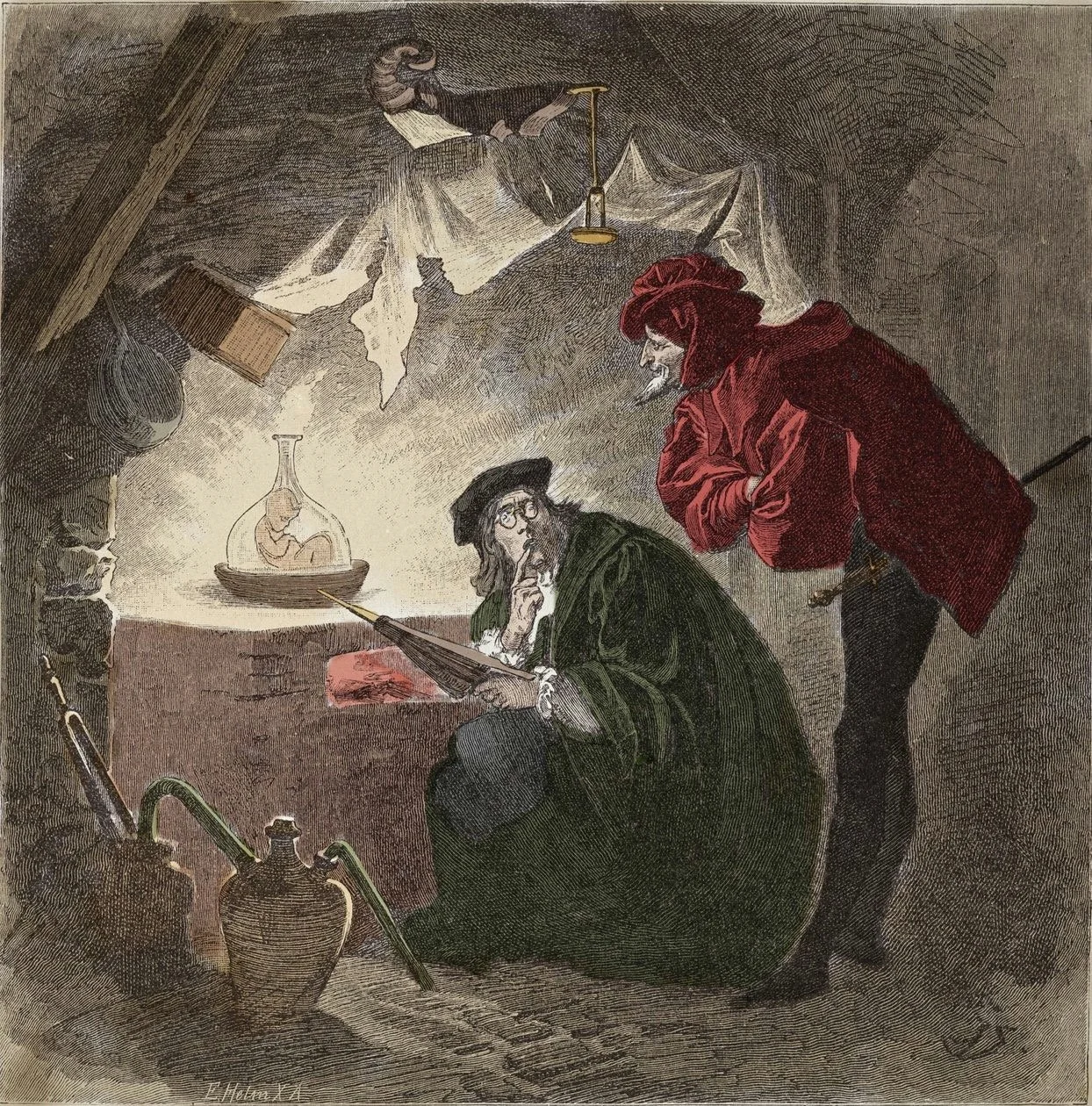 Image 2 of 5
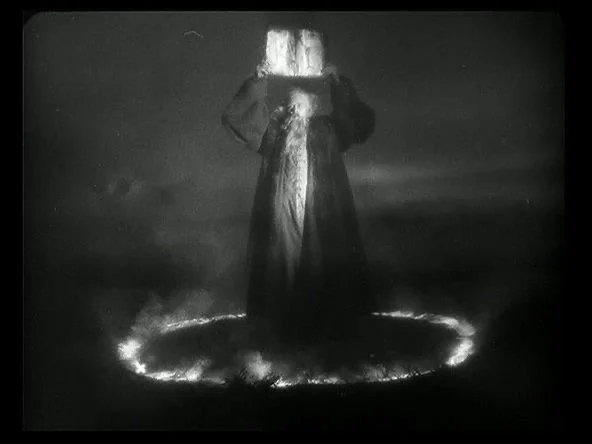 Image 3 of 5
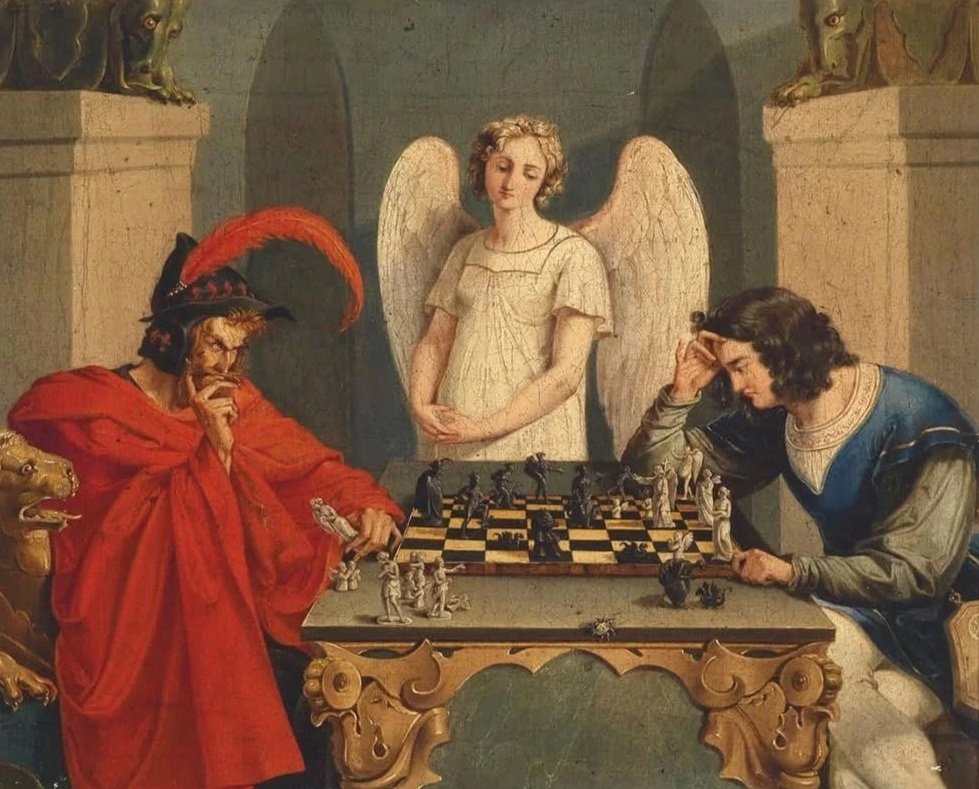 Image 4 of 5
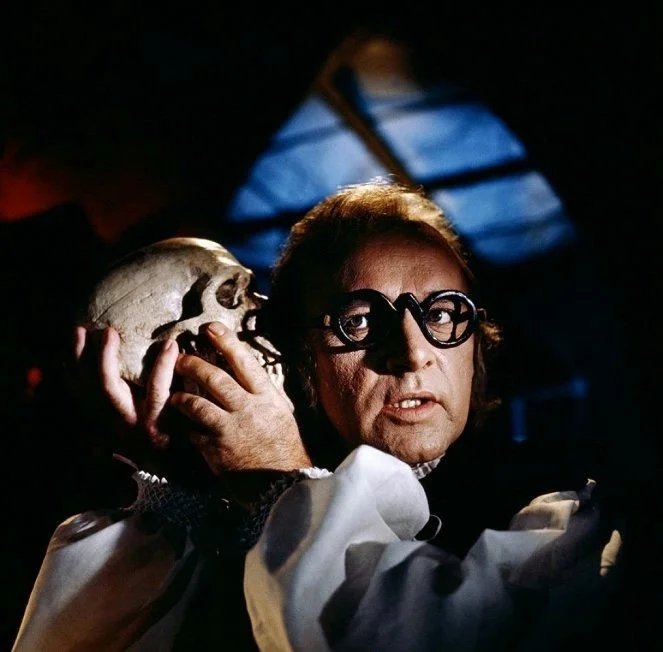 Image 5 of 5
The Magician, the Devil, and the Price of Knowledge: A History of Doctor Faust with Cultural Historian Jason Lahman, Begins May 2nd
Four Week Class Taught Online Via Zoom
Sunday, May 2 - May 23, 2027
2:00 - 4:00pm ET (NYC Time)
$140 Paid Patreon Members / $160 General Admission
PLEASE NOTE: Classes will be recorded and archived for students who cannot make that time
Who was Doctor Faust? A wandering magician, astrologer, alchemist, and reputed necromancer in Renaissance Germany, the historical Johann Georg Faust (c. 1480–c. 1540) left behind little more than scattered accounts of his extraordinary activities. Yet within decades of his death, he had become one of Europe's most notorious legendary figures: a man who summoned spirits, traveled through the heavens, commanded supernatural powers, and sold his soul to the Devil in exchange for knowledge, worldly experience and erotic fulfillment. His story emerged from a world in which ancient magical traditions, Renaissance humanism, and the religious upheavals of the Reformation collided, raising urgent questions about the limits of human knowledge and the dangers of forbidden power.
Over the following centuries, Faust underwent a remarkable transformation. Initially condemned as a cautionary example of diabolical ambition, he became a symbol of humanity's restless desire to penetrate the mysteries of existence. From the German Faustbooks and Christopher Marlowe's Elizabethan tragedy to Goethe's monumental poem-play, his legend absorbed changing ideas about magic, science, religion, sexuality, creativity, and salvation. In Goethe's hands, the damned magician became a metaphysical adventurer, descending into mysterious realms of primordial creation and confronting the deepest questions of time, beauty, and human striving.
In this four-week course, we will trace the extraordinary history of Doctor Faust from the magical culture of Renaissance Europe to his modern incarnations in literature, philosophy, opera, visual art, and cinema. Along the way, we will encounter the Devil and his servants, the mysteries of classical antiquity, the witches of Walpurgis Night, Goethe's enigmatic primordial Mothers, and a vast array of phantasms born of the Romantic imagination. Finally, we will consider how Faust became one of the defining myths of modern Western civilization, embodying both the promise and the terrible consequences of humanity's pursuit of unlimited knowledge and god-like power.
Week 1 — The Historical Faust: Magicians, Humanists, and the Devil
Who was the real Doctor Faust, and what kind of world made his reputation possible? We will begin in Renaissance Germany, examining the fragmentary evidence surrounding Johann Georg Faust and the extraordinary intellectual and religious culture of his time. The revival of Hermeticism, Neoplatonism, astrology, alchemy, and ceremonial magic produced new visions of humanity's relationship with the cosmos, exemplified by such figures as Marsilio Ficino, Johannes Trithemius, Heinrich Cornelius Agrippa, and Paracelsus. Against this background, we will explore the growing anxieties surrounding witchcraft, demonology, and forbidden knowledge, particularly during the Protestant Reformation, and consider how an itinerant magician became the subject of one of Europe's most enduring legends.
Week 2 — The Devil's Bargain: Faustbooks, Damnation, and the Theater
How did Faust become the man who sold his soul to the Devil? This week will explore the emergence of the Faust legend in popular literature, beginning with the German Historia von D. Johann Fausten (1587) and the older Christian traditions of diabolical pacts, demonic servants, and supernatural temptation. We will follow Faust through his magical adventures, spirit conjurations, journeys into the heavens and underworld, and encounters with the great figures of antiquity. Particular attention will be given to Christopher Marlowe's Doctor Faustus, with its extraordinary combination of Renaissance ambition, theological terror, and theatrical spectacle. We will also examine how Faust entered European popular culture through chapbooks, puppet theater, and traveling performers, becoming both a warning against forbidden knowledge and an irresistible figure of imaginative liberation.
Week 3 — Goethe's Faust: Romanticism, Desire, and the Primordial Mothers
In Goethe's hands, Faust underwent his most profound transformation: from a damned magician into an embodiment of humanity's restless metaphysical aspirations. We will explore Goethe's lifelong engagement with the legend, examining the tragic story of Gretchen, the witches and spirits of Walpurgis Night, the appearance of Helen of Troy, and the drama's extraordinary synthesis of Christian, classical, and Romantic cosmologies. Special attention will be given to Faust's mysterious descent into the realm of the Mothers, primordial female powers existing beyond ordinary space and time. Drawing upon Harold Jantz's The Mothers in Faust: The Myth of Time and Creativity, we will investigate the drama's deeper mythological structures and its preoccupation with creation, transformation, beauty, and the origins of form. We will conclude with Goethe's remarkable reimagining of Faust's destiny through redemption, spiritual ascent, and the Eternal Feminine.
Week 4 — The Faustian Century: Art, Modernity, and the Soul
By the late nineteenth century, Faust had become far more than a literary character: he was an emblem of the modern human condition. Our final week follows his extraordinary afterlife in Romantic painting, opera, literature, and cinema, from Delacroix, Berlioz, Liszt, and Gounod to the supernatural spectacle of F. W. Murnau's Faust (1926). We will examine Oswald Spengler's influential conception of Western civilization as fundamentally Faustian, driven by infinite aspiration, technological mastery, and the conquest of nature, before turning to Thomas Mann's Doctor Faustus (1947), in which the diabolical bargain becomes an allegory of artistic genius and Germany's descent into catastrophe. Finally, we will consider the enduring relevance of the Faustian myth in an age of scientific ambition, artificial intelligence, and seemingly unlimited technological power. What does it mean to gain the world at the possible cost of one's soul?
List of images:
1.) Friedrich August Moritz Retzsch, "Faust and Mephistopheles Playing Chess", 1830s.
2.) Richard Burton as Faust in "Doctor Faustus", 1967.
3.) Unknown artist, "Faust in His Study with the Homunculus", 19th century.
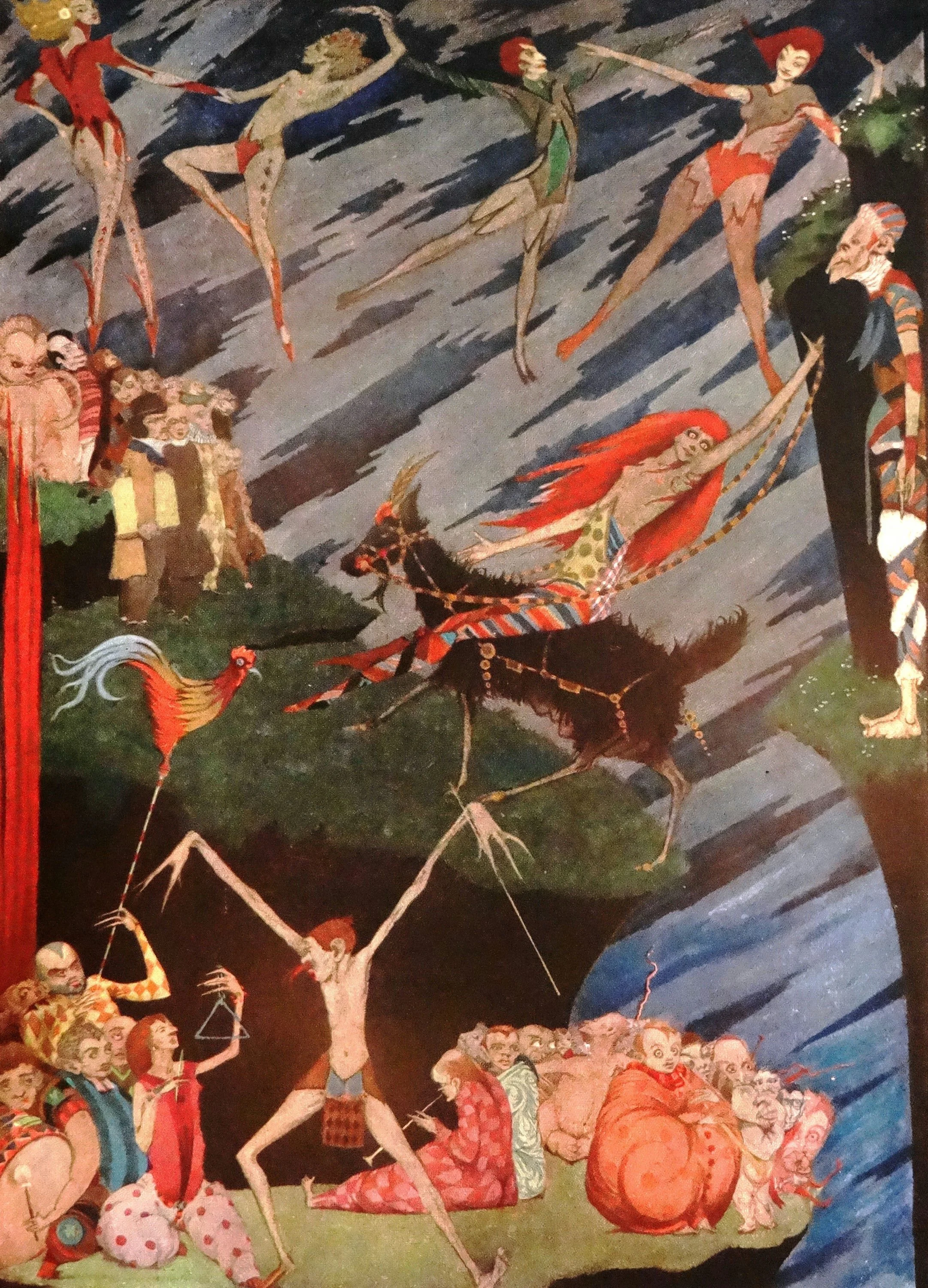
4.) Harry Clarke, "Walpurgis Night", illustration for Goethe's "Faust", 1928.
5.) Gösta Ekman in F. W. Murnau's "Faust", 1926