
 Image 1 of 4
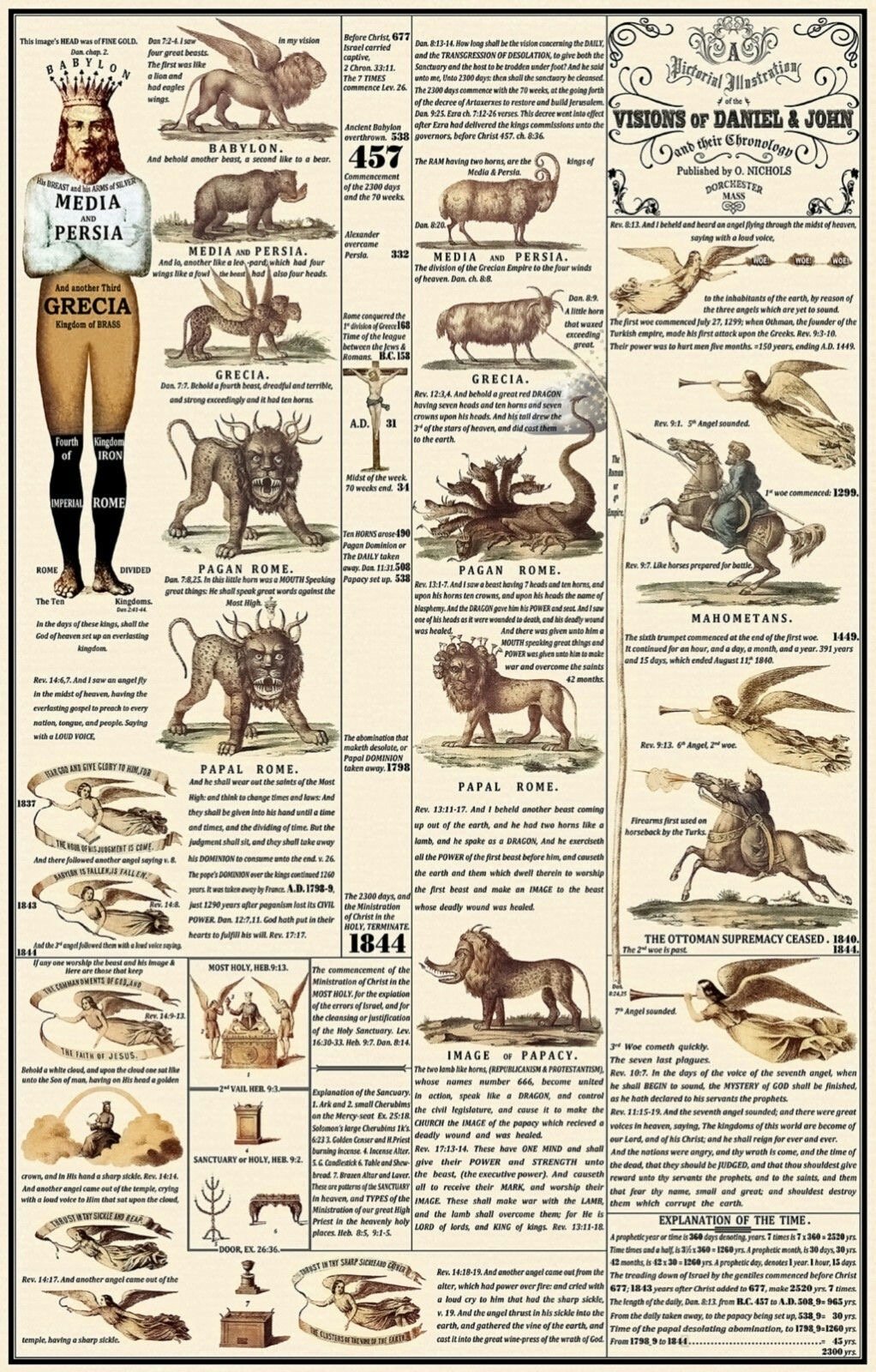 Image 2 of 4
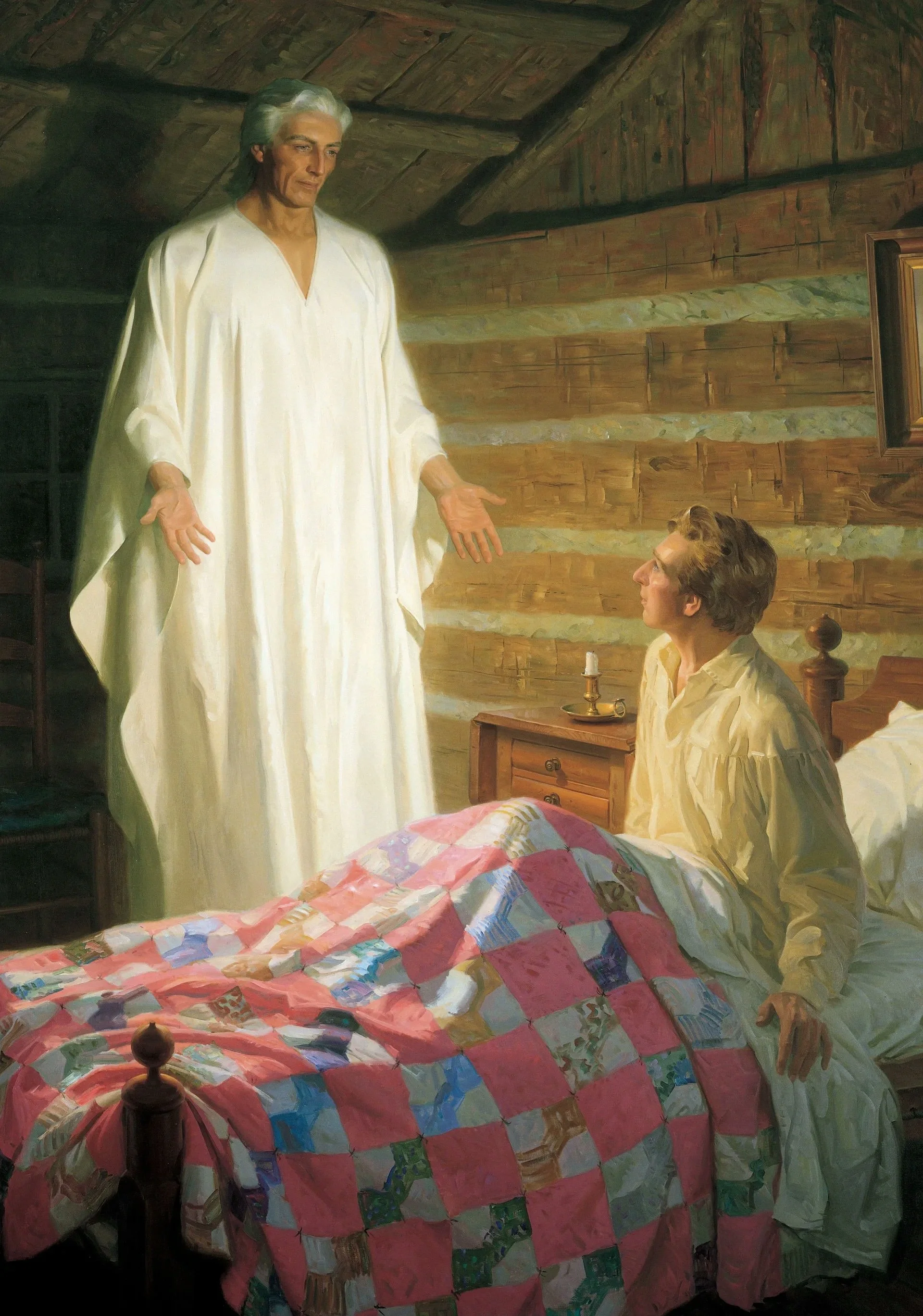 Image 3 of 4
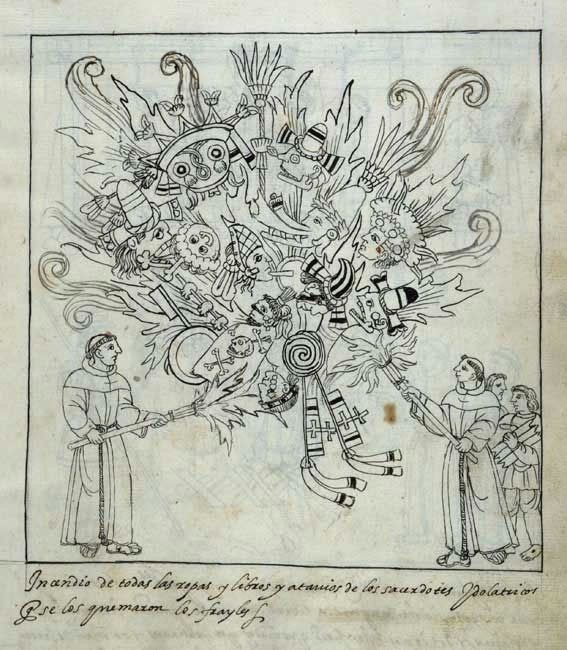 Image 4 of 4
Shining Cities, Falling Stars: A Cultural History of American Apocalypse with Cultural Historian Jason Lahman, Begins July 12
Six Week Class Taught Online Via Zoom
Sundays, July 12 - August 16, 2026
2:00 - 4:00pm ET (NYC Time)
$150 Paid Patreon Members / $175 General Admission
PLEASE NOTE: Classes will be recorded and archived for students who cannot make that time
From conquistadors seeking the Seven Cities of Gold to Cold War visions of nuclear annihilation and evangelical prophecies of the Rapture, American history has been shaped by the conviction that one world is ending and another is about to begin. Apocalypse, in its original sense, means revelation — the unveiling of hidden truths and the violent transition between ages. In the Americas, conquest, religious migration, revivalism, war, racial upheaval, and geopolitical fear have repeatedly been interpreted through this lens of catastrophic renewal.
This six-week course traces the persistent role of apocalyptic imagination in shaping American identity from the sixteenth century to the present. Spanish millenarian Catholicism, Puritan covenant theology, the visionary revelations of Joseph Smith, the prophetic fervor of the Millerites, Civil War sermons framing the conflict in providential terms, Cold War nuclear dread, and modern evangelical eschatology all reveal a culture repeatedly convinced it stands at the threshold of history’s final transformation.
Through richly illustrated lectures drawing on colonial chronicles, sermons, prophetic texts, political rhetoric, popular media, and visual culture — from mission iconography and Puritan woodcuts to Civil War photography, Cold War civil defense films, and contemporary prophecy media — we will examine apocalypse not as fantasy, but as a powerful framework for understanding crisis, purification, and the birth of new worlds.
Week 1 — The Spanish Utopia & the Conquest
Spanish explorers and missionaries arrived in the Americas animated by crusading zeal, medieval eschatology, and legends such as El Dorado and the Seven Cities of Cíbola. Franciscans and Dominicans framed conversion as the purification of a demonic age, while Indigenous temples were destroyed and sacred objects burned. Drawing on missionary chronicles and the writings of Bartolomé de las Casas, this session explores conquest as apocalyptic revelation: the destruction of one sacred cosmos and the imposition of a Christian universal order.
Week 2 — The Dissenters & the New Jerusalem
Seventeenth-century Puritans, shaped by Reformation theology and English Civil War upheaval, imagined themselves as a chosen people escaping a corrupt Babylon. John Winthrop’s “City upon a Hill,” Increase and Cotton Mather’s providential histories, and jeremiad sermons interpreting war, epidemic disease, and moral decline as divine warnings reveal a society convinced it stood in covenant with God. We examine how apocalyptic expectation structured early New England’s moral psychology and communal discipline.
Week 3 — Golden Plates, Table-Tapping & the Rise of New American Cults
The Second Great Awakening produced an explosion of prophetic movements and visionary authority. Joseph Smith’s angelic revelations and the founding of The Church of Jesus Christ of Latter-day Saints promised the restoration of the primordial church in America. William Miller’s millennial predictions mobilized thousands awaiting Christ’s return in 1844, while the Fox sisters’ spirit communications helped ignite the Spiritualist movement. This week examines how democratized revelation fostered apocalyptic expectation in a rapidly modernizing republic.
Week 4 — Manifest Destiny, Reconstruction & the Apocalypse of Race
Nineteenth-century expansionist ideology cast the United States as a providential nation destined to span the continent. The Mexican-American War, the Trail of Tears, and the rhetoric of Manifest Destiny framed Indigenous displacement as historical inevitability. During the Civil War, many Northern clergy interpreted the conflict as divine judgment on the national sin of slavery, while Southern ministers defended slavery as biblically sanctioned and framed the war as a providential trial rather than a moral indictment. Reconstruction promised rebirth, yet the rise of Redemption politics and white supremacist violence revealed competing visions of the nation’s post-apocalyptic future.
Week 5 — Red Scares & Anti-American Paranoia
The Bolshevik Revolution, the Palmer Raids, and McCarthy-era investigations fostered fears of ideological subversion and internal collapse. Apocalyptic anxiety intensified with Hiroshima, duck-and-cover drills, fallout shelters, and civil defense propaganda imagining nuclear annihilation as an ever-present possibility. Science fiction films, survival manuals, and Cold War rhetoric reframed the end of the world as instantaneous, technological, and potentially self-inflicted.
Week 6 — Evangelical Apocalypse & the New World Order
Twentieth-century dispensationalist theology popularized prophetic timelines linking biblical scripture to modern geopolitics. Hal Lindsey’s The Late Great Planet Earth interpreted the Cold War and Middle East conflicts as signs of the End Times, while the Left Behind series dramatized the Rapture and Tribulation for mass audiences. Fears surrounding global governance, microchip surveillance, and international institutions were read into prophetic texts, demonstrating how apocalyptic expectation continues to shape political imagination and cultural anxiety.
Jason Lahman is an artist and cultural historian of science, technology and the occult.
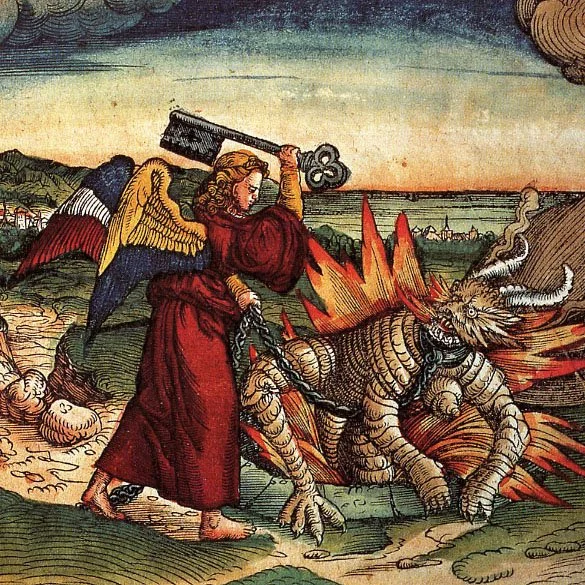
Images: Revelation 20:18 Key of the bottomless pit, 1st edition, from the Luther Bible, ca. 1530 (colored woodcut); Millerite map of Book of Daniel and the dispensations of time, ca. 1850's; Moroni Appears to Joseph Smith in His Room, ca. 1977, Tom Lovell; Burning of the Idols from Description of the City and Province of Tlaxcala, ca. 1500’s, Diego Muñoz Camargo.
Six Week Class Taught Online Via Zoom
Sundays, July 12 - August 16, 2026
2:00 - 4:00pm ET (NYC Time)
$150 Paid Patreon Members / $175 General Admission
PLEASE NOTE: Classes will be recorded and archived for students who cannot make that time
From conquistadors seeking the Seven Cities of Gold to Cold War visions of nuclear annihilation and evangelical prophecies of the Rapture, American history has been shaped by the conviction that one world is ending and another is about to begin. Apocalypse, in its original sense, means revelation — the unveiling of hidden truths and the violent transition between ages. In the Americas, conquest, religious migration, revivalism, war, racial upheaval, and geopolitical fear have repeatedly been interpreted through this lens of catastrophic renewal.
This six-week course traces the persistent role of apocalyptic imagination in shaping American identity from the sixteenth century to the present. Spanish millenarian Catholicism, Puritan covenant theology, the visionary revelations of Joseph Smith, the prophetic fervor of the Millerites, Civil War sermons framing the conflict in providential terms, Cold War nuclear dread, and modern evangelical eschatology all reveal a culture repeatedly convinced it stands at the threshold of history’s final transformation.
Through richly illustrated lectures drawing on colonial chronicles, sermons, prophetic texts, political rhetoric, popular media, and visual culture — from mission iconography and Puritan woodcuts to Civil War photography, Cold War civil defense films, and contemporary prophecy media — we will examine apocalypse not as fantasy, but as a powerful framework for understanding crisis, purification, and the birth of new worlds.
Week 1 — The Spanish Utopia & the Conquest
Spanish explorers and missionaries arrived in the Americas animated by crusading zeal, medieval eschatology, and legends such as El Dorado and the Seven Cities of Cíbola. Franciscans and Dominicans framed conversion as the purification of a demonic age, while Indigenous temples were destroyed and sacred objects burned. Drawing on missionary chronicles and the writings of Bartolomé de las Casas, this session explores conquest as apocalyptic revelation: the destruction of one sacred cosmos and the imposition of a Christian universal order.
Week 2 — The Dissenters & the New Jerusalem
Seventeenth-century Puritans, shaped by Reformation theology and English Civil War upheaval, imagined themselves as a chosen people escaping a corrupt Babylon. John Winthrop’s “City upon a Hill,” Increase and Cotton Mather’s providential histories, and jeremiad sermons interpreting war, epidemic disease, and moral decline as divine warnings reveal a society convinced it stood in covenant with God. We examine how apocalyptic expectation structured early New England’s moral psychology and communal discipline.
Week 3 — Golden Plates, Table-Tapping & the Rise of New American Cults
The Second Great Awakening produced an explosion of prophetic movements and visionary authority. Joseph Smith’s angelic revelations and the founding of The Church of Jesus Christ of Latter-day Saints promised the restoration of the primordial church in America. William Miller’s millennial predictions mobilized thousands awaiting Christ’s return in 1844, while the Fox sisters’ spirit communications helped ignite the Spiritualist movement. This week examines how democratized revelation fostered apocalyptic expectation in a rapidly modernizing republic.
Week 4 — Manifest Destiny, Reconstruction & the Apocalypse of Race
Nineteenth-century expansionist ideology cast the United States as a providential nation destined to span the continent. The Mexican-American War, the Trail of Tears, and the rhetoric of Manifest Destiny framed Indigenous displacement as historical inevitability. During the Civil War, many Northern clergy interpreted the conflict as divine judgment on the national sin of slavery, while Southern ministers defended slavery as biblically sanctioned and framed the war as a providential trial rather than a moral indictment. Reconstruction promised rebirth, yet the rise of Redemption politics and white supremacist violence revealed competing visions of the nation’s post-apocalyptic future.
Week 5 — Red Scares & Anti-American Paranoia
The Bolshevik Revolution, the Palmer Raids, and McCarthy-era investigations fostered fears of ideological subversion and internal collapse. Apocalyptic anxiety intensified with Hiroshima, duck-and-cover drills, fallout shelters, and civil defense propaganda imagining nuclear annihilation as an ever-present possibility. Science fiction films, survival manuals, and Cold War rhetoric reframed the end of the world as instantaneous, technological, and potentially self-inflicted.
Week 6 — Evangelical Apocalypse & the New World Order
Twentieth-century dispensationalist theology popularized prophetic timelines linking biblical scripture to modern geopolitics. Hal Lindsey’s The Late Great Planet Earth interpreted the Cold War and Middle East conflicts as signs of the End Times, while the Left Behind series dramatized the Rapture and Tribulation for mass audiences. Fears surrounding global governance, microchip surveillance, and international institutions were read into prophetic texts, demonstrating how apocalyptic expectation continues to shape political imagination and cultural anxiety.
Jason Lahman is an artist and cultural historian of science, technology and the occult.
Images: Revelation 20:18 Key of the bottomless pit, 1st edition, from the Luther Bible, ca. 1530 (colored woodcut); Millerite map of Book of Daniel and the dispensations of time, ca. 1850's; Moroni Appears to Joseph Smith in His Room, ca. 1977, Tom Lovell; Burning of the Idols from Description of the City and Province of Tlaxcala, ca. 1500’s, Diego Muñoz Camargo.