
 Image 1 of 1
Online Talk · Performing Hysteria: Portraits of Hysteric Patients and Their Impact on Female Representation with Lucy Bink
7pm ET (NYC time)
DATE TDB, 2026
PLEASE NOTE: A link to a recording of this talk will be sent out to ticket holders after its conclusion. It will also be archived for our Patreon members. Become a Member HERE.
Ticketholders: A Zoom invite is sent out two hours before the event to the email used at checkout. Please check your spam folder and if not received, email hello@morbidanayomy.org. A temporary streaming link will be emailed after the event concludes.
Hysteria was once the only mental disorder exclusively attributed to women. According to feminist theory, it functioned as a tool to control women’s health, behavior, and expression. Though no longer a medical diagnosis, the label “hysteric” still lingers, often used to describe women who defy patriarchal norms.
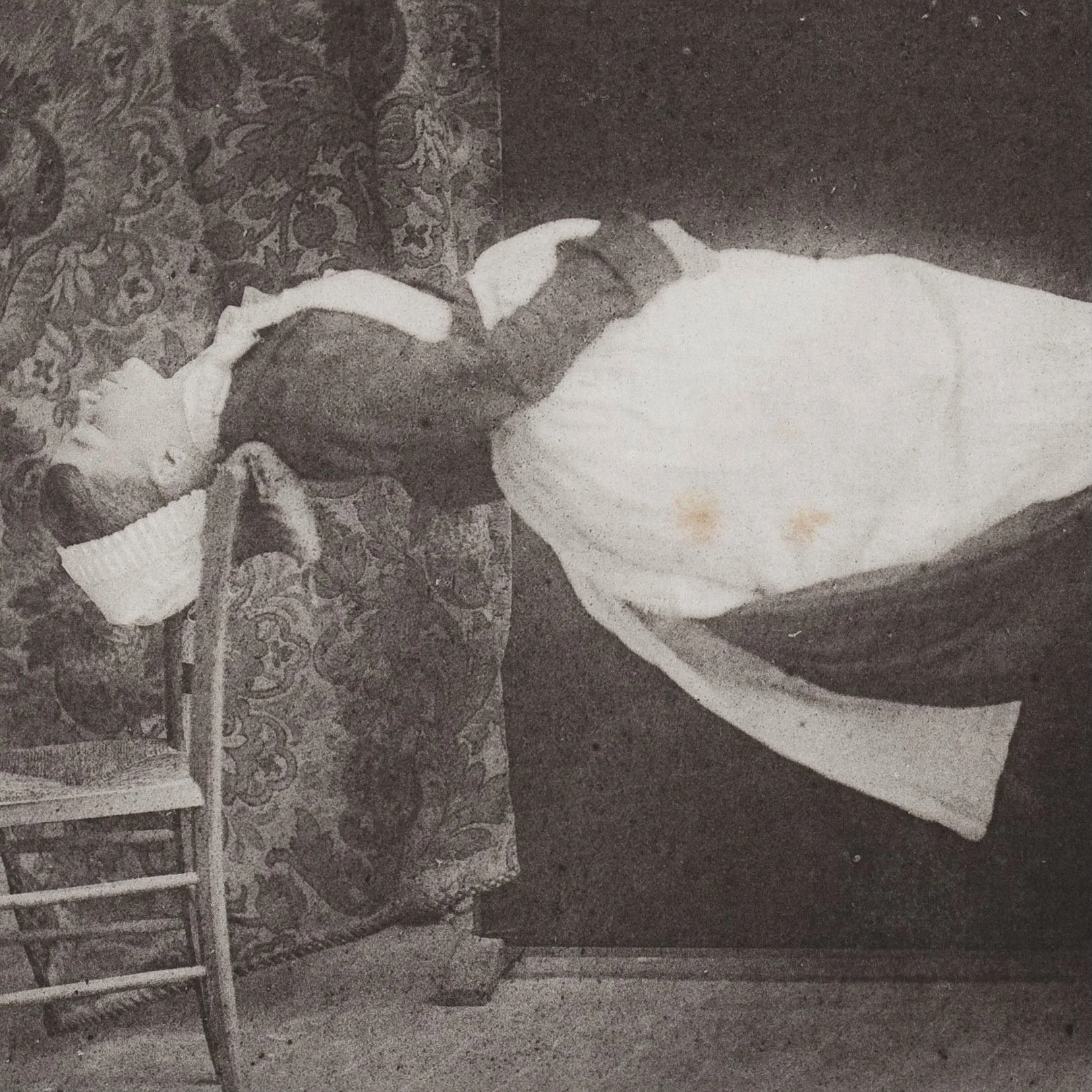
By the hand of her paper ‘Performing Hysteria: Psychiatric portraits of hysteric patients and their impact on female representation’, Lucy Bink will discuss portraits of women diagnosed with hysteria. There will be a specific focus on portraits taken between 1876 and 1880 at Salpêtrière Hospital in Paris, when the then neurological disorder was medicalised under the direction of Jean-Martin Charcot. Through the portraits, Lucy will critically reflect on the negative repercussions of the treatment of that time and the influence the portraits had on Western representations of femininity. What did it mean to be classified as hysteric? And what was the role of photography in this?
The lecture will question how the label of the “hysteric” can be reclaimed. In this, Lucy Bink will exemplify the performance of women in (post-)punk, who reclaim rage as a form of protest. Where hysteria once signified deviance, anger, and performance now emerge as creative and political forces. Exemplifying bands such as Amyl and the Sniffers and Babes in Toyland, Lucy will take you along her journey of connecting the 19th-century portraits to our current visual culture.
Lucy Bink (2001) is a research-based and feminist artist who investigates themes of gender, power, and history. Focusing on female representation in visual culture and historical narratives, she challenges patriarchal perspectives on topics such as menstruation, hysteria, menopause, and anger. By revisiting these subjects, she aims to show how they have been misunderstood, silenced, or pathologized.
Lucy works with photography, text, textiles, archival research, and photographed performance, blending reflective and intuitive methods. She uses photography to create an interplay between vulnerability and resilience, combining strong textures and dark colors with clinical elements. Her images often involve strong body language, symbolic meaning, and heavy contrast. Through photography, she investigates how acts of looking and being looked at shape identity and agency.
Empathy is central to her creative process, guiding the exploration of personal and collective histories. Using a multifaceted research approach, she engages with academic, literary, and visual sources alongside conversations, observations, and personal experiences. This approach helps her to weave together knowledge and emotion, analyzing how the personal intersects with the political.
7pm ET (NYC time)
DATE TDB, 2026
PLEASE NOTE: A link to a recording of this talk will be sent out to ticket holders after its conclusion. It will also be archived for our Patreon members. Become a Member HERE.
Ticketholders: A Zoom invite is sent out two hours before the event to the email used at checkout. Please check your spam folder and if not received, email hello@morbidanayomy.org. A temporary streaming link will be emailed after the event concludes.
Hysteria was once the only mental disorder exclusively attributed to women. According to feminist theory, it functioned as a tool to control women’s health, behavior, and expression. Though no longer a medical diagnosis, the label “hysteric” still lingers, often used to describe women who defy patriarchal norms.
By the hand of her paper ‘Performing Hysteria: Psychiatric portraits of hysteric patients and their impact on female representation’, Lucy Bink will discuss portraits of women diagnosed with hysteria. There will be a specific focus on portraits taken between 1876 and 1880 at Salpêtrière Hospital in Paris, when the then neurological disorder was medicalised under the direction of Jean-Martin Charcot. Through the portraits, Lucy will critically reflect on the negative repercussions of the treatment of that time and the influence the portraits had on Western representations of femininity. What did it mean to be classified as hysteric? And what was the role of photography in this?
The lecture will question how the label of the “hysteric” can be reclaimed. In this, Lucy Bink will exemplify the performance of women in (post-)punk, who reclaim rage as a form of protest. Where hysteria once signified deviance, anger, and performance now emerge as creative and political forces. Exemplifying bands such as Amyl and the Sniffers and Babes in Toyland, Lucy will take you along her journey of connecting the 19th-century portraits to our current visual culture.
Lucy Bink (2001) is a research-based and feminist artist who investigates themes of gender, power, and history. Focusing on female representation in visual culture and historical narratives, she challenges patriarchal perspectives on topics such as menstruation, hysteria, menopause, and anger. By revisiting these subjects, she aims to show how they have been misunderstood, silenced, or pathologized.
Lucy works with photography, text, textiles, archival research, and photographed performance, blending reflective and intuitive methods. She uses photography to create an interplay between vulnerability and resilience, combining strong textures and dark colors with clinical elements. Her images often involve strong body language, symbolic meaning, and heavy contrast. Through photography, she investigates how acts of looking and being looked at shape identity and agency.
Empathy is central to her creative process, guiding the exploration of personal and collective histories. Using a multifaceted research approach, she engages with academic, literary, and visual sources alongside conversations, observations, and personal experiences. This approach helps her to weave together knowledge and emotion, analyzing how the personal intersects with the political.