
 Image 1 of 1
DATE TBD 2026
7pm ET (NYC time)
Free! RSVP with email at checkout
PLEASE NOTE: Video playback of free events is only available to Patreon members. Become a Member HERE.
Ticketholders: A Zoom invite is sent out two hours before the event to the email used at checkout. Please check your spam folder and if not received, email hello@morbidanatomy.org.
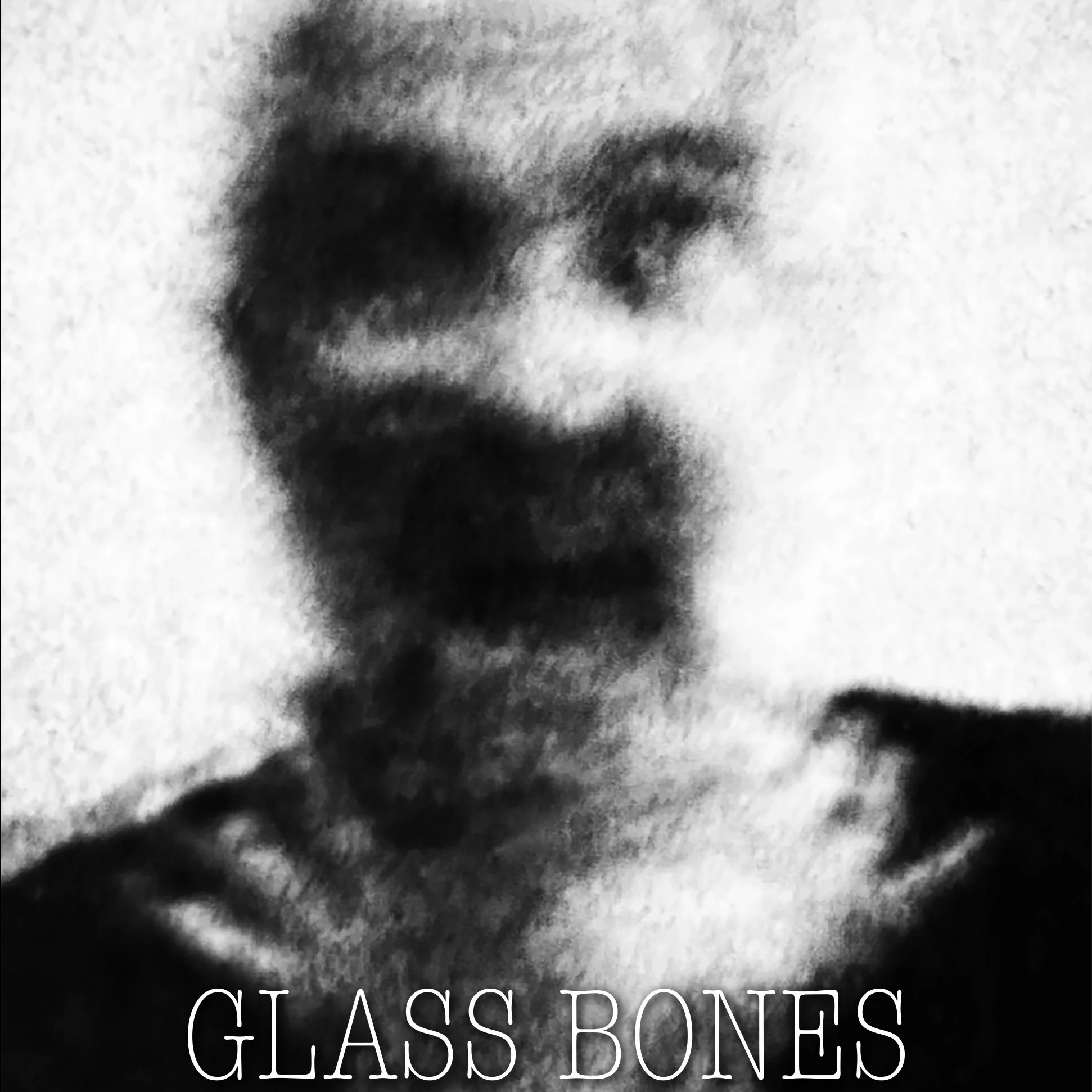
Glass Bones is an interdisciplinary exploration of mortality awareness, rupture, creativity, and the fragile structures humans build to live with the knowledge of death. Drawing from Ernest Becker, Terror Management Theory, existential philosophy, and decades of studio practice using 19th-century photographic processes, visual artist and doctoral researcher Quinn Jacobson examines how creative work can function as a site of metabolization rather than defense.
Moving between psychology, philosophy, photography, painting, and memoir, the lecture explores the idea that art is not merely expressive but epistemological: a way of knowing that emerges when inherited structures of meaning begin to fracture. Wet collodion plates, tintypes, mixed media paintings, and material processes become both metaphor and method for examining the instability of consciousness, memory, identity, and culture itself.
At the center of the inquiry is the metaphor of “glass bones:" the paradox of being conscious and mortal at the same time. Fragile creatures living inside fragile stories, trying to create meaning despite the knowledge that everything breaks. Rather than offering solutions or transcendence, Glass Bones asks what becomes possible when we remain near rupture long enough for new forms of meaning to emerge.
Quinn Jacobson is a visual artist, writer, and doctoral researcher whose work explores the intersection of creativity, mortality, and meaning-making. Working across photography, painting, mixed media, and critical theory, he investigates how artists confront death anxiety, rupture, and existential uncertainty through creative practice.
For more than three decades, Jacobson has worked extensively with 19th-century photographic processes including wet collodion, tintype, ambrotype, and palladium printing. His artwork and research draw from Ernest Becker, Terror Management Theory, existential philosophy, and arts-based inquiry to examine the fragile psychological and cultural structures humans build in response to mortality awareness.
He is currently pursuing a PhD in Visionary Practice and Regenerative Leadership at Southwestern College in Santa Fe, New Mexico. His recent book, Glass Bones, combines philosophy, psychology, memoir, and visual art into an exploration of rupture, fragility, and the role of creative practice in metabolizing existential anxiety. Jacobson’s work has been exhibited internationally in the United States, Europe, and China.
DATE TBD 2026
7pm ET (NYC time)
Free! RSVP with email at checkout
PLEASE NOTE: Video playback of free events is only available to Patreon members. Become a Member HERE.
Ticketholders: A Zoom invite is sent out two hours before the event to the email used at checkout. Please check your spam folder and if not received, email hello@morbidanatomy.org.
Glass Bones is an interdisciplinary exploration of mortality awareness, rupture, creativity, and the fragile structures humans build to live with the knowledge of death. Drawing from Ernest Becker, Terror Management Theory, existential philosophy, and decades of studio practice using 19th-century photographic processes, visual artist and doctoral researcher Quinn Jacobson examines how creative work can function as a site of metabolization rather than defense.
Moving between psychology, philosophy, photography, painting, and memoir, the lecture explores the idea that art is not merely expressive but epistemological: a way of knowing that emerges when inherited structures of meaning begin to fracture. Wet collodion plates, tintypes, mixed media paintings, and material processes become both metaphor and method for examining the instability of consciousness, memory, identity, and culture itself.
At the center of the inquiry is the metaphor of “glass bones:" the paradox of being conscious and mortal at the same time. Fragile creatures living inside fragile stories, trying to create meaning despite the knowledge that everything breaks. Rather than offering solutions or transcendence, Glass Bones asks what becomes possible when we remain near rupture long enough for new forms of meaning to emerge.
Quinn Jacobson is a visual artist, writer, and doctoral researcher whose work explores the intersection of creativity, mortality, and meaning-making. Working across photography, painting, mixed media, and critical theory, he investigates how artists confront death anxiety, rupture, and existential uncertainty through creative practice.
For more than three decades, Jacobson has worked extensively with 19th-century photographic processes including wet collodion, tintype, ambrotype, and palladium printing. His artwork and research draw from Ernest Becker, Terror Management Theory, existential philosophy, and arts-based inquiry to examine the fragile psychological and cultural structures humans build in response to mortality awareness.
He is currently pursuing a PhD in Visionary Practice and Regenerative Leadership at Southwestern College in Santa Fe, New Mexico. His recent book, Glass Bones, combines philosophy, psychology, memoir, and visual art into an exploration of rupture, fragility, and the role of creative practice in metabolizing existential anxiety. Jacobson’s work has been exhibited internationally in the United States, Europe, and China.