Four Week Class Taught Online Via Zoom
Sundays, May 16 - June 6, 2027
3:00 - 5:00pm ET (NYC Time)
$145 Paid Patreon Members / $155 General Admission
PLEASE NOTE: Classes will be recorded and archived for students who cannot make that time
The Minoans of Bronze Age Crete created one of the most visually mesmerizing artistic traditions of the ancient world. Their works are filled with movement, colour, elegance, sensuality, freedom, and an extraordinary intimacy with nature. Octopuses dance across jars, lilies bloom on palace walls, dolphins swim across the palatial walls, and tiny gold rings reveal intricate and mysterious masterpieces of astonishing delicacy and deep meaning.
This course will explore the extraordinary creativity of Minoan artists and artisans through pottery, fresco painting, textiles, jewelry, sculpture, stone carving, seals, and luxury crafts. Along the way, we will discover the sophisticated techniques that made these works possible, the symbolism woven into their designs, and the artistic achievements that continue to astonish and inspire more than three thousand years later.
The visual record of Minoan art will be examined for both its aesthetic and technical qualities and for what it can reveal about the people who created it. We will explore how gender is represented in Minoan art, from the prominent public and ceremonial roles of women, adorned in richly patterned garments, to men portrayed as athletes, craftsmen, sailors, fishermen, musicians, and participants in ritual life. We will also examine intriguing figures whose appearance and social roles do not fit neatly into binary categories, opening a conversation about gender diversity in the Bronze Age.
Together, these images reveal a civilization whose artistic language celebrated vitality, beauty, mystery, togetherness, and humanity's intimate belonging with the natural world.
Unlike many contemporary civilizations, Minoan artists did not celebrate war or violence. Instead, their art invites us into a sensual and vibrant world animated by ritual, craftsmanship, the sea, festivals, and the rhythms of everyday life. Every object, from a humble drinking cup for communal gatherings to an exquisitely carved sealstone, reflects a remarkable attention to proportion, innovation, and both aesthetic and technical excellence.
Accompanied by an exceptional collection of photographs, archaeological discoveries, and visual reconstructions gathered over many years of research, this course offers an immersive journey through one of Europe's greatest artistic traditions.
Class 1: Introduction: The Minoans speak to us
Class 2: Clay and Fire: The Art of Minoan Pottery
The evolution of Minoan ceramics
Early wares and palace pottery
Kamares Ware and its psychedelic designs
Marine Style pottery and oceanic wornders
Everyday vessels, feasting ware, storage jars, and ceremonial ceramics
Class 3: Woven Wonders: Jewelry, Textiles, and Personal Adornment
Goldsmithing and precious materials
The Bee Pendant and other masterpieces
Textile production and weaving technologie
Pigments and dyes
Seals and engraved gemstones
Class 4: Thera: Between Atlantis and Pompeii
Akrotiri and its preservation following the volcanic eruption
The Saffron Goddess fresco and female initiation rituals
The Blue Monkeys, the Spring Fresco, the Flotilla Procession, and other masterpieces
Chiara Baldini is a scholar, author, and speaker whose work sits at the intersection of psychedelic studies, feminist thought, ancient history, and contemporary counterculture. Her research began with an inquiry into the resonance between contemporary experiences of collective altered states of consciousness, particularly within psychedelic festival culture, and the mystery traditions of ancient Greece and Rome. Following this question backward through history led her to investigate the pre-patriarchal heritage of the lands that would become Europe, investigating gender, power, and social organization in Neolithic Europe and Minoan Crete.
She is a PhD student at the California Institute of Integral Studies. She is from Florence (Italy) but is based in Portugal.
Images: Silver Necklace, c. 1500 BCE, Aegean (Minoan), Cleveland Museum of Art, Cleveland, Ohio (Accession No. 1914.860); Fresco of the Seated Adorant (Detail of the Wounded Woman), c. 1600 BCE, Minoan wall painting from Akrotiri (Xeste 3), Museum of Prehistoric Thera, Fira, Santorini; Sir Arthur Evans, Drawing of a polychrome pot from a tomb at Isopata near Knossos, c. early 20th century, watercolor and ink on paper, Ashmolean Museum, University of Oxford, Oxford (Sir Arthur Evans Archive); The Spring Fresco, c. 1650–1600 BCE, Minoan wall painting from Akrotiri (Delta Complex, Room D2), National Archaeological Museum, Athens.

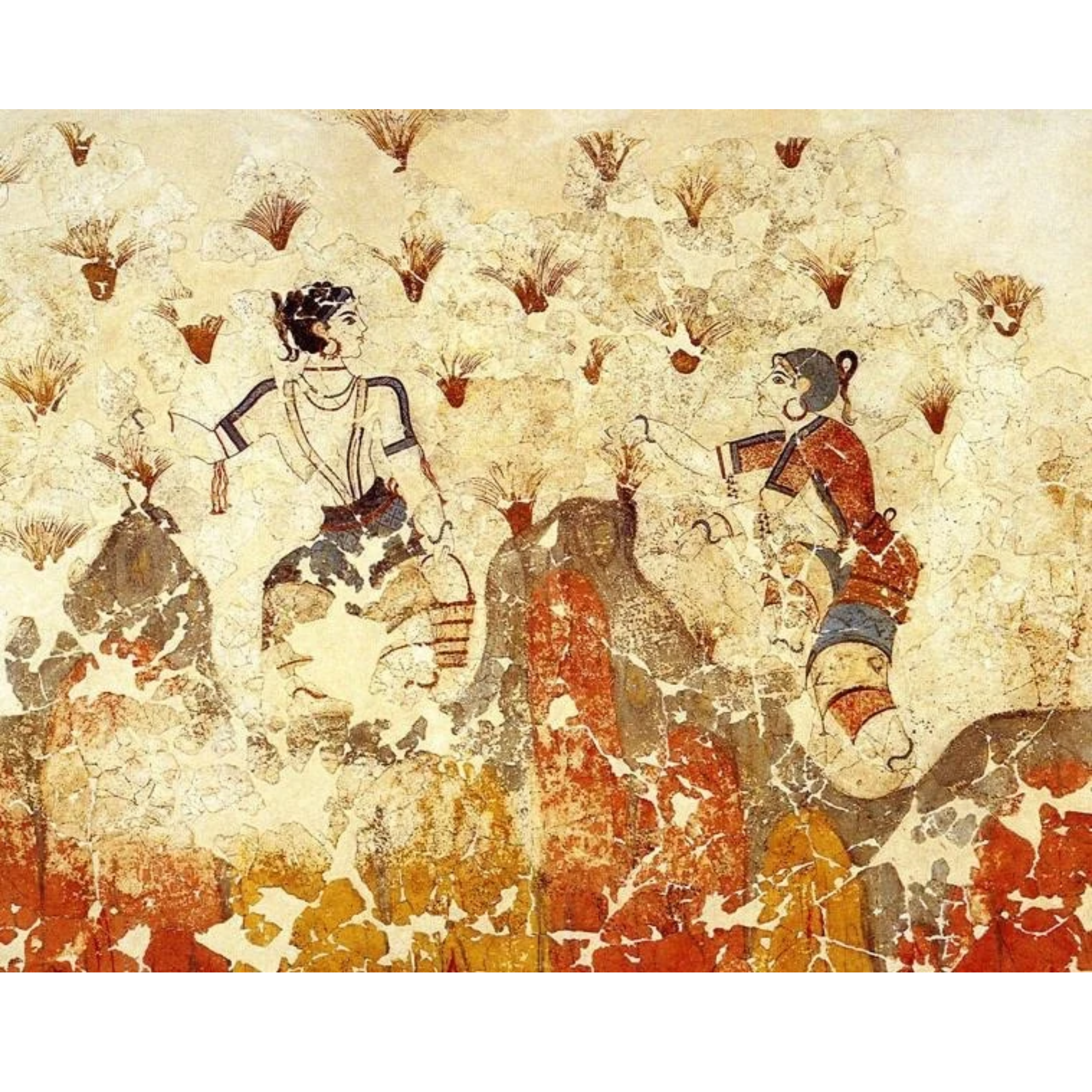 Image 1 of 6
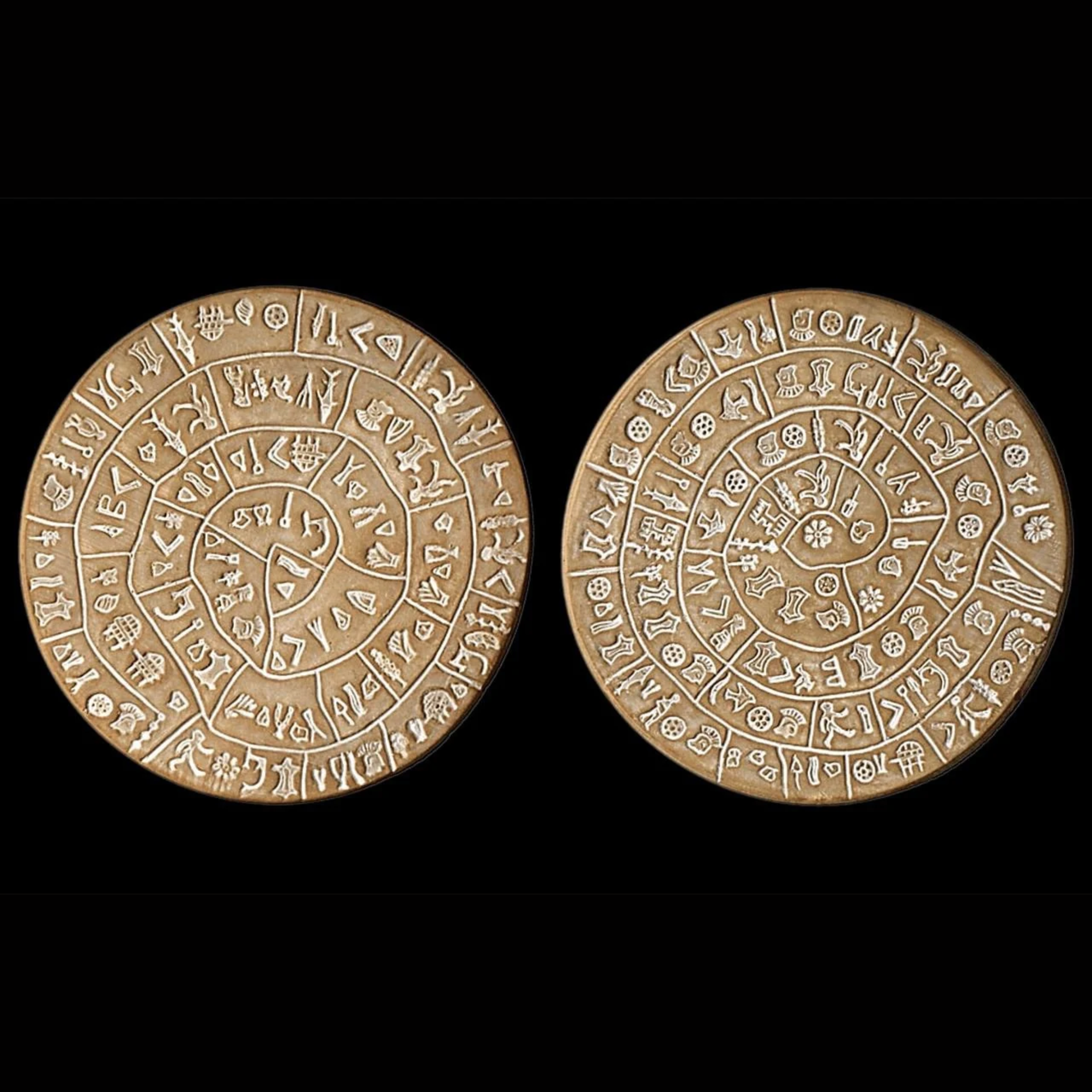 Image 2 of 6
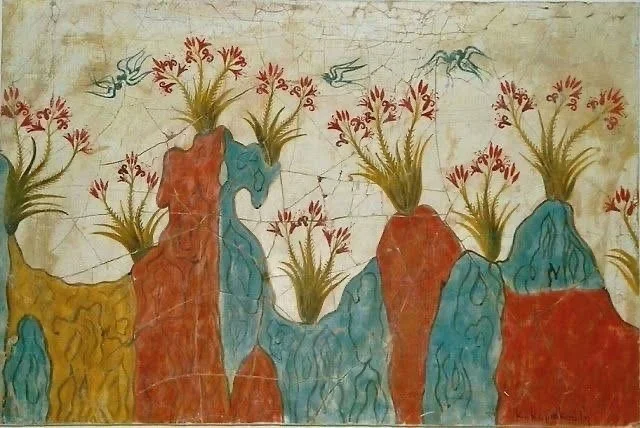 Image 3 of 6
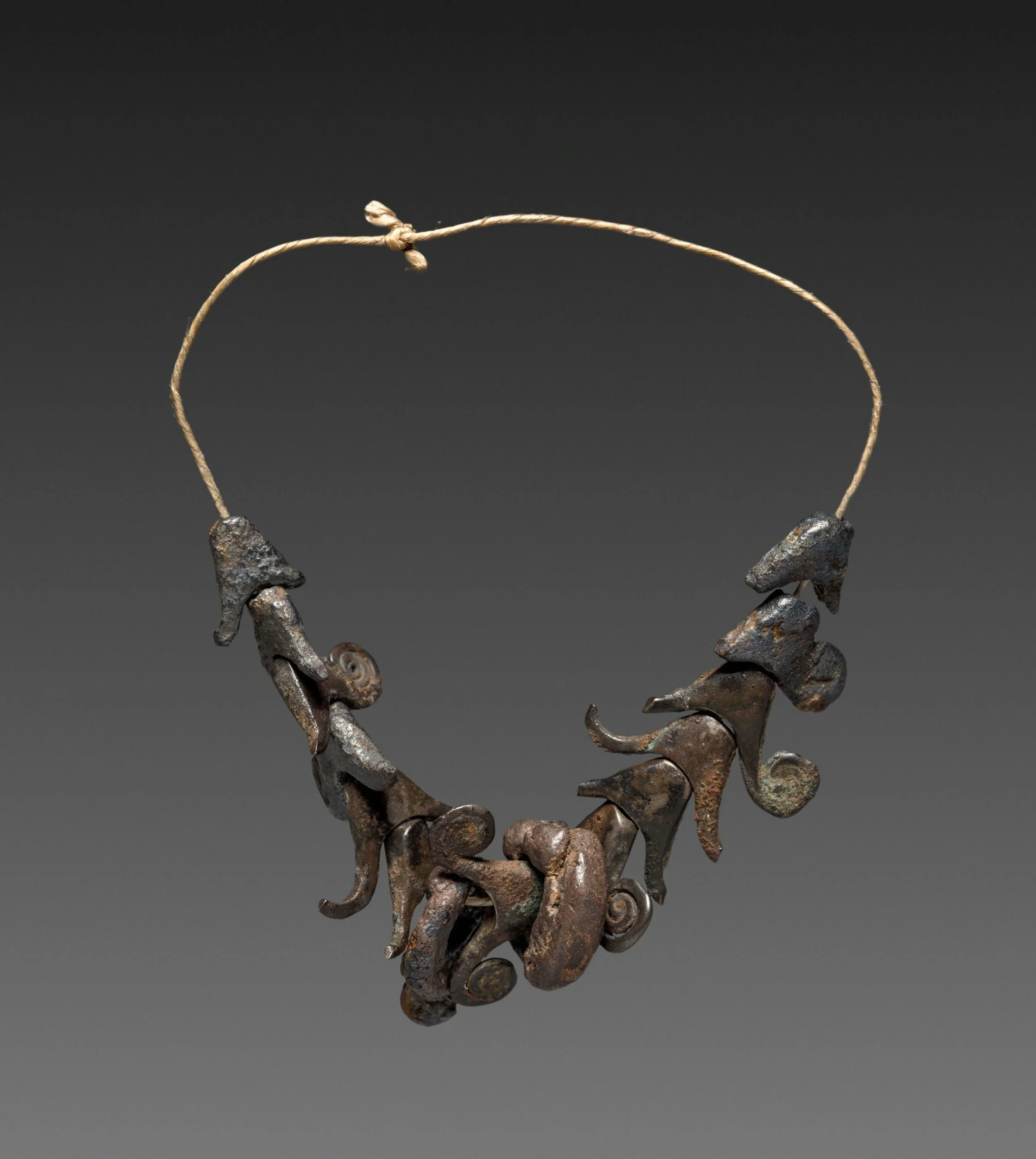 Image 4 of 6
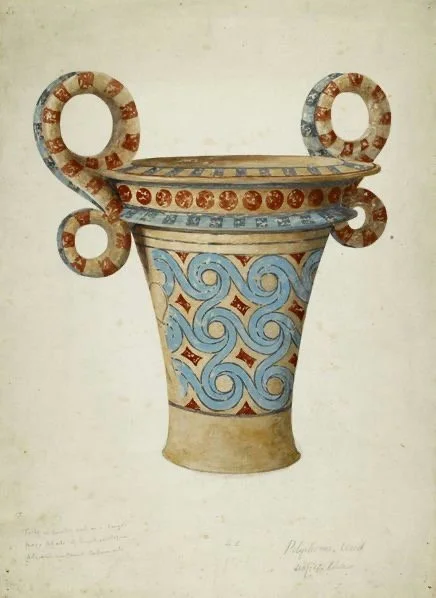 Image 5 of 6
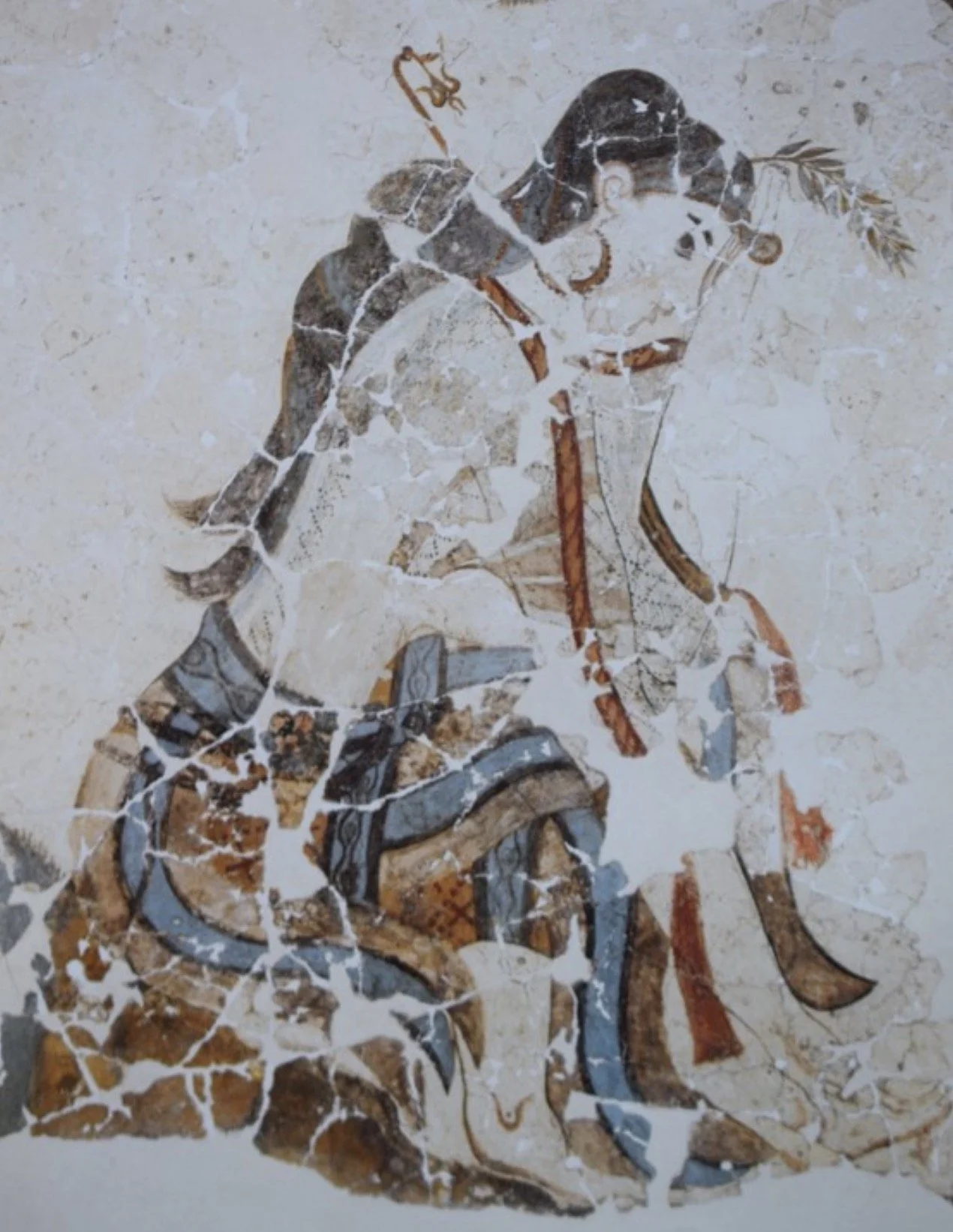 Image 6 of 6