
 Image 1 of 1
Online Talk · Vanishing Wonders: Sideshows, Sex Museums, and Tokyo's New Museum of "Bad Art" with Japanese Sideshow Performer and Butoh Dancer Shuhei Okawara
Monday, April 12, 2027
7pm ET (NYC time)
PLEASE NOTE: A link to a recording of this talk will be sent out to ticket holders after its conclusion. It will also be archived for our Patreon members. Become a Member HERE.
Ticketholders: A Zoom invite is sent out two hours before the event to the email used at checkout. Please check your spam folder and if not received, email hello@morbidanayomy.org. A temporary streaming link will be emailed after the event concludes.
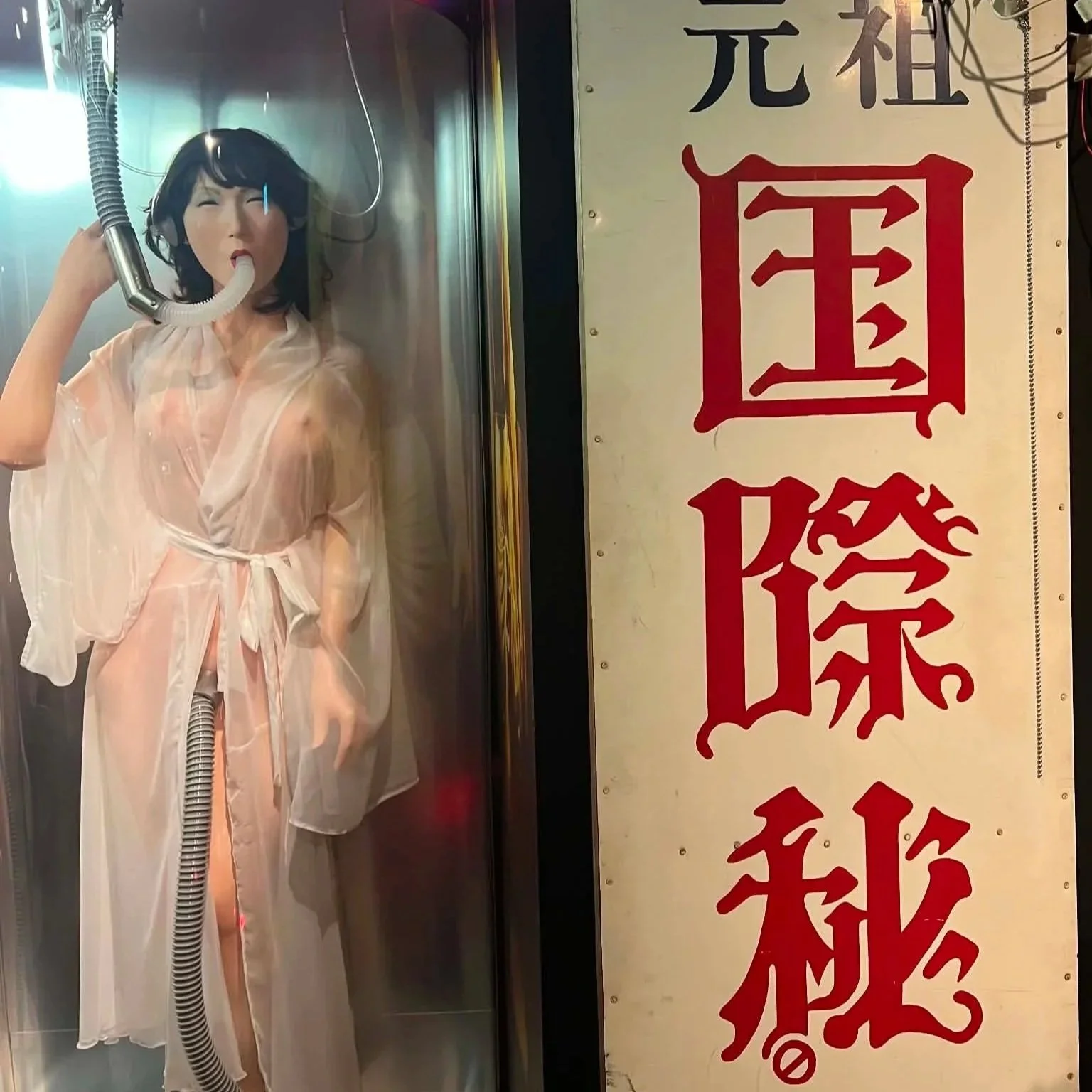
In Japan, a strange and glorious tradition is quietly disappearing. For centuries, the misemono — traveling sideshow tents — drew crowds with hand-painted banners promising snake-women, living mermaids, and feats both grotesque and sublime. Alongside them stood the hihōkan: roadside "secret treasure museums," gloriously eccentric shrines to sex and oddity that once dotted the hot-spring towns of postwar Japan. Both are now nearly gone, their signboards and lovingly absurd dioramas discarded as junk — "bad art," unworthy of a museum.
This talk will provide a guided tour of that vanishing world, led by one of its last living practitioners. Shuhei Okawara is a butoh dancer and sideshow performer, and the only regular performer at the Daido Art Museum — a brand-new institution in Tokyo's Mukojima district, produced by Kyoichi Tsuzuki, the cult chronicler of Japanese subculture. The museum was founded on a radical premise: that the vernacular art everyone else threw away — sideshow banners, hihōkan curios, the anonymous handiwork of ordinary people — deserves to be seen, studied, and loved.
Okawara will trace the history of misemono and hihōkan culture, walk us through the museum's extraordinary collection, and share what it feels like to perform inside it: the voice of the barker, the body of the dancer, and the strange intimacy between performer and crowd that these forms depend on. Along the way he makes the case for "bad art" — the overlooked, the tasteless, the sincere — as one of the most honest records we have of how people actually live, dream, and die.
Expect painted beasts that never existed, photographs of sex museums frozen in time, and a first-hand account of keeping a dying art alive — a rare English-language window into a corner of Japanese culture almost no outsider has ever seen.
Shuhei Okawara is a butoh dancer, sideshow performer, mask maker, and art dealer based in Tokyo. He began training at seventeen under the butoh master Shoichi Fukushi and has performed in the misemono (sideshow) tradition ever since. He is the only regular performer at the Daido Art Museum in Mukojima, Tokyo — a new museum of Japanese vernacular and "bad" art produced by the subculture chronicler Kyoichi Tsuzuki.
His projects move between the theatrical and the unsettling. Ano Kao ("That Face"), a mask work, is held in the collection of the MAK — Museum of Applied Arts in Vienna, with another owned by the musician The Weeknd. Other works include Skin Share and durational performance pieces exploring the body, exchange, and endurance. Through his atelier, Kamenya Omote, he makes and sells masks and works with collectors internationally. More at kamenyaomote.com and shuheiookawara.com.
Monday, April 12, 2027
7pm ET (NYC time)
PLEASE NOTE: A link to a recording of this talk will be sent out to ticket holders after its conclusion. It will also be archived for our Patreon members. Become a Member HERE.
Ticketholders: A Zoom invite is sent out two hours before the event to the email used at checkout. Please check your spam folder and if not received, email hello@morbidanayomy.org. A temporary streaming link will be emailed after the event concludes.
In Japan, a strange and glorious tradition is quietly disappearing. For centuries, the misemono — traveling sideshow tents — drew crowds with hand-painted banners promising snake-women, living mermaids, and feats both grotesque and sublime. Alongside them stood the hihōkan: roadside "secret treasure museums," gloriously eccentric shrines to sex and oddity that once dotted the hot-spring towns of postwar Japan. Both are now nearly gone, their signboards and lovingly absurd dioramas discarded as junk — "bad art," unworthy of a museum.
This talk will provide a guided tour of that vanishing world, led by one of its last living practitioners. Shuhei Okawara is a butoh dancer and sideshow performer, and the only regular performer at the Daido Art Museum — a brand-new institution in Tokyo's Mukojima district, produced by Kyoichi Tsuzuki, the cult chronicler of Japanese subculture. The museum was founded on a radical premise: that the vernacular art everyone else threw away — sideshow banners, hihōkan curios, the anonymous handiwork of ordinary people — deserves to be seen, studied, and loved.
Okawara will trace the history of misemono and hihōkan culture, walk us through the museum's extraordinary collection, and share what it feels like to perform inside it: the voice of the barker, the body of the dancer, and the strange intimacy between performer and crowd that these forms depend on. Along the way he makes the case for "bad art" — the overlooked, the tasteless, the sincere — as one of the most honest records we have of how people actually live, dream, and die.
Expect painted beasts that never existed, photographs of sex museums frozen in time, and a first-hand account of keeping a dying art alive — a rare English-language window into a corner of Japanese culture almost no outsider has ever seen.
Shuhei Okawara is a butoh dancer, sideshow performer, mask maker, and art dealer based in Tokyo. He began training at seventeen under the butoh master Shoichi Fukushi and has performed in the misemono (sideshow) tradition ever since. He is the only regular performer at the Daido Art Museum in Mukojima, Tokyo — a new museum of Japanese vernacular and "bad" art produced by the subculture chronicler Kyoichi Tsuzuki.
His projects move between the theatrical and the unsettling. Ano Kao ("That Face"), a mask work, is held in the collection of the MAK — Museum of Applied Arts in Vienna, with another owned by the musician The Weeknd. Other works include Skin Share and durational performance pieces exploring the body, exchange, and endurance. Through his atelier, Kamenya Omote, he makes and sells masks and works with collectors internationally. More at kamenyaomote.com and shuheiookawara.com.