
 Image 1 of 1
7pm ET (NYC time)
Monday, October 5, 2026
PLEASE NOTE: A link to a recording of this talk will be sent out to ticket holders after its conclusion. It will also be archived for our Patreon members. Become a Member HERE.
Ticketholders: A Zoom invite is sent out two hours before the event to the email used at checkout. Please check your spam folder and if not received, email hello@morbidanayomy.org. A temporary streaming link will be emailed after the event concludes.
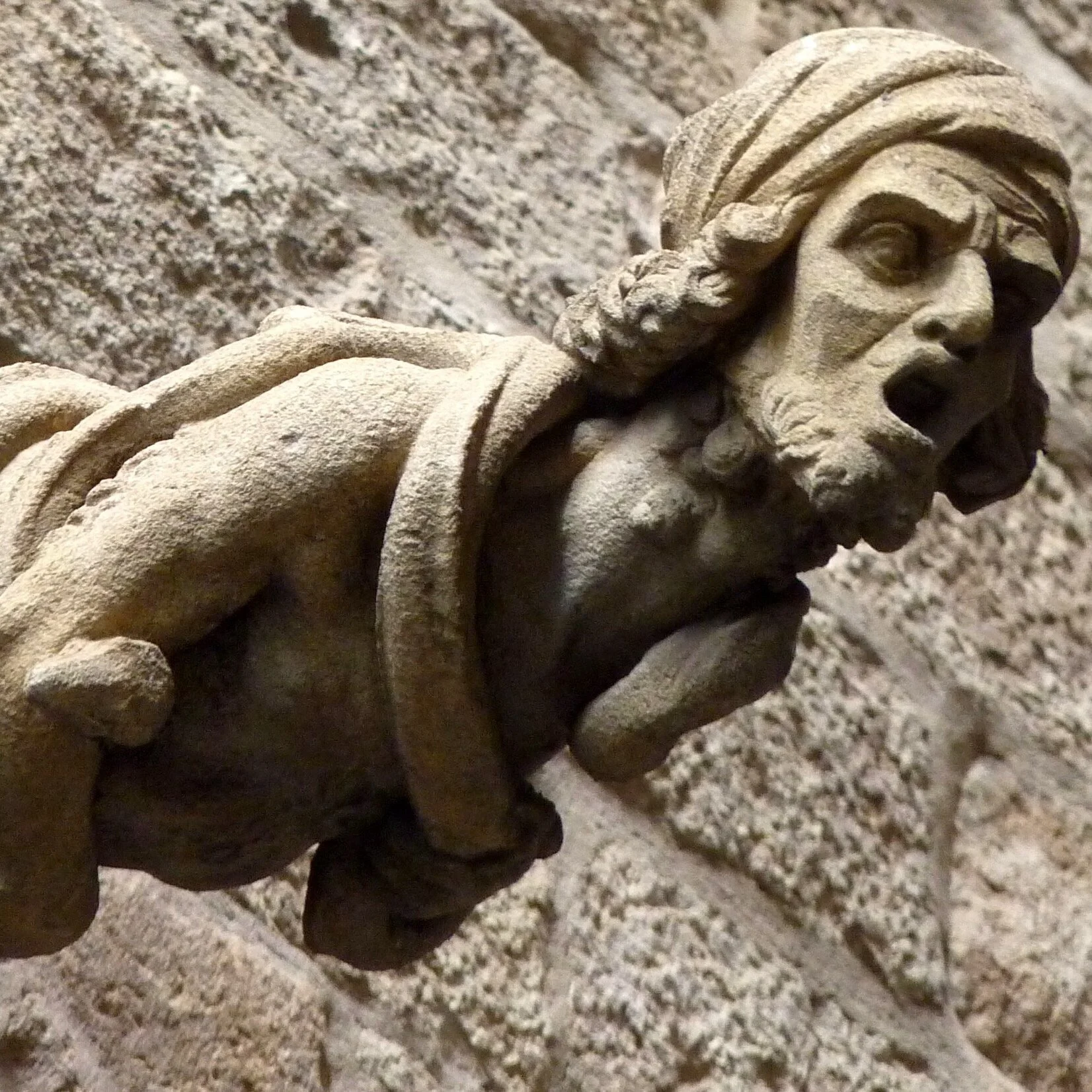
Perched at the edges of buildings, half inside and half outside sacred space, gargoyles and grotesques occupy one of the most unsettling positions in the history of art and architecture. Emerging most visibly in the Gothic cathedrals of medieval Europe, these distorted, hybrid, and often monstrous figures were not merely decorative. True gargoyles served a functional purpose, channeling rainwater away from stone walls, while their purely sculptural relatives—the grotesques—were designed to confront viewers with fear, excess, and bodily instability.
Moving beyond the Middle Ages, the talk will trace the afterlives of the gargoyle and grotesque in modern architecture, including their revival in nineteenth-century restorations and their surprising persistence in twentieth-century skyscrapers such as New York’s Chrysler Building. Across time, these figures reveal a recurring architectural logic: the use of distorted bodies and monstrous forms to guard space, externalize anxiety, and make invisible dangers visible.
Rather than treating gargoyles as medieval curiosities or decorative oddities, this lecture will approache them as serious visual strategies—architectural embodiments of fear, protection, and the unstable boundaries that define human attempts to impose order on the world.
Brenda Edgar is an Art Historian in Louisville, KY. Her research interests include relics and reliquaries, medieval medical manuscripts and depictions of disease in medieval art, as well as the historical role of altered states of consciousness in the creation of art. In addition to her work for Morbid Anatomy, she teaches Art History courses at Indiana University Southeast. Her free monthly public talk series, “Art History Illustrated,” is presented at the Carnegie Center for Art and History in New Albany, Indiana. When she isn’t reading or writing, Brenda is a New York Times Crossword Puzzle addict as well as a yoga instructor.
7pm ET (NYC time)
Monday, October 5, 2026
PLEASE NOTE: A link to a recording of this talk will be sent out to ticket holders after its conclusion. It will also be archived for our Patreon members. Become a Member HERE.
Ticketholders: A Zoom invite is sent out two hours before the event to the email used at checkout. Please check your spam folder and if not received, email hello@morbidanayomy.org. A temporary streaming link will be emailed after the event concludes.
Perched at the edges of buildings, half inside and half outside sacred space, gargoyles and grotesques occupy one of the most unsettling positions in the history of art and architecture. Emerging most visibly in the Gothic cathedrals of medieval Europe, these distorted, hybrid, and often monstrous figures were not merely decorative. True gargoyles served a functional purpose, channeling rainwater away from stone walls, while their purely sculptural relatives—the grotesques—were designed to confront viewers with fear, excess, and bodily instability.
Moving beyond the Middle Ages, the talk will trace the afterlives of the gargoyle and grotesque in modern architecture, including their revival in nineteenth-century restorations and their surprising persistence in twentieth-century skyscrapers such as New York’s Chrysler Building. Across time, these figures reveal a recurring architectural logic: the use of distorted bodies and monstrous forms to guard space, externalize anxiety, and make invisible dangers visible.
Rather than treating gargoyles as medieval curiosities or decorative oddities, this lecture will approache them as serious visual strategies—architectural embodiments of fear, protection, and the unstable boundaries that define human attempts to impose order on the world.
Brenda Edgar is an Art Historian in Louisville, KY. Her research interests include relics and reliquaries, medieval medical manuscripts and depictions of disease in medieval art, as well as the historical role of altered states of consciousness in the creation of art. In addition to her work for Morbid Anatomy, she teaches Art History courses at Indiana University Southeast. Her free monthly public talk series, “Art History Illustrated,” is presented at the Carnegie Center for Art and History in New Albany, Indiana. When she isn’t reading or writing, Brenda is a New York Times Crossword Puzzle addict as well as a yoga instructor.