
 Image 1 of 1
7pm ET (NYC time)
Monday, September 7, 2026
PLEASE NOTE: A link to a recording of this talk will be sent out to ticket holders after its conclusion. It will also be archived for our Patreon members. Become a Member HERE.
Ticketholders: A Zoom invite is sent out two hours before the event to the email used at checkout. Please check your spam folder and if not received, email hello@morbidanayomy.org. A temporary streaming link will be emailed after the event concludes.
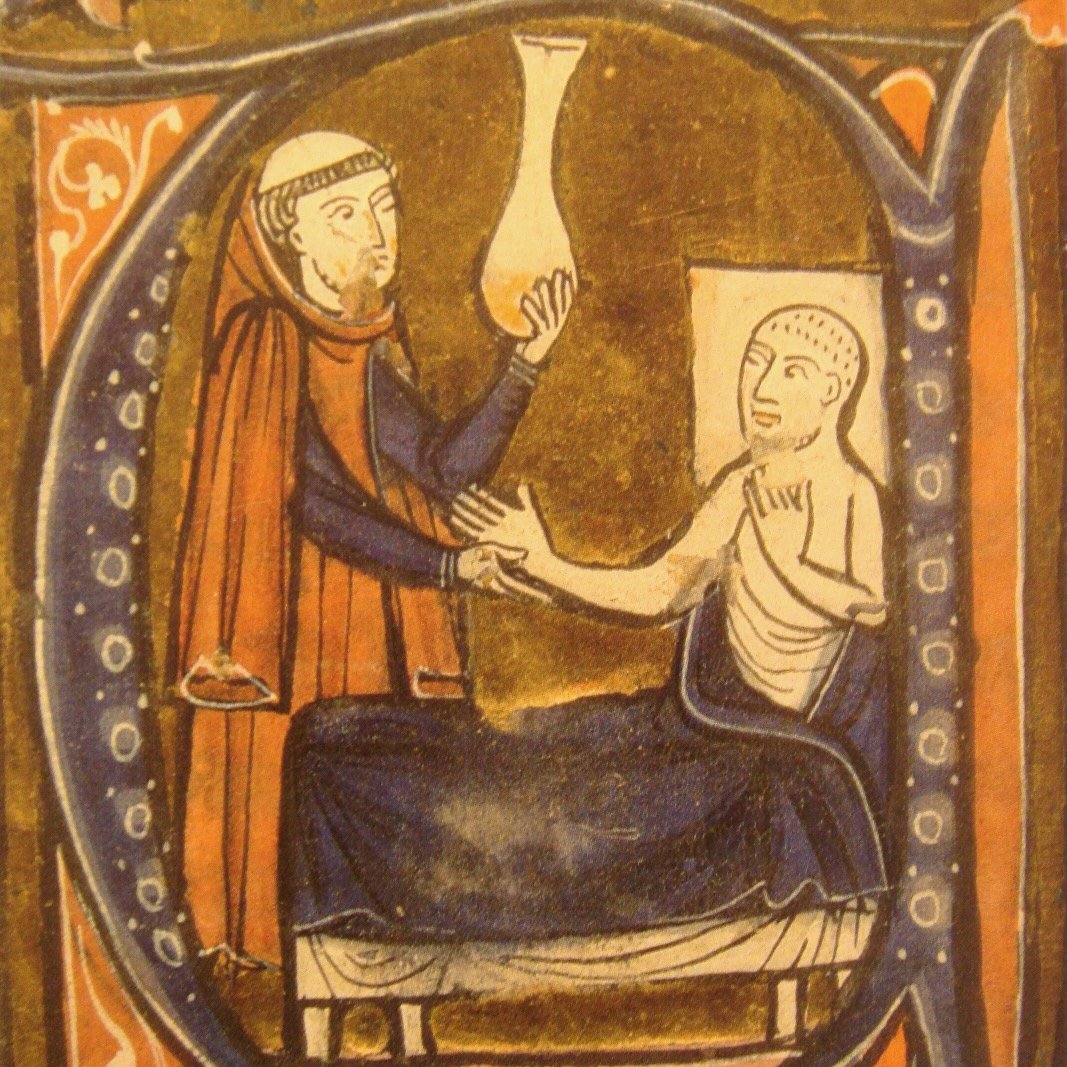
Before the rise of modern medicine, illness was not understood as a purely biological problem. Disease was experienced as physical, spiritual, moral, and social all at once—and healing required more than physical treatment. Across medieval and early modern Europe, this worldview produced a vast and remarkably specific system of healing saints, each invoked against particular ailments: diseases of the eyes, teeth, throat, skin, childbirth, plague, cancer, and countless other bodily threats.
Drawing on art history, religious practice, and the history of medicine, we will explore how saints became specialists, why particular illnesses were paired with particular bodies, and how identification—shared suffering, visible wounds, or martyrdom—generated trust in a saint’s healing power.
Through paintings, sculptures, reliquaries, ex-votos, and devotional objects, the talk will consider how images of saints functioned as tools for managing fear and uncertainty in a world where cure was never guaranteed. Rather than treating devotion to healing saints as superstition or sentiment, this lecture will approache it as a sophisticated response to bodily vulnerability—one that mapped illness onto a network of patrons, intercessors, and images that helped people live with sickness long before they could reliably defeat it.
Brenda Edgar is an Art Historian in Louisville, KY. Her research interests include relics and reliquaries, medieval medical manuscripts and depictions of disease in medieval art, as well as the historical role of altered states of consciousness in the creation of art. In addition to her work for Morbid Anatomy, she teaches Art History courses at Indiana University Southeast. Her free monthly public talk series, “Art History Illustrated,” is presented at the Carnegie Center for Art and History in New Albany, Indiana. When she isn’t reading or writing, Brenda is a New York Times Crossword Puzzle addict as well as a yoga instructor.
7pm ET (NYC time)
Monday, September 7, 2026
PLEASE NOTE: A link to a recording of this talk will be sent out to ticket holders after its conclusion. It will also be archived for our Patreon members. Become a Member HERE.
Ticketholders: A Zoom invite is sent out two hours before the event to the email used at checkout. Please check your spam folder and if not received, email hello@morbidanayomy.org. A temporary streaming link will be emailed after the event concludes.
Before the rise of modern medicine, illness was not understood as a purely biological problem. Disease was experienced as physical, spiritual, moral, and social all at once—and healing required more than physical treatment. Across medieval and early modern Europe, this worldview produced a vast and remarkably specific system of healing saints, each invoked against particular ailments: diseases of the eyes, teeth, throat, skin, childbirth, plague, cancer, and countless other bodily threats.
Drawing on art history, religious practice, and the history of medicine, we will explore how saints became specialists, why particular illnesses were paired with particular bodies, and how identification—shared suffering, visible wounds, or martyrdom—generated trust in a saint’s healing power.
Through paintings, sculptures, reliquaries, ex-votos, and devotional objects, the talk will consider how images of saints functioned as tools for managing fear and uncertainty in a world where cure was never guaranteed. Rather than treating devotion to healing saints as superstition or sentiment, this lecture will approache it as a sophisticated response to bodily vulnerability—one that mapped illness onto a network of patrons, intercessors, and images that helped people live with sickness long before they could reliably defeat it.
Brenda Edgar is an Art Historian in Louisville, KY. Her research interests include relics and reliquaries, medieval medical manuscripts and depictions of disease in medieval art, as well as the historical role of altered states of consciousness in the creation of art. In addition to her work for Morbid Anatomy, she teaches Art History courses at Indiana University Southeast. Her free monthly public talk series, “Art History Illustrated,” is presented at the Carnegie Center for Art and History in New Albany, Indiana. When she isn’t reading or writing, Brenda is a New York Times Crossword Puzzle addict as well as a yoga instructor.