
 Image 1 of 1
2pm ET (NYC time)
Sunday, March 29, 2026
PLEASE NOTE: Video playback of free events is only available to Patreon members. Become a Member HERE.
Ticketholders: A Zoom invite is sent out two hours before the event to the email used at checkout. Please check your spam folder and if not received, email hello@morbidanatomy.org.
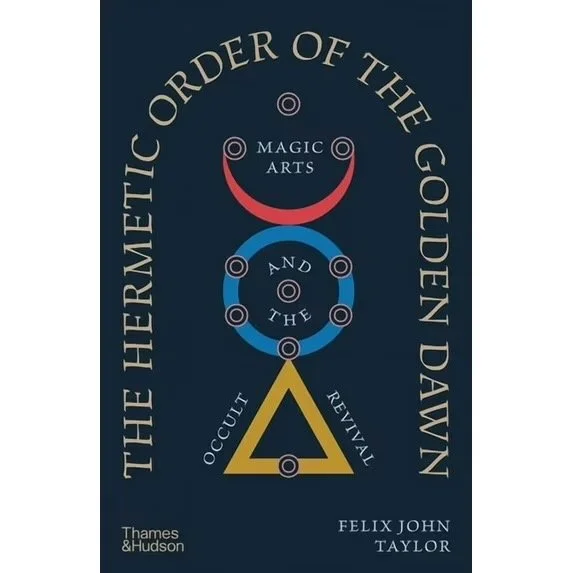
Join author Felix John Taylor in anticipation of his upcoming publication, The Hermetic Order of the Golden Dawn. Occultism has long been associated with the visual and literary arts, the wild, and the avant-garde, and nowhere was this more embodied than in the Hermetic Order of the Golden Dawn. Founded in London in the 1880s by Freemasons, it was the world’s most famous secret society. In this fresh and invigorating narrative history, author Felix Taylor recounts its rise and fall through the men and women for whom the Order represented both an alternative to traditional Victorian religious values and a space for imaginative exploration.
Devoted to the study of ceremonial magic, the Order attracted a long list of eminent writers, actors, and visual artists to its ranks, from Aleister Crowley to W. B. Yeats and beyond. It envisioned a “golden age” of spiritual enlightenment, with progressive ideals—class and gender were no barriers to entry—and teachings (tarot, alchemy, astral projection) gradually unveiled as members ascended its ten “grades.”
While its temples were formally spaces to practice magic, Taylor finds that the Golden Dawn was at times more an arts club or society of writers. Political schisms and sex scandals ensured that it was short-lived, yet for many members its occult practices came to shape their work and influence the wider culture over a much longer period.
With its influence on Wicca and modern magic, The Golden Dawn is a vital thread connecting Victorian esotericism to the present-day occult revival.
—
Felix John Taylor is a librarian at The Queen’s College, Oxford and writes for the Literary Review. He has a PhD from St Hugh’s College, Oxford on Welsh mythology and folklore in twentieth-century literature, and previously held positions at the Bodleian Modern Languages and Arts & Archaeology libraries.
2pm ET (NYC time)
Sunday, March 29, 2026
PLEASE NOTE: Video playback of free events is only available to Patreon members. Become a Member HERE.
Ticketholders: A Zoom invite is sent out two hours before the event to the email used at checkout. Please check your spam folder and if not received, email hello@morbidanatomy.org.
Join author Felix John Taylor in anticipation of his upcoming publication, The Hermetic Order of the Golden Dawn. Occultism has long been associated with the visual and literary arts, the wild, and the avant-garde, and nowhere was this more embodied than in the Hermetic Order of the Golden Dawn. Founded in London in the 1880s by Freemasons, it was the world’s most famous secret society. In this fresh and invigorating narrative history, author Felix Taylor recounts its rise and fall through the men and women for whom the Order represented both an alternative to traditional Victorian religious values and a space for imaginative exploration.
Devoted to the study of ceremonial magic, the Order attracted a long list of eminent writers, actors, and visual artists to its ranks, from Aleister Crowley to W. B. Yeats and beyond. It envisioned a “golden age” of spiritual enlightenment, with progressive ideals—class and gender were no barriers to entry—and teachings (tarot, alchemy, astral projection) gradually unveiled as members ascended its ten “grades.”
While its temples were formally spaces to practice magic, Taylor finds that the Golden Dawn was at times more an arts club or society of writers. Political schisms and sex scandals ensured that it was short-lived, yet for many members its occult practices came to shape their work and influence the wider culture over a much longer period.
With its influence on Wicca and modern magic, The Golden Dawn is a vital thread connecting Victorian esotericism to the present-day occult revival.
—
Felix John Taylor is a librarian at The Queen’s College, Oxford and writes for the Literary Review. He has a PhD from St Hugh’s College, Oxford on Welsh mythology and folklore in twentieth-century literature, and previously held positions at the Bodleian Modern Languages and Arts & Archaeology libraries.