
 Image 1 of 1
Monday, February 8, 2027
7pm ET (NYC time)
PLEASE NOTE: Video playback of free events is only available to Patreon members. Become a Member HERE.
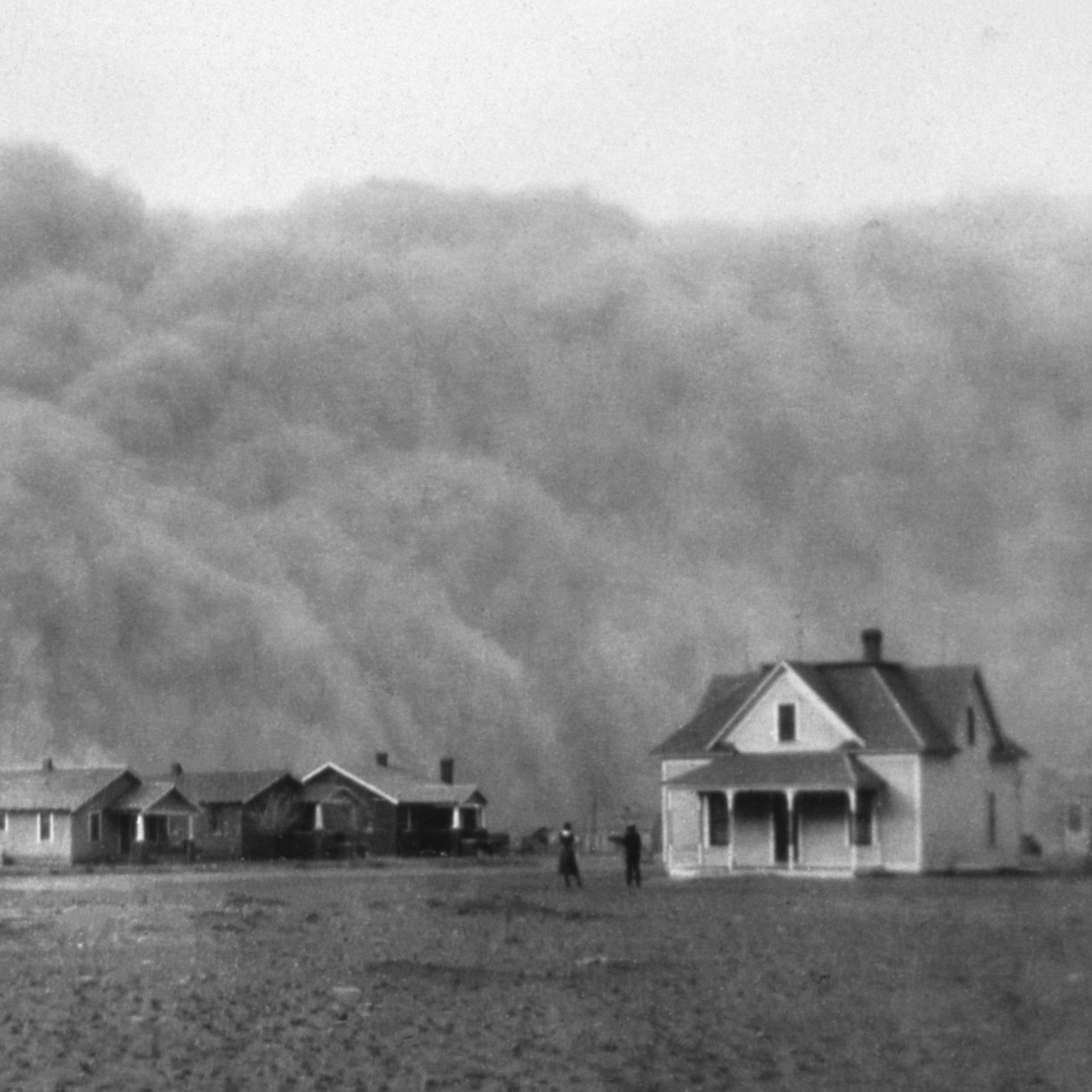
How do you sing about the end of the world? This is a question the American songwriter Woody Guthrie asked after witnessing the sky turn dark with dust on what became known as Black Sunday on April 14, 1935. The album he made five years later, Dust Bowl Ballads, grapples with survival when ecological collapse, forced migration, police brutality, and state-sanctioned violence are cutting down every hope.
In Woody Guthrie's Dust Bowl Ballads—Allison C. Meier's new book for Bloomsbury's 33 1/3 series—she explores why this album is essential listening now, and how folk music of the 1940s has been under-appreciated for its radical legacy. While many people are familiar with Guthrie's anthemic “This Land Is Your Land,” there is much more to explore in his musical impact. In this talk, Meier will share how she explored the places that inspired Guthrie, like the Oklahoma Panhandle where the scars of the Dust Bowl remain, as well as her archival investigations into how Guthrie made art out of apocalypse.
Allison C. Meier is an Oklahoma-born, Brooklyn-based writer, editor, and researcher. She is the author of Grave (2023, Bloomsbury), Concrete New York (2026, Blue Crow Media), and Woody Guthrie's Dust Bowl Ballads (2026, Bloomsbury). She is a regular contributor to publications on art, architecture, and history and moonlights as a cemetery tour guide at New York City burial grounds.
Monday, February 8, 2027
7pm ET (NYC time)
PLEASE NOTE: Video playback of free events is only available to Patreon members. Become a Member HERE.
How do you sing about the end of the world? This is a question the American songwriter Woody Guthrie asked after witnessing the sky turn dark with dust on what became known as Black Sunday on April 14, 1935. The album he made five years later, Dust Bowl Ballads, grapples with survival when ecological collapse, forced migration, police brutality, and state-sanctioned violence are cutting down every hope.
In Woody Guthrie's Dust Bowl Ballads—Allison C. Meier's new book for Bloomsbury's 33 1/3 series—she explores why this album is essential listening now, and how folk music of the 1940s has been under-appreciated for its radical legacy. While many people are familiar with Guthrie's anthemic “This Land Is Your Land,” there is much more to explore in his musical impact. In this talk, Meier will share how she explored the places that inspired Guthrie, like the Oklahoma Panhandle where the scars of the Dust Bowl remain, as well as her archival investigations into how Guthrie made art out of apocalypse.
Allison C. Meier is an Oklahoma-born, Brooklyn-based writer, editor, and researcher. She is the author of Grave (2023, Bloomsbury), Concrete New York (2026, Blue Crow Media), and Woody Guthrie's Dust Bowl Ballads (2026, Bloomsbury). She is a regular contributor to publications on art, architecture, and history and moonlights as a cemetery tour guide at New York City burial grounds.