
 Image 1 of 2
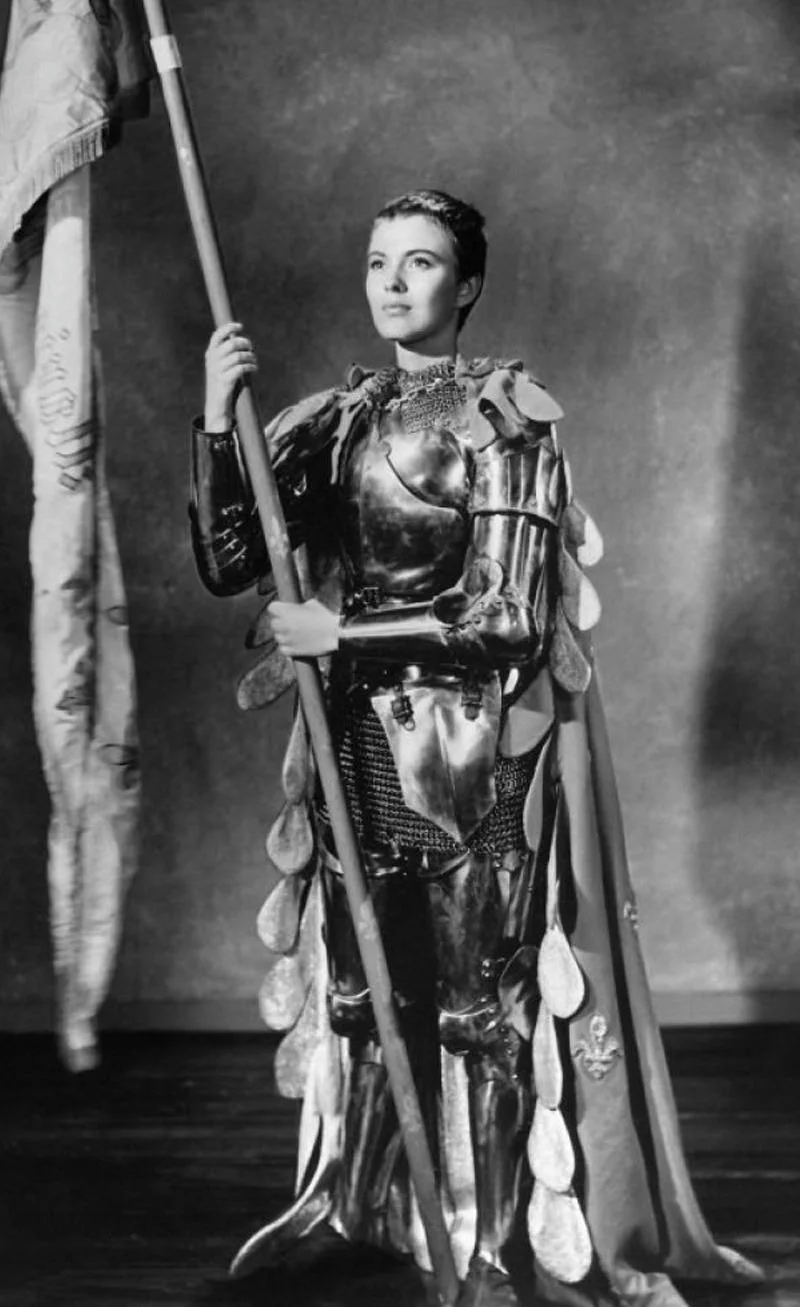 Image 2 of 2
Warrior, Witch, and Saint: Exploring the Life and Legend of Joan of Arc with Cultural Historian Jason Lahman, Begins March 22
Four Week Class Taught Online Via Zoom
Sundays, March 22, 29, April 5, 12, 2026
2:00pm - 4:00pm ET (NYC Time)
$120 Paid Patreon Members / $145 General Admission
PLEASE NOTE: Classes will be recorded and archived for students who cannot make that time
In this intensive four-week course, one of the most intriguing and controversial figures of the Middle Ages—Jeanne d'Arc—will be brought to life through primary source readings, richly illustrated lectures, and works of music and film.
Over the course of four weeks, we’ll explore Joan's formative world in the French countryside of Domrémy, the contemporary devotion to saints, the lore of fairies and earth spirits, and the anthropology of auditory revelations and prophecies from higher realms. Joan's astonishing and sudden emergence as a military leader during the crisis years of the Hundred Years' War made her a legend in her own lifetime, yet also triggered anxieties surrounding gender, heresy, and magic. These fears were weaponized to construct a dark narrative and manipulate her as a pawn in the game of royal power.
Through close readings of trial records, chronicles, mystical history, and rural folklore, we will trace how a teenage visionary became a divine instrument of war, then a condemned heretic burned at the stake. Yet Joan's story does not end in the flames. This course will also examine the centuries-long struggle to reclaim and reinterpret her image: as misguided heretic and divinely inspired saint, as Protestant cautionary tale and Romantic freedom fighter, as a symbol of resurgent French nationalism and proto-feminist warrior who defied the impossible by following her own vision. Alongside Joan, we will also consider her fellow warrior—the infamous Baron Gilles de Rais, whose descent into decadence, necromancy, and possibly mass murder—created an archetypal shadow figure to Joan's virtue and eventually fueled the perverse legend of Bluebeard.
The course aims to illuminate why Joan of Arc—along with Gilles de Rais—remains one of the most potent figures in the Western imagination, an endless wellspring of curiosity and fascination for historians, artists, and the public.
Week 1 — Joan and the Voices:
We begin in Domrémy, tracing Joan's childhood world of saints, sacred landscapes, and lingering fairy lore. We examine how her heavenly visitors—St. Michael, St. Catherine, and St. Margaret—emerged within a culture where folk belief, mysticism, and church authority overlapped and collided. Rival frameworks of saintly vision versus dangerous enchantment set the stage for everything that followed.
Week 2 — Joan in Battle:
We follow Joan's meteoric ascent from peasant girl to military icon during the siege of Orléans and the coronation campaign. Special focus is given to her martial symbolism, gender nonconformity, and charismatic authority on the field. We explore how Joan transformed French morale and reimagined sanctity as a force of war. Though untrained as a knight, she led from the front, banner aloft, sustaining multiple wounds. Eyewitnesses repeatedly attested that she chose the most dangerous ground. Far from a mere mascot, Joan functioned as an inspired field commander whose timing, resolve, and visibility spurred seasoned captains into action.
Week 3 — Joan on Trial:
This week centers on Rouen and the machinery of accusation: cross-dressing, sorcery, disobedience to the Church, and the weaponization of theological interrogation. We read the trial's most haunting exchanges and consider Joan alongside Gilles de Rais as archetypal mirrors of one another—one sanctified as a saint and emblem of holy truth, the other forever connected to perversity and evil. In both cases, however, the historian's quest for clear answers often turns up empty-handed, though the lore and mythology persist.
Week 4 — Joan in Memory:
We trace Joan's rehabilitation, canonization, and the centuries-long battle to reclaim her image—from Romantic nationalism and Catholic devotion to feminist, queer, and radical appropriations. Film, painting, and propaganda reveal how Joan becomes a vessel for each era's fears and desires. Joan endures not as a static saint, but as a living battleground of meaning; a site of cultural contention and wellspring of artistic inspiration.
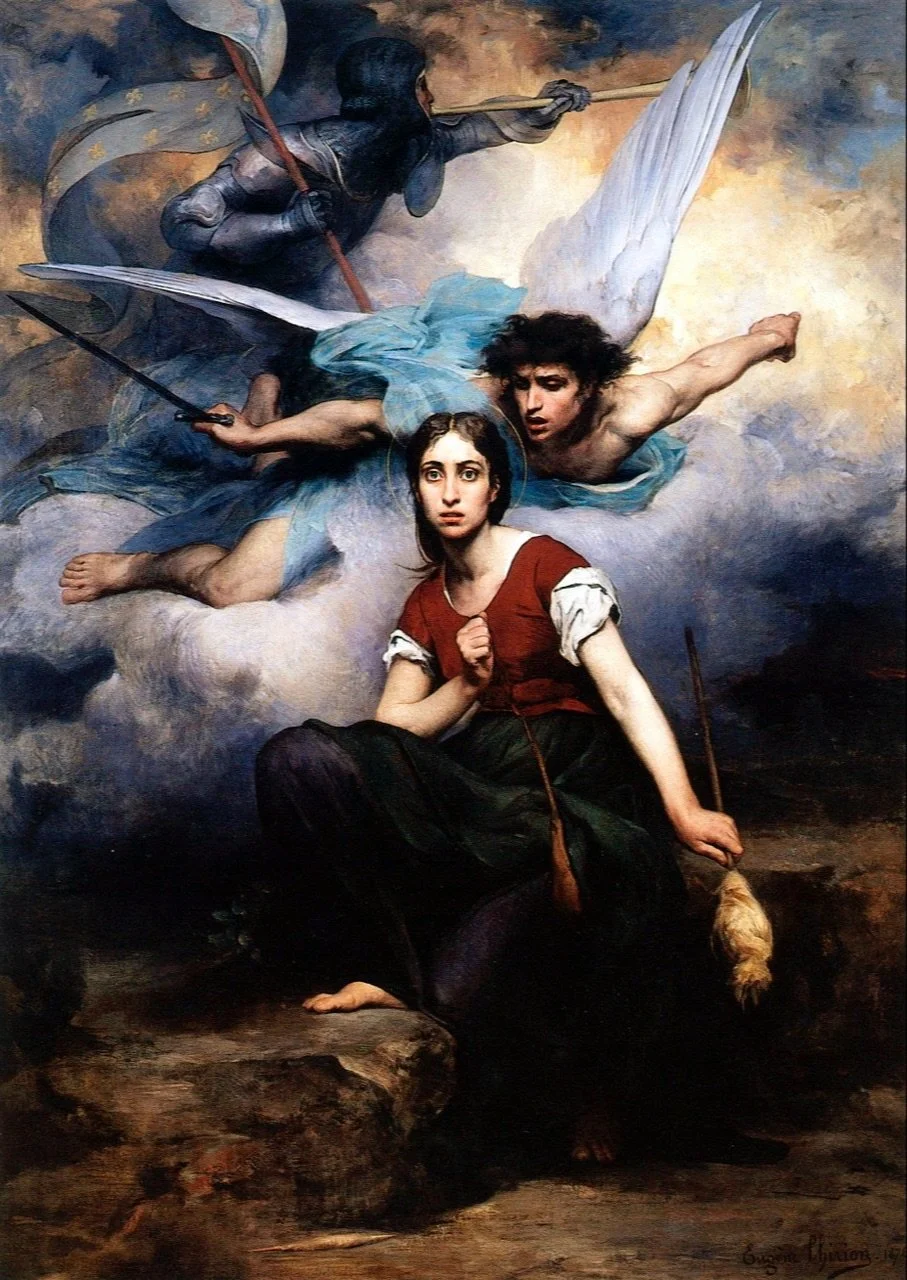
Jeanne d'Arc, ca 1876, by Eugène Thirion. Jean Seberg as Joan of Arc, ca. 1957, Film St. Joan.
Jason Lahman is an artist and cultural historian of science, technology and the occult.
Four Week Class Taught Online Via Zoom
Sundays, March 22, 29, April 5, 12, 2026
2:00pm - 4:00pm ET (NYC Time)
$120 Paid Patreon Members / $145 General Admission
PLEASE NOTE: Classes will be recorded and archived for students who cannot make that time
In this intensive four-week course, one of the most intriguing and controversial figures of the Middle Ages—Jeanne d'Arc—will be brought to life through primary source readings, richly illustrated lectures, and works of music and film.
Over the course of four weeks, we’ll explore Joan's formative world in the French countryside of Domrémy, the contemporary devotion to saints, the lore of fairies and earth spirits, and the anthropology of auditory revelations and prophecies from higher realms. Joan's astonishing and sudden emergence as a military leader during the crisis years of the Hundred Years' War made her a legend in her own lifetime, yet also triggered anxieties surrounding gender, heresy, and magic. These fears were weaponized to construct a dark narrative and manipulate her as a pawn in the game of royal power.
Through close readings of trial records, chronicles, mystical history, and rural folklore, we will trace how a teenage visionary became a divine instrument of war, then a condemned heretic burned at the stake. Yet Joan's story does not end in the flames. This course will also examine the centuries-long struggle to reclaim and reinterpret her image: as misguided heretic and divinely inspired saint, as Protestant cautionary tale and Romantic freedom fighter, as a symbol of resurgent French nationalism and proto-feminist warrior who defied the impossible by following her own vision. Alongside Joan, we will also consider her fellow warrior—the infamous Baron Gilles de Rais, whose descent into decadence, necromancy, and possibly mass murder—created an archetypal shadow figure to Joan's virtue and eventually fueled the perverse legend of Bluebeard.
The course aims to illuminate why Joan of Arc—along with Gilles de Rais—remains one of the most potent figures in the Western imagination, an endless wellspring of curiosity and fascination for historians, artists, and the public.
Week 1 — Joan and the Voices:
We begin in Domrémy, tracing Joan's childhood world of saints, sacred landscapes, and lingering fairy lore. We examine how her heavenly visitors—St. Michael, St. Catherine, and St. Margaret—emerged within a culture where folk belief, mysticism, and church authority overlapped and collided. Rival frameworks of saintly vision versus dangerous enchantment set the stage for everything that followed.
Week 2 — Joan in Battle:
We follow Joan's meteoric ascent from peasant girl to military icon during the siege of Orléans and the coronation campaign. Special focus is given to her martial symbolism, gender nonconformity, and charismatic authority on the field. We explore how Joan transformed French morale and reimagined sanctity as a force of war. Though untrained as a knight, she led from the front, banner aloft, sustaining multiple wounds. Eyewitnesses repeatedly attested that she chose the most dangerous ground. Far from a mere mascot, Joan functioned as an inspired field commander whose timing, resolve, and visibility spurred seasoned captains into action.
Week 3 — Joan on Trial:
This week centers on Rouen and the machinery of accusation: cross-dressing, sorcery, disobedience to the Church, and the weaponization of theological interrogation. We read the trial's most haunting exchanges and consider Joan alongside Gilles de Rais as archetypal mirrors of one another—one sanctified as a saint and emblem of holy truth, the other forever connected to perversity and evil. In both cases, however, the historian's quest for clear answers often turns up empty-handed, though the lore and mythology persist.
Week 4 — Joan in Memory:
We trace Joan's rehabilitation, canonization, and the centuries-long battle to reclaim her image—from Romantic nationalism and Catholic devotion to feminist, queer, and radical appropriations. Film, painting, and propaganda reveal how Joan becomes a vessel for each era's fears and desires. Joan endures not as a static saint, but as a living battleground of meaning; a site of cultural contention and wellspring of artistic inspiration.
Jeanne d'Arc, ca 1876, by Eugène Thirion. Jean Seberg as Joan of Arc, ca. 1957, Film St. Joan.
Jason Lahman is an artist and cultural historian of science, technology and the occult.