
 Image 1 of 5
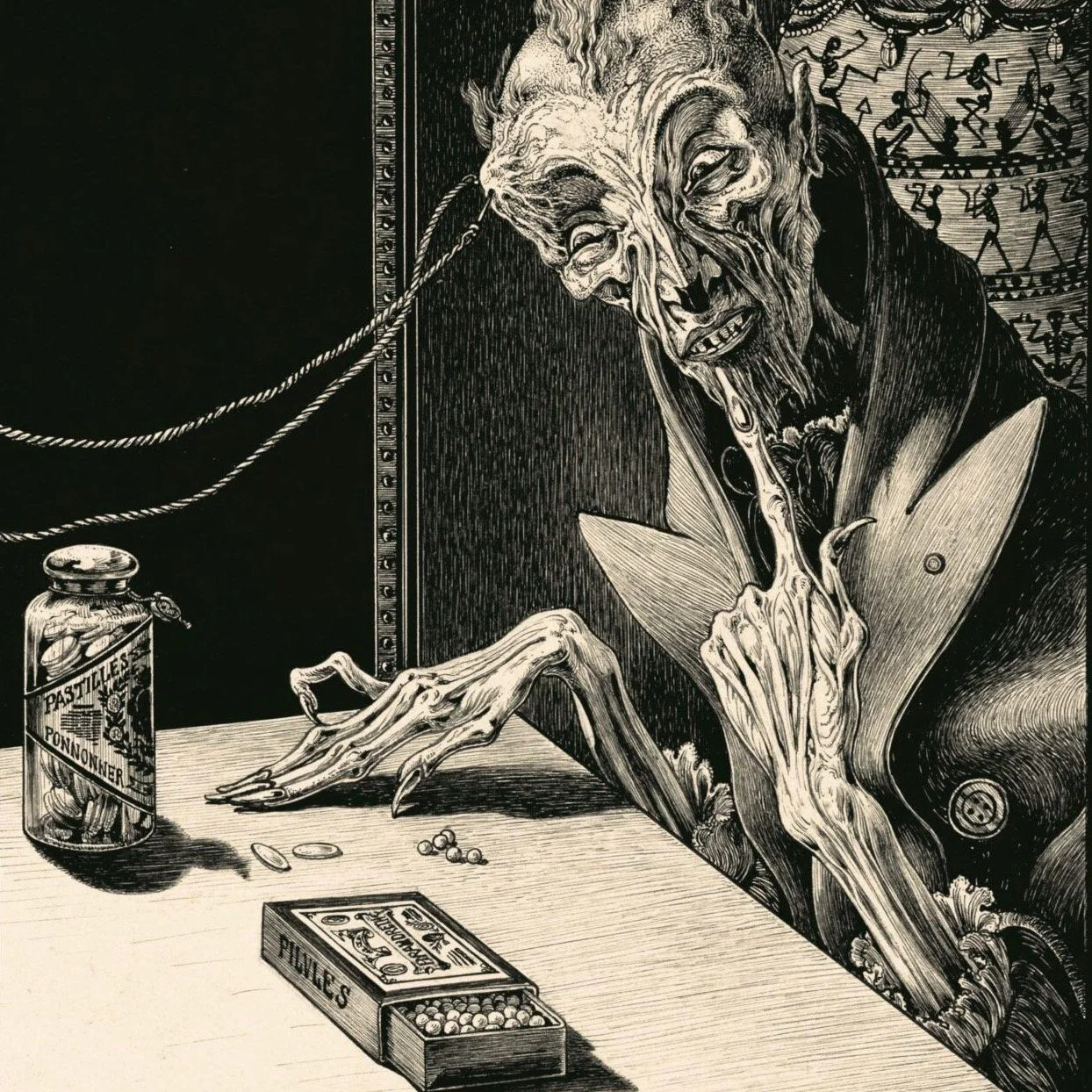 Image 2 of 5
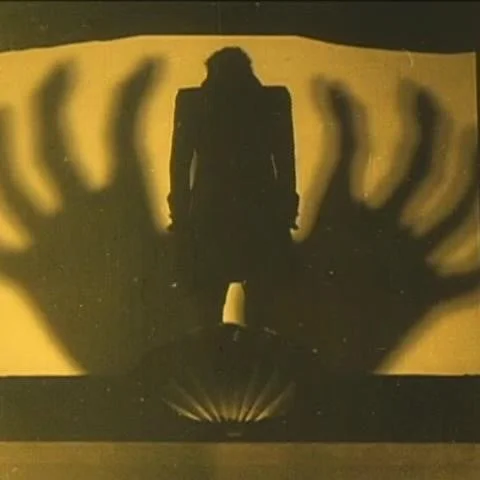 Image 3 of 5
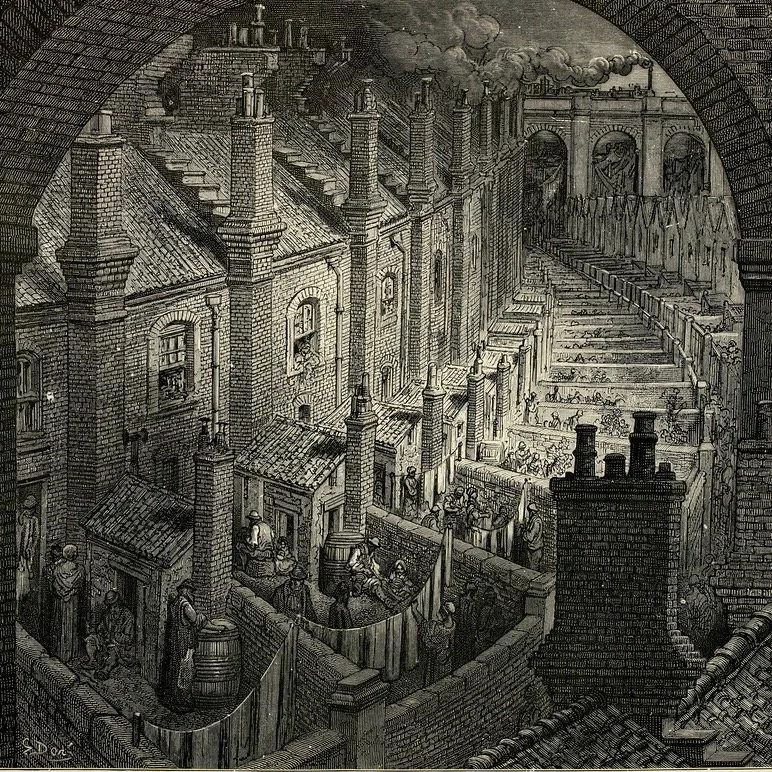 Image 4 of 5
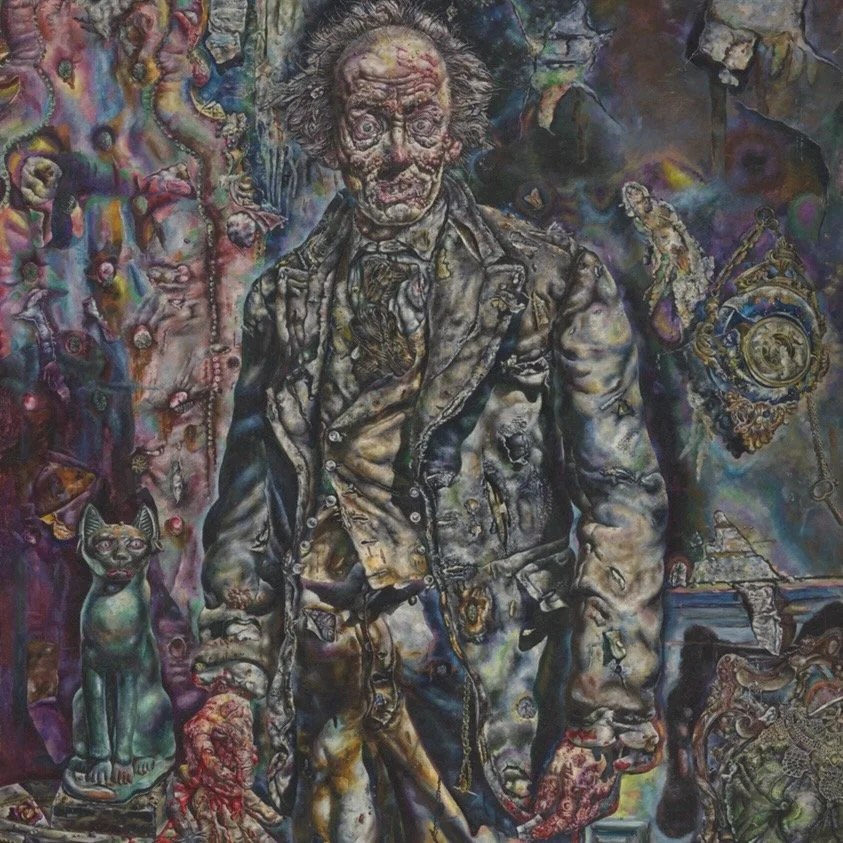 Image 5 of 5
Five Week Class Taught Online Via Zoom
Sundays, May 3 - May 31, 2026
2:00 - 3:30pm ET (NYC Time)
$150 Paid Patreon Members / $175 General Admission
PLEASE NOTE: Classes will be recorded and archived for students who cannot make that time
Following Lahman’s previous class Romantics, Ruins, and Revolutions of the Unreal— which traced the birth of the Gothic imagination—this class will follow its transmutations in the 19th into the 20th century. We will follow the Gothic as it leaves the monastery for the laboratory, the ruin for the factory, and the candle for the cathode ray. Science, industry, and the moving image will become new instruments of enchantment — and of dread. From the galvanic experiments of Frankenstein to cinema’s shadows and the digital flicker, the Gothic persists as modernity’s uncanny twin: the dark reflection of its radiant self-belief.
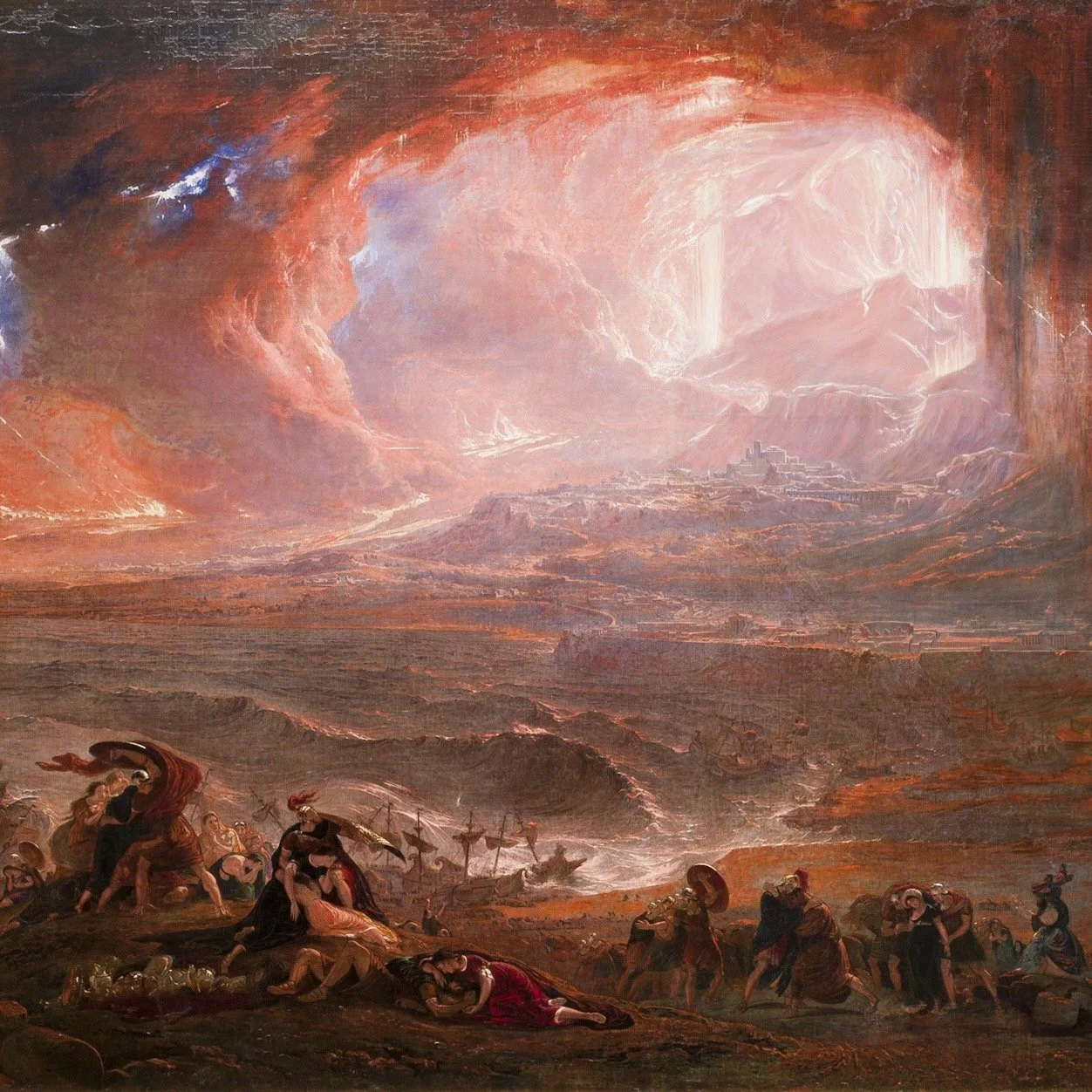
We will use Victoria Nelson’s Gothicka as our guide, enriched by readings from Poe, Dickens, Freud, Ruskin, and Wilde along with images from John Martin’s apocalypses and the corporeal meditations of Cronenberg and Ron Athey. Each week will explors a distinct metamorphosis: knowledge into peril, science into revelation, the city into labyrinth, and the body into spectacle — a cartography of the modern Gothic: descent from light into luminosity, from reason into radiant dread.
Class Overview:
Week 1 – Forbidden Knowledge
The Gothic laboratory fuses mysticism and science. Erasmus Darwin’s speculative biology, Godwin’s St. Leon, and Shelley’s Frankenstein reveal the Promethean peril of invention. Alchemy merges with electricity: the spark of life becomes both miracle and blasphemy, the monster the child of reason itself.
Week 2 – Cosmic Gothic
Romantic awe expands into geologic and astronomical dread. Lyell’s deep time and Poe’s cosmic spaces dissolve the human scale. Turner and John Martin translate revelation into painterly apocalypse — the universe as cathedral and cataclysm, where knowledge opens onto the infinite void.
Week 3 – Gothic Revival and the City
The modern metropolis becomes the Gothic labyrinth. Ruskin’s sacred craftsmanship, Dickens’s fog-bound streets, and the vast Victorian cemeteries re-enchant the industrial landscape. The Gothic revival serves as protest and elegy — a yearning for meaning amid the new iron age of progress.
Week 4 – Gothic Celluloid
The age of shadowplay begins. Murnau’s Nosferatu and the Universal horror cycle animate Gothic figures in motion, while Freud’s uncanny names their psychic function. On screen, repression and desire flicker together: the cinematic image as séance for modernism’s fear.
Week 5 – The Modern Gothic Body
The body becomes the ultimate Gothic site — mutable, erotic, and uncanny. From Wilde’s Dorian Gray and Le Fanu’s Carmilla to Beardsley’s decadent lines, the 19th century aestheticized corruption and desire. In the 20th, this lineage continues through Buñuel, Hitchcock, and Cronenberg, where technology, sexuality, and identity fuse into one unstable organism. Artists from Anita Berber to Ron Athey extend this meditation on pain, transcendence, and transformation — the Gothic body as altar and experiment, decay as metamorphosis.
For a preview of this class, check out Jason’s talk on our Patreon platform.
Jason Lahman is an artist and cultural historian specializing in the history of technology, science and the occult. He has lectured often and taught a number of classes for Morbid Anatomy including A Cultural History of Robots, A History of Fairies and a two part course on the history of the Femme Fatale.
Five Week Class Taught Online Via Zoom
Sundays, May 3 - May 31, 2026
2:00 - 3:30pm ET (NYC Time)
$150 Paid Patreon Members / $175 General Admission
PLEASE NOTE: Classes will be recorded and archived for students who cannot make that time
Following Lahman’s previous class Romantics, Ruins, and Revolutions of the Unreal— which traced the birth of the Gothic imagination—this class will follow its transmutations in the 19th into the 20th century. We will follow the Gothic as it leaves the monastery for the laboratory, the ruin for the factory, and the candle for the cathode ray. Science, industry, and the moving image will become new instruments of enchantment — and of dread. From the galvanic experiments of Frankenstein to cinema’s shadows and the digital flicker, the Gothic persists as modernity’s uncanny twin: the dark reflection of its radiant self-belief.
We will use Victoria Nelson’s Gothicka as our guide, enriched by readings from Poe, Dickens, Freud, Ruskin, and Wilde along with images from John Martin’s apocalypses and the corporeal meditations of Cronenberg and Ron Athey. Each week will explors a distinct metamorphosis: knowledge into peril, science into revelation, the city into labyrinth, and the body into spectacle — a cartography of the modern Gothic: descent from light into luminosity, from reason into radiant dread.
Class Overview:
Week 1 – Forbidden Knowledge
The Gothic laboratory fuses mysticism and science. Erasmus Darwin’s speculative biology, Godwin’s St. Leon, and Shelley’s Frankenstein reveal the Promethean peril of invention. Alchemy merges with electricity: the spark of life becomes both miracle and blasphemy, the monster the child of reason itself.
Week 2 – Cosmic Gothic
Romantic awe expands into geologic and astronomical dread. Lyell’s deep time and Poe’s cosmic spaces dissolve the human scale. Turner and John Martin translate revelation into painterly apocalypse — the universe as cathedral and cataclysm, where knowledge opens onto the infinite void.
Week 3 – Gothic Revival and the City
The modern metropolis becomes the Gothic labyrinth. Ruskin’s sacred craftsmanship, Dickens’s fog-bound streets, and the vast Victorian cemeteries re-enchant the industrial landscape. The Gothic revival serves as protest and elegy — a yearning for meaning amid the new iron age of progress.
Week 4 – Gothic Celluloid
The age of shadowplay begins. Murnau’s Nosferatu and the Universal horror cycle animate Gothic figures in motion, while Freud’s uncanny names their psychic function. On screen, repression and desire flicker together: the cinematic image as séance for modernism’s fear.
Week 5 – The Modern Gothic Body
The body becomes the ultimate Gothic site — mutable, erotic, and uncanny. From Wilde’s Dorian Gray and Le Fanu’s Carmilla to Beardsley’s decadent lines, the 19th century aestheticized corruption and desire. In the 20th, this lineage continues through Buñuel, Hitchcock, and Cronenberg, where technology, sexuality, and identity fuse into one unstable organism. Artists from Anita Berber to Ron Athey extend this meditation on pain, transcendence, and transformation — the Gothic body as altar and experiment, decay as metamorphosis.
For a preview of this class, check out Jason’s talk on our Patreon platform.
Jason Lahman is an artist and cultural historian specializing in the history of technology, science and the occult. He has lectured often and taught a number of classes for Morbid Anatomy including A Cultural History of Robots, A History of Fairies and a two part course on the history of the Femme Fatale.