
 Image 1 of 4
 Image 2 of 4
 Image 3 of 4
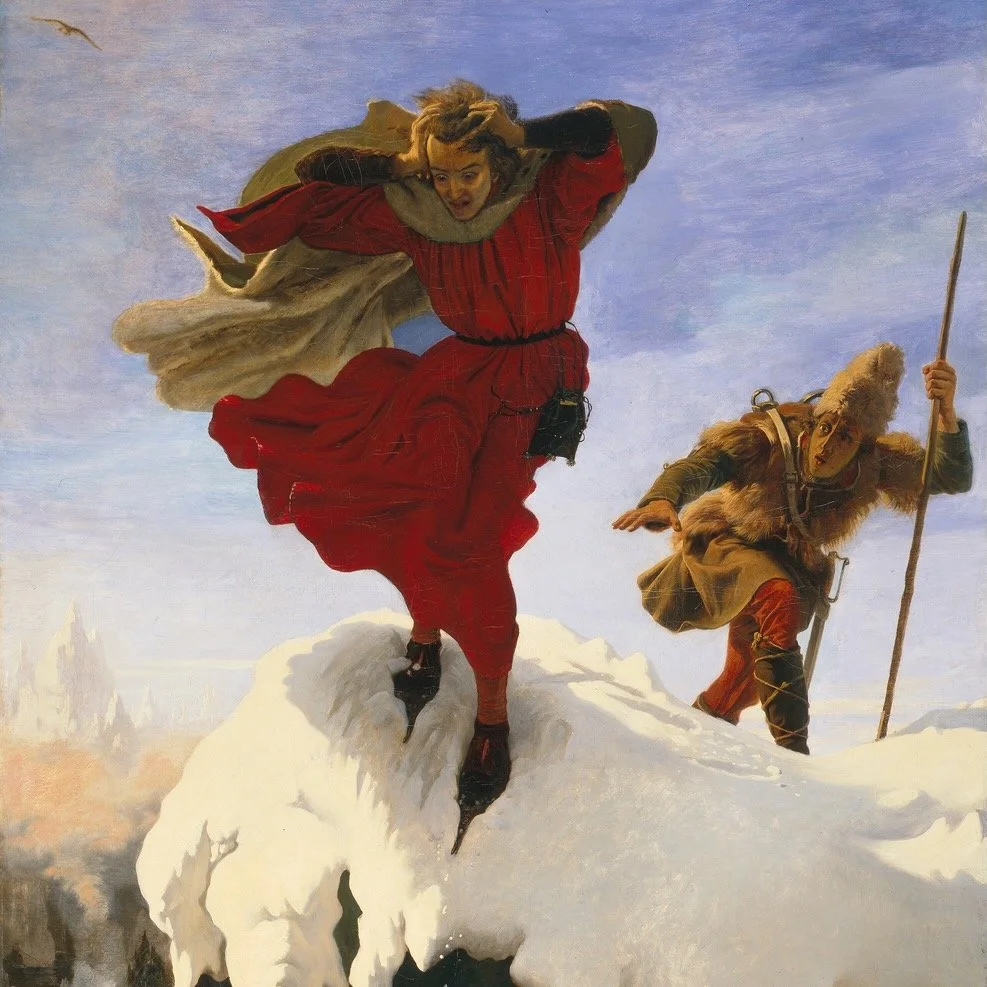 Image 4 of 4
Five Week Class Taught Online Via Zoom
Sundays, February 1 - March 1, 2026
2 - 4 PM ET (NYC Time)
$150 Paid Patreon Members / $175 General Admission
PLEASE NOTE: Classes will be recorded and archived for students who cannot make that time
This class will trace the birth of the Gothic imagination from the 18th century into the Romantic age, when ruins, specters, and forbidden desires reshaped Europe’s sense of reality. We will begin with the sublime and the melancholy of ruined abbeys, moving into the haunted dreamscapes of Romantic art and literature. We will trace the unfolding of the Gothic through the political theatre of revolution, the erotic delirium of the body, and the Orientalist fantasies that projected Europe’s fears onto an uncanny elsewhere.
Readings will range from Burke and Radcliffe to Sade, Byron, and Beckford, guided by Victoria Nelson’s Gothicka: The Romance of the Gothic Imagination. Visual material will include Piranesi’s prisons, Goya’s Caprichos, Blake’s visionary engravings, and Delacroix’s revolutionary canvases. Over five weeks, we will trace how the Gothic emerged as a shadow cosmos to Enlightenment rationalism — a world of ruins, visions, and dangerous knowledge.
Class Overview:
Week 1 – Ruins and the Sublime
The Gothic begins as a revolt against Enlightenment clarity and a yearning for the imagined Middle Ages. Burke’s sublime redefines terror as aesthetic pleasure, while Walpole’s Castle of Otranto sets the physical ruin as key emblem. In Piranesi’s prisons and Friedrich’s desolate abbeys, architecture itself becomes the threshold between rationalism and the triumph of decay.
Week 2 – Specters and Dreams
The Gothic turns inward to haunted interiors and strange visionary states. Hoffmann’s doubles and Coleridge’s opium dreams blur waking and sleeping worlds. Fuseli’s Nightmare and Goya’s Sleep of Reason Produces Monsters give form to the psyche as a theatre of desire and dread.
Week 3 – Revolution and Terror
The Gothic becomes the moral language of upheaval. Burke’s Reflections on the Revolution in France and Radcliffe’s tales of confinement turn political anxiety into aesthetic terror. In Géricault’s Raft of the Medusa and Delacroix’s battles, revolution appears as a sublime catastrophe.
Week 4 – The Gothic Body and Sexuality
The Gothic body becomes a site of temptation and transgression. From Richardson’s Pamela and Radcliffe’s virtuous heroines to Lewis’s The Monk and Sade’s forbidden ecstasies, erotic repression and blasphemous lust intertwine. Wollstonecraft’s feminist critique and the erotic spirits of Fuseli and Blake reveal the Gothic body trembling between sin and revelation.
Week 5 – Gothic Orientalism
The Gothic imagination turns eastward, projecting Europe’s longings and fears. Beckford’s Vathek, Byron’s Oriental tales, and the fantasy of lush harems and desert mirage use "the East" as both fantasy and critique — a mirror of Europe’s deepest taboos. The Gothic exotic becomes the stage for the West’s encounter with its collective shadow self.
Jason Lahman is an artist and cultural historian specializing in the history of technology, science and the occult. He has lectured often and taught a number of classes for Morbid Anatomy including A Cultural History of Robots, A History of Fairies and a two part course on the history of the Femme Fatale.
Five Week Class Taught Online Via Zoom
Sundays, February 1 - March 1, 2026
2 - 4 PM ET (NYC Time)
$150 Paid Patreon Members / $175 General Admission
PLEASE NOTE: Classes will be recorded and archived for students who cannot make that time
This class will trace the birth of the Gothic imagination from the 18th century into the Romantic age, when ruins, specters, and forbidden desires reshaped Europe’s sense of reality. We will begin with the sublime and the melancholy of ruined abbeys, moving into the haunted dreamscapes of Romantic art and literature. We will trace the unfolding of the Gothic through the political theatre of revolution, the erotic delirium of the body, and the Orientalist fantasies that projected Europe’s fears onto an uncanny elsewhere.
Readings will range from Burke and Radcliffe to Sade, Byron, and Beckford, guided by Victoria Nelson’s Gothicka: The Romance of the Gothic Imagination. Visual material will include Piranesi’s prisons, Goya’s Caprichos, Blake’s visionary engravings, and Delacroix’s revolutionary canvases. Over five weeks, we will trace how the Gothic emerged as a shadow cosmos to Enlightenment rationalism — a world of ruins, visions, and dangerous knowledge.
Class Overview:
Week 1 – Ruins and the Sublime
The Gothic begins as a revolt against Enlightenment clarity and a yearning for the imagined Middle Ages. Burke’s sublime redefines terror as aesthetic pleasure, while Walpole’s Castle of Otranto sets the physical ruin as key emblem. In Piranesi’s prisons and Friedrich’s desolate abbeys, architecture itself becomes the threshold between rationalism and the triumph of decay.
Week 2 – Specters and Dreams
The Gothic turns inward to haunted interiors and strange visionary states. Hoffmann’s doubles and Coleridge’s opium dreams blur waking and sleeping worlds. Fuseli’s Nightmare and Goya’s Sleep of Reason Produces Monsters give form to the psyche as a theatre of desire and dread.
Week 3 – Revolution and Terror
The Gothic becomes the moral language of upheaval. Burke’s Reflections on the Revolution in France and Radcliffe’s tales of confinement turn political anxiety into aesthetic terror. In Géricault’s Raft of the Medusa and Delacroix’s battles, revolution appears as a sublime catastrophe.
Week 4 – The Gothic Body and Sexuality
The Gothic body becomes a site of temptation and transgression. From Richardson’s Pamela and Radcliffe’s virtuous heroines to Lewis’s The Monk and Sade’s forbidden ecstasies, erotic repression and blasphemous lust intertwine. Wollstonecraft’s feminist critique and the erotic spirits of Fuseli and Blake reveal the Gothic body trembling between sin and revelation.
Week 5 – Gothic Orientalism
The Gothic imagination turns eastward, projecting Europe’s longings and fears. Beckford’s Vathek, Byron’s Oriental tales, and the fantasy of lush harems and desert mirage use "the East" as both fantasy and critique — a mirror of Europe’s deepest taboos. The Gothic exotic becomes the stage for the West’s encounter with its collective shadow self.
Jason Lahman is an artist and cultural historian specializing in the history of technology, science and the occult. He has lectured often and taught a number of classes for Morbid Anatomy including A Cultural History of Robots, A History of Fairies and a two part course on the history of the Femme Fatale.