
 Image 1 of 5
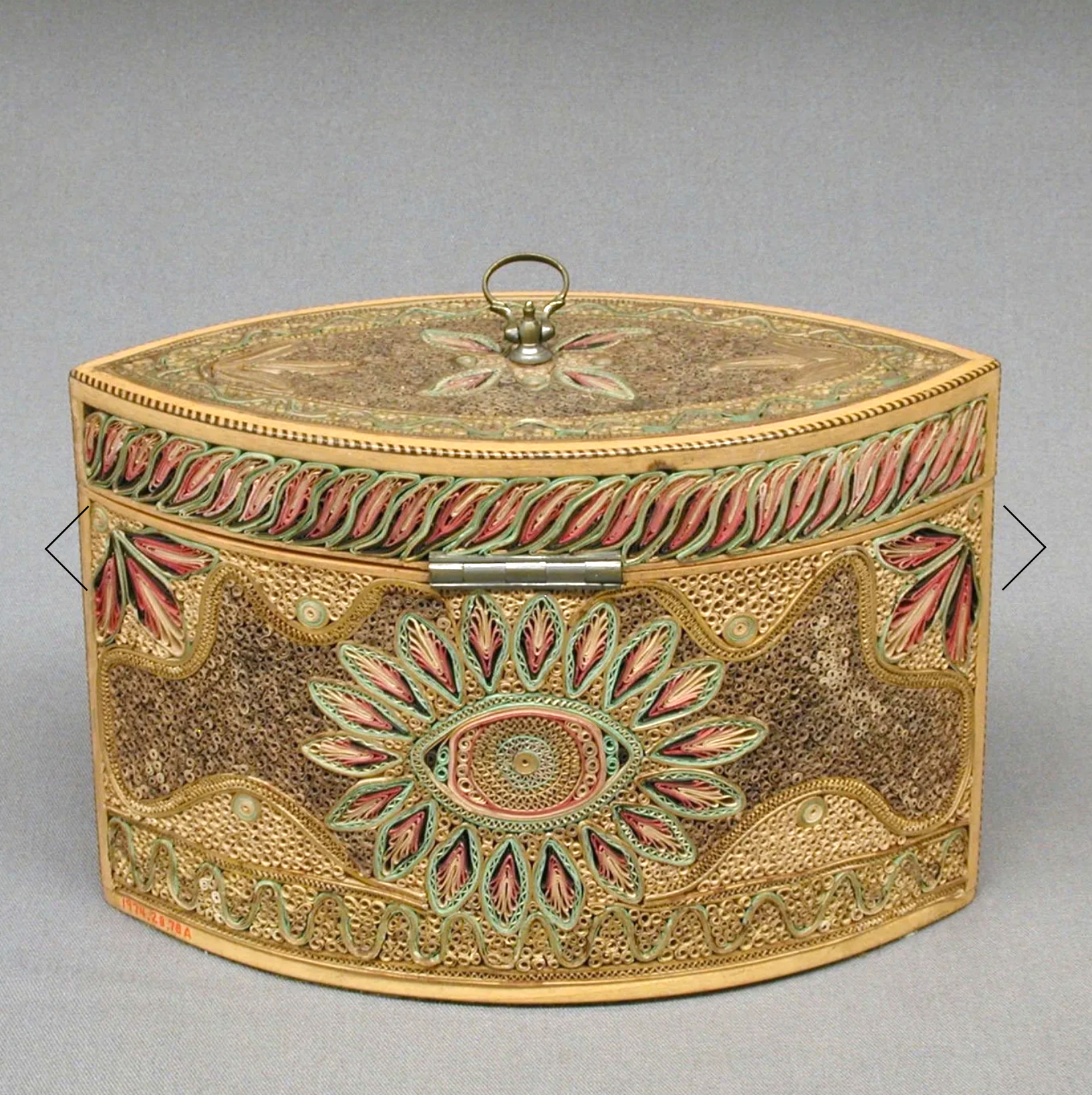 Image 2 of 5
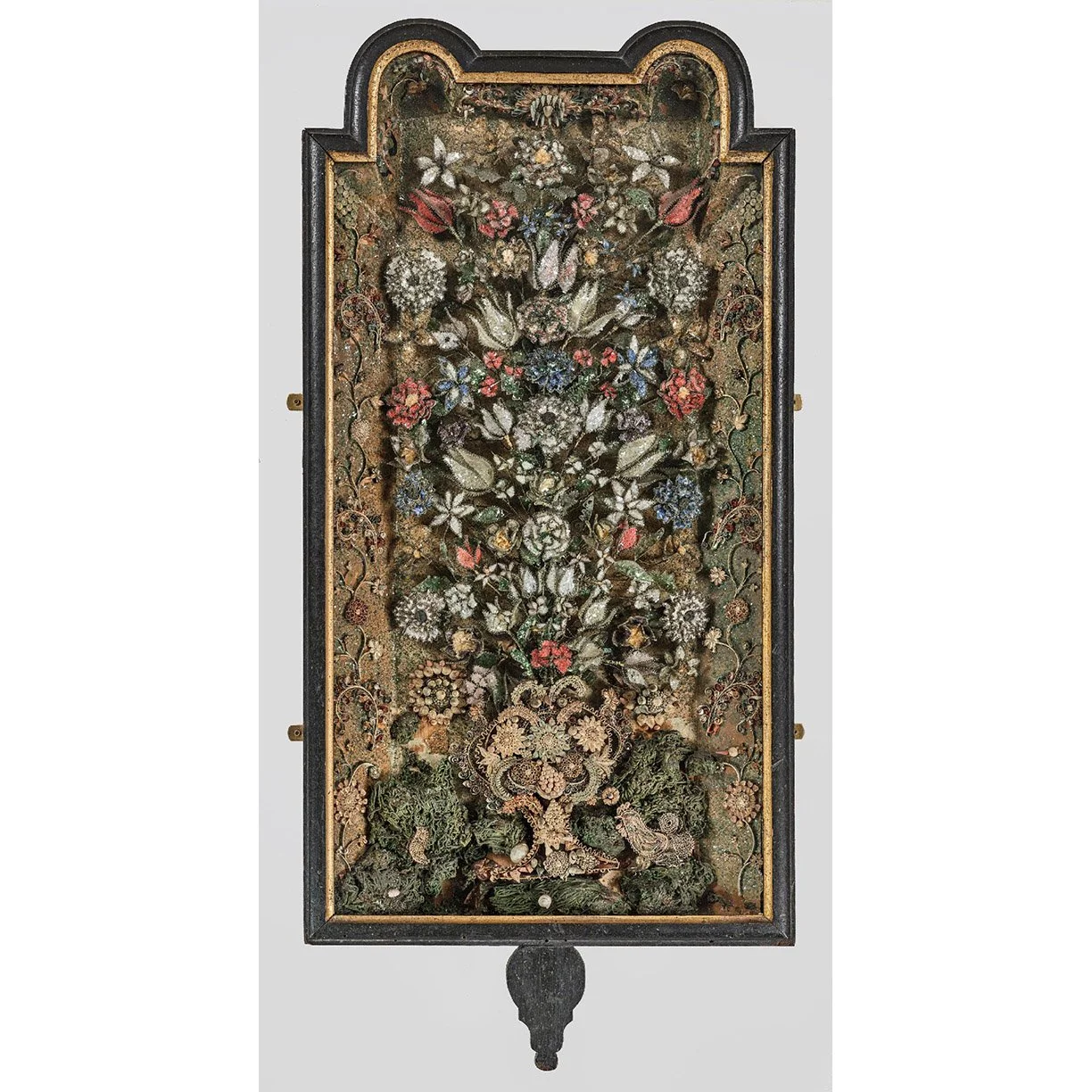 Image 3 of 5
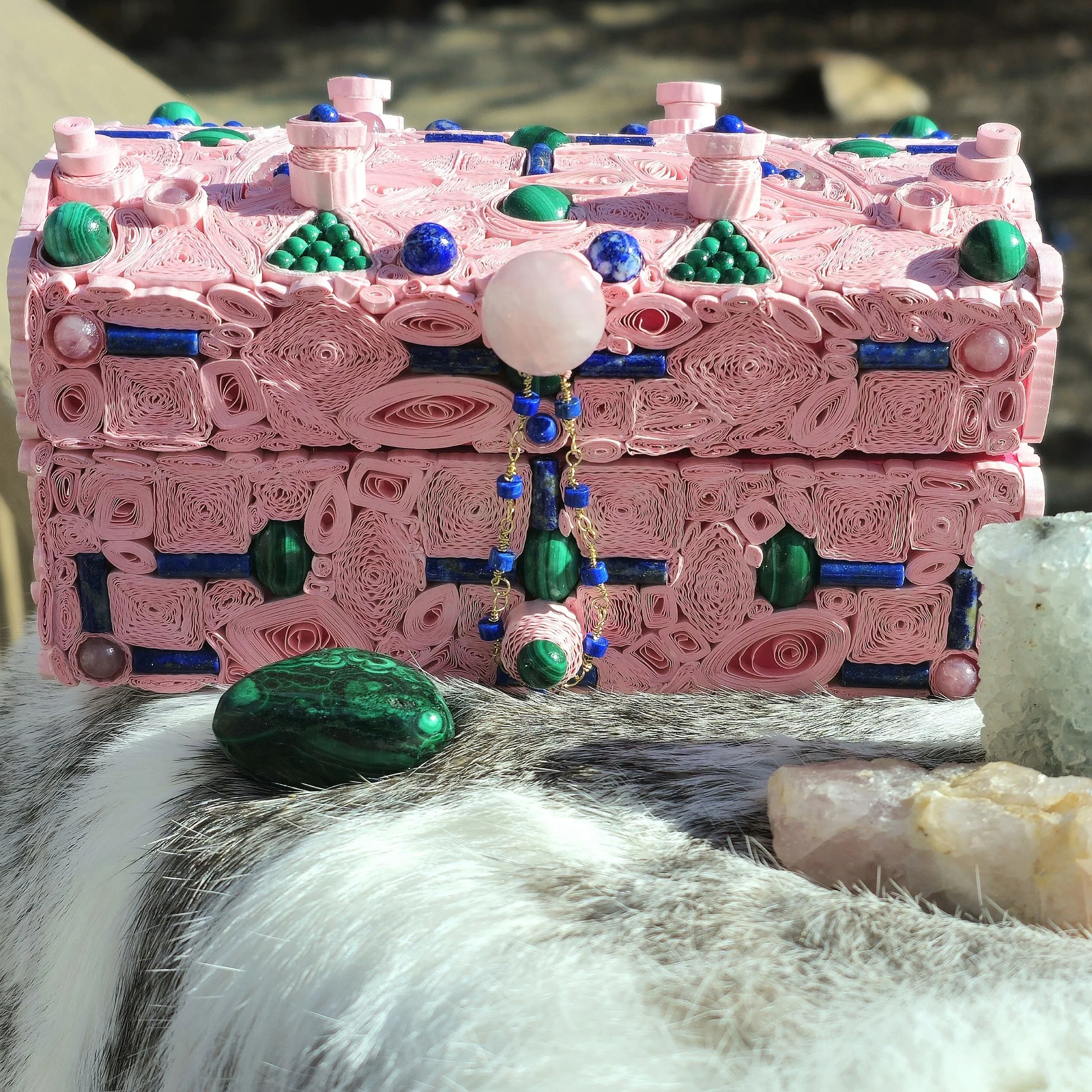 Image 4 of 5
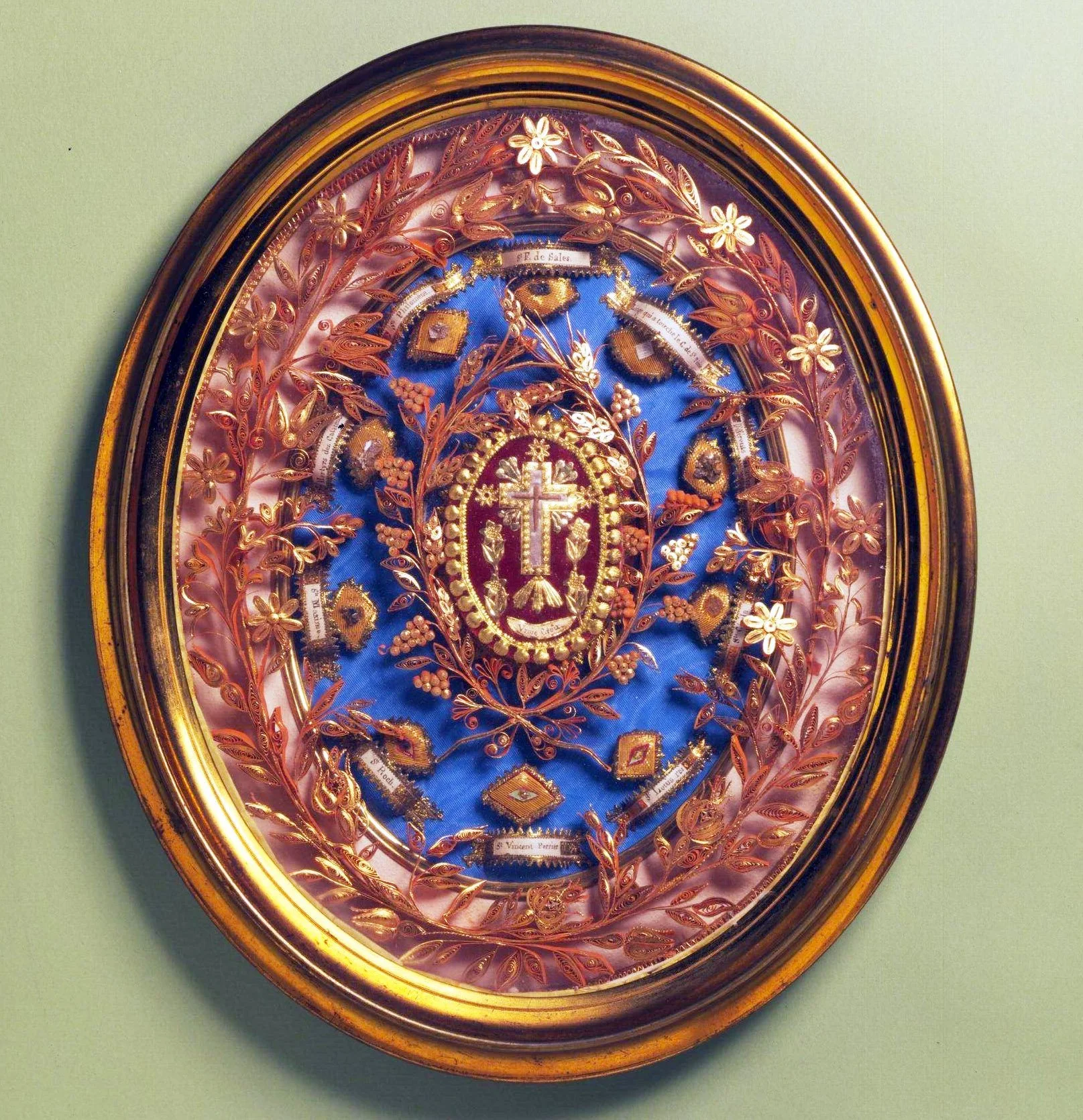 Image 5 of 5
Sacral Paper: The Art of Devotion Using Quilled Paper with Artist Miriam Morrissette, Begins August 16
Six Week Class Taught Online Via Zoom
Sundays, August 16 - September 20, 2026
2:00 - 4:00pm ET (NYC Time)
$165 Paid Patreon Members / $185 General Admission
IMPORTANT: Supply List for the class listed at the bottom
PLEASE NOTE: Classes will be recorded and archived for students who cannot make that time
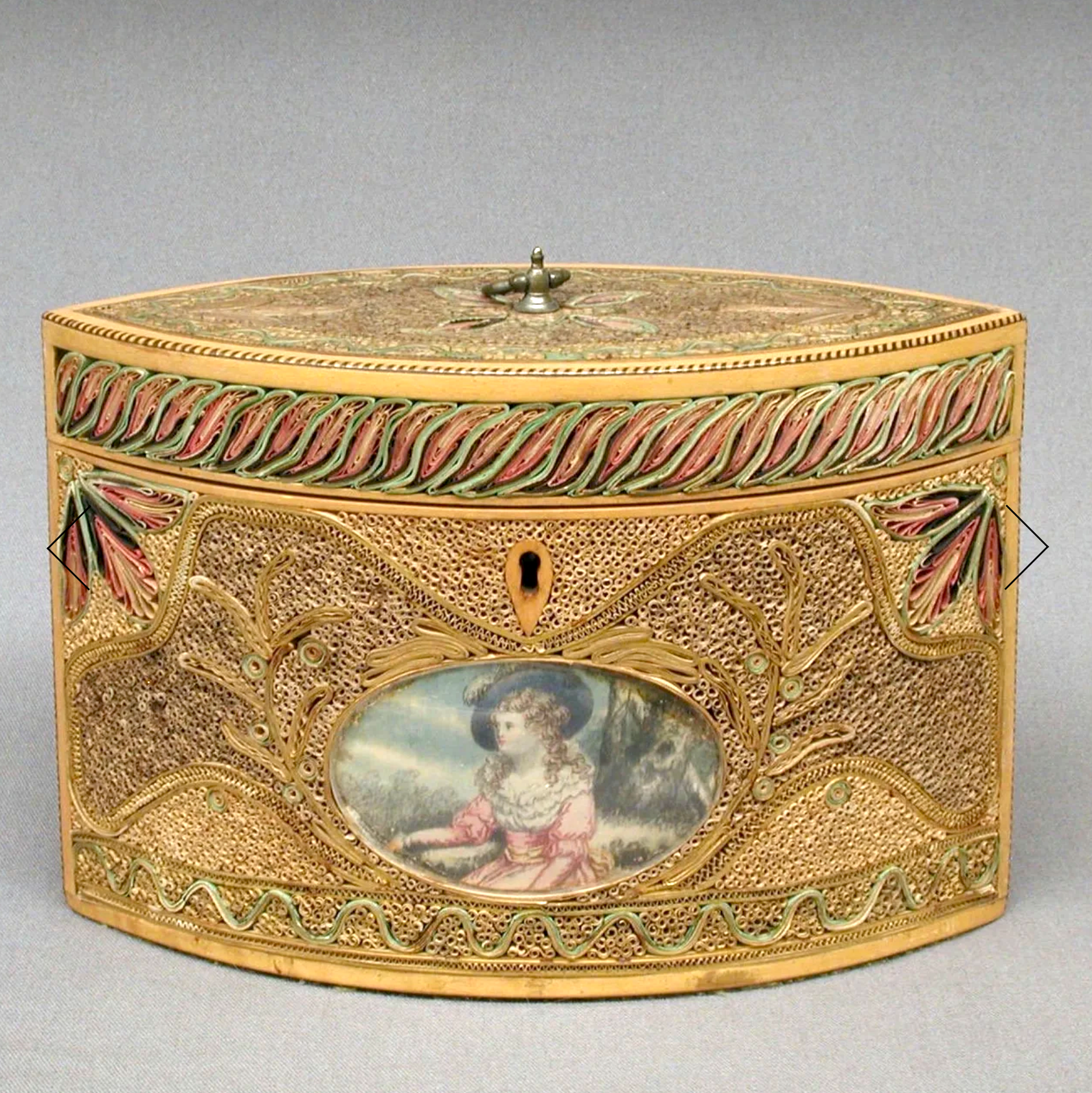
Paper quilling—also known as paper filigree—is the art of rolling and shaping strips of paper and attaching them to a surface in order to adorn it. This technique was first used in the 13th century to embellish devotional objects created by French, Italian, and German monastics. These nuns and monks would often use gilded edges of books in order to mimic metal filigree which was a more costly form of ornament.
Paper quilling became a popular pastime in 18th and 19th century Europe, used to decorate everyday objects as well as Victorian hairwork and stump work embroidery. With the rapid proliferation of mass produced goods in the 20th century, the popularity of paper quilling as a decorative artform waned. This course seeks to re-situate paper quilling as an art form and as an act of devotion that allows us to bridge the sacred and the mundane.
It is no wonder this artform was popular in convents and monasteries; The act of quilling strips of paper into shapes is repetitious and contemplative, allowing one to focus on the intention of the object that is being adorned. The adornment of an object with quilled paper is an act of devotion that serves as a reminder of what we hold most sacred. Paper quilling invites us—in today’s fast paced world—to slow down and focus on the present moment. Each piece of quilled paper allows us to become more immersed in both the temporal and the numinous realms.
Over the course of six weeks, we will explore paper quilling techniques as we create a shrine or talismanic object meant to serve as a reminder of what we hold most sacred. Through the examination of the history of paper quilling and devotional objects, we will find inspiration and ideas. The instructor will demonstrate basic and advanced quilling paper techniques, along with ways to use recycled materials to serve as the support for your object.
By the end of this course you will have acquired basic paper quilling techniques and knowledge of more advanced ones. As a final project students will complete a shrine or talismanic object embellished with paper quilling to honor what or who they hold most sacred.
Miriam Morrissette is an artist, occultist, and former public school educator. She works in the mediums of analog collage, quilled paper, and various textile arts. She has a BA in English from Oregon State University where her undergraduate thesis focused on trauma, disability, and queerness. She is currently a full-time professional artist living in Reno, NV.
Images: Tea caddy (one of a pair), with original paper box- from the Metropolitan Museum of Art; Quillwork shadow box, c. 1720 American, probably Boston, Massachusetts. Bridget Noyes (Stonington, Connecticut, 1710–1774). Paper, shells, wax, gum Arabic, silver wire, mica, glass, and pine. Gift of Frank S. Pratt through William B. Goodwin, 1949.637;
Paper quilled box by Artist Miriam Morrissette.
Supply list for paper quilling class with links :
Note from the educator: I have included the high quality tools I use and think work best. Cheaper versions are available in some cases though they are more prone to rust and breakage. Please feel free to find other versions of these tools that are within your budget.
*You do not need the supplies for the first class, but you will want them for the other classes.
Essential supplies (costing around $150)
Pre-cut quilling paper strips in the colors of your choosing in ⅛ and ¼ of an inch strips and ⅜” strips if you are feeling adventurous. Quilled creations strips are acid free and made in the U.S.A. and are the ones I prefer you use as they are high quality.
Premium Quilling Papers:
https://www.quilledcreations.com/solid-quilling-paper
Metallic strips:
https://www.quilledcreations.com/metallic-quilling-paper
Gilded edge strips:
https://www.quilledcreations.com/metallic-edge-gilded-quilling-paper
Medium Slotted tool:
https://www.quilledcreations.com/slotted-quilling-tool
Ergonomic quilling paper tool:
https://www.quilledcreations.com/savvy-slotted-tool
Needle tool:
https://www.quilledcreations.com/needle-quilling-tool
Quilling board:
https://www.quilledcreations.com/circle-template-board
Fine tip tweezers:
https://www.quilledcreations.com/quilling-tweezers
Fine tip glue bottle:
https://www.quilledcreations.com/quilling-glue-applicator
Curling Coach:
https://www.quilledcreations.com/curling-coach-quilling-tool
Curved tipped metal Awl:
https://a.co/d/bA5L0A4
Straight Awl:
https://a.co/d/0f80v3hy
Wipe away tool:
https://www.trekell.com/products/wipe-out-tool
Aleene's quick dry tacky glue:
https://a.co/d/gQrCNRO
Yamato Nori Adhesive Starch Paste:
https://a.co/d/0ZCkqmz
Spray on Mod Podge in Satin finish:
https://www.michaels.com/product/mod-podge-allinone-ultra-sprayon-glue-sealer-10694474
Large slotted tool:
https://a.co/d/6cIdrOD
Fine slotted tool:
https://a.co/d/dqinw1s
Small paper crimper for paper quilling strips:
https://www.quilledcreations.com/deluxe-quilling-crimper
Optional Supplies:
These tools and supplies we will go over how to use in class, but are not essential in order to make your shrine/talisman. However, you may want to buy a couple of these tools as we go through the course to try the techniques out.
Large paper Crimper:
Husking board:
https://www.quilledcreations.com/husking-quilling-board
Electric slotted tool: (I highly recommend you buy this as it saves so much time if you are making a larger shrine or talisman.)
https://www.quilledcreations.com/boss-quilling-tool
Metal toothed quilling combs:
https://www.quilledcreations.com/quilling-comb
Longer length metal quilling comb with shorter distance between teeth:
https://www.quilledcreations.com/super-looper-quilling-comb
Border buddies for making different shaped borders:
https://www.quilledcreations.com/border-buddy-quilling-tool
Budget version of border buddies:
Molds for 3D shapes:
https://www.quilledcreations.com/mini-mold-quilling-tool
Budget version of molds:
Large paper strip crimper:
Giant metal quilling comb:
Different sized slotted tools:
Gold leaf:
Gemstone beads: (Intrinsic trading is my favorite place to buy gemstone beads as they are high quality.)
Silk/Rayon Velvet fabric:
Dead stock Craft supplies
Silk Ribbon and Vintage trims:
German Crinkle wire and Vintage trimmings:
https://www.vintage-ornaments.com/craft-supplies/bouillon-crinkle-wire
Vintage beads and Cabochons:
https://www.etsy.com/shop/FindingYourElement
https://www.etsy.com/shop/VintageRoseFindings
Shells:
Six Week Class Taught Online Via Zoom
Sundays, August 16 - September 20, 2026
2:00 - 4:00pm ET (NYC Time)
$165 Paid Patreon Members / $185 General Admission
IMPORTANT: Supply List for the class listed at the bottom
PLEASE NOTE: Classes will be recorded and archived for students who cannot make that time
Paper quilling—also known as paper filigree—is the art of rolling and shaping strips of paper and attaching them to a surface in order to adorn it. This technique was first used in the 13th century to embellish devotional objects created by French, Italian, and German monastics. These nuns and monks would often use gilded edges of books in order to mimic metal filigree which was a more costly form of ornament.
Paper quilling became a popular pastime in 18th and 19th century Europe, used to decorate everyday objects as well as Victorian hairwork and stump work embroidery. With the rapid proliferation of mass produced goods in the 20th century, the popularity of paper quilling as a decorative artform waned. This course seeks to re-situate paper quilling as an art form and as an act of devotion that allows us to bridge the sacred and the mundane.
It is no wonder this artform was popular in convents and monasteries; The act of quilling strips of paper into shapes is repetitious and contemplative, allowing one to focus on the intention of the object that is being adorned. The adornment of an object with quilled paper is an act of devotion that serves as a reminder of what we hold most sacred. Paper quilling invites us—in today’s fast paced world—to slow down and focus on the present moment. Each piece of quilled paper allows us to become more immersed in both the temporal and the numinous realms.
Over the course of six weeks, we will explore paper quilling techniques as we create a shrine or talismanic object meant to serve as a reminder of what we hold most sacred. Through the examination of the history of paper quilling and devotional objects, we will find inspiration and ideas. The instructor will demonstrate basic and advanced quilling paper techniques, along with ways to use recycled materials to serve as the support for your object.
By the end of this course you will have acquired basic paper quilling techniques and knowledge of more advanced ones. As a final project students will complete a shrine or talismanic object embellished with paper quilling to honor what or who they hold most sacred.
Miriam Morrissette is an artist, occultist, and former public school educator. She works in the mediums of analog collage, quilled paper, and various textile arts. She has a BA in English from Oregon State University where her undergraduate thesis focused on trauma, disability, and queerness. She is currently a full-time professional artist living in Reno, NV.
Images: Tea caddy (one of a pair), with original paper box- from the Metropolitan Museum of Art; Quillwork shadow box, c. 1720 American, probably Boston, Massachusetts. Bridget Noyes (Stonington, Connecticut, 1710–1774). Paper, shells, wax, gum Arabic, silver wire, mica, glass, and pine. Gift of Frank S. Pratt through William B. Goodwin, 1949.637;
Paper quilled box by Artist Miriam Morrissette.
Supply list for paper quilling class with links :
Note from the educator: I have included the high quality tools I use and think work best. Cheaper versions are available in some cases though they are more prone to rust and breakage. Please feel free to find other versions of these tools that are within your budget.
*You do not need the supplies for the first class, but you will want them for the other classes.
Essential supplies (costing around $150)
Pre-cut quilling paper strips in the colors of your choosing in ⅛ and ¼ of an inch strips and ⅜” strips if you are feeling adventurous. Quilled creations strips are acid free and made in the U.S.A. and are the ones I prefer you use as they are high quality.
Premium Quilling Papers:
https://www.quilledcreations.com/solid-quilling-paper
Metallic strips:
https://www.quilledcreations.com/metallic-quilling-paper
Gilded edge strips:
https://www.quilledcreations.com/metallic-edge-gilded-quilling-paper
Medium Slotted tool:
https://www.quilledcreations.com/slotted-quilling-tool
Ergonomic quilling paper tool:
https://www.quilledcreations.com/savvy-slotted-tool
Needle tool:
https://www.quilledcreations.com/needle-quilling-tool
Quilling board:
https://www.quilledcreations.com/circle-template-board
Fine tip tweezers:
https://www.quilledcreations.com/quilling-tweezers
Fine tip glue bottle:
https://www.quilledcreations.com/quilling-glue-applicator
Curling Coach:
https://www.quilledcreations.com/curling-coach-quilling-tool
Curved tipped metal Awl:
https://a.co/d/bA5L0A4
Straight Awl:
https://a.co/d/0f80v3hy
Wipe away tool:
https://www.trekell.com/products/wipe-out-tool
Aleene's quick dry tacky glue:
https://a.co/d/gQrCNRO
Yamato Nori Adhesive Starch Paste:
https://a.co/d/0ZCkqmz
Spray on Mod Podge in Satin finish:
https://www.michaels.com/product/mod-podge-allinone-ultra-sprayon-glue-sealer-10694474
Large slotted tool:
https://a.co/d/6cIdrOD
Fine slotted tool:
https://a.co/d/dqinw1s
Small paper crimper for paper quilling strips:
https://www.quilledcreations.com/deluxe-quilling-crimper
Optional Supplies:
These tools and supplies we will go over how to use in class, but are not essential in order to make your shrine/talisman. However, you may want to buy a couple of these tools as we go through the course to try the techniques out.
Large paper Crimper:
Husking board:
https://www.quilledcreations.com/husking-quilling-board
Electric slotted tool: (I highly recommend you buy this as it saves so much time if you are making a larger shrine or talisman.)
https://www.quilledcreations.com/boss-quilling-tool
Metal toothed quilling combs:
https://www.quilledcreations.com/quilling-comb
Longer length metal quilling comb with shorter distance between teeth:
https://www.quilledcreations.com/super-looper-quilling-comb
Border buddies for making different shaped borders:
https://www.quilledcreations.com/border-buddy-quilling-tool
Budget version of border buddies:
Molds for 3D shapes:
https://www.quilledcreations.com/mini-mold-quilling-tool
Budget version of molds:
Large paper strip crimper:
Giant metal quilling comb:
Different sized slotted tools:
Gold leaf:
Gemstone beads: (Intrinsic trading is my favorite place to buy gemstone beads as they are high quality.)
Silk/Rayon Velvet fabric:
Dead stock Craft supplies
Silk Ribbon and Vintage trims:
German Crinkle wire and Vintage trimmings:
https://www.vintage-ornaments.com/craft-supplies/bouillon-crinkle-wire
Vintage beads and Cabochons:
https://www.etsy.com/shop/FindingYourElement
https://www.etsy.com/shop/VintageRoseFindings
Shells: