Four-Week Class Taught Online Via Zoom
Sundays, May 10 - May 31, 2026
2:00 - 3:30pm ET (NYC Time)
$145 Paid Patreon Members / $155 General Admission
PLEASE NOTE: Classes will be recorded and archived for students who cannot make that time
What might a culture look like when domination does not shape every relationship? What happens to religion when an intimate, participatory relationship with the natural world sits at its core? What does spiritual practice become when it unfolds in caves and on mountain peaks rather than behind temple walls? What kind of art emerges when it is created by people who appear free, sensual, playful, and untamed? And what roles do women inhabit when submission is not expected, and childbearing is not an external imposition?
These questions lead us to the Minoans, the Bronze Age civilization that flourished on the Greek island of Crete between roughly 1900 and 1450 BCE. Long before classical Greece, the Minoans built palaces as multifunctional community spaces, painted walls with leaping bodies and sensual depictions of nature, and developed social, religious, and political forms that continue to challenge patriarchal framings. Their world feels strangely familiar and profoundly alien at once, inviting wonder as much as interpretation.
In this course, we will approach Minoan civilization through its art, architecture, religious practices, and political organization. Along the way, we will linger on a central and provocative question: how do we name a society that does not seem to fit within later patriarchal models? Is “matriarchy” a useful concept, or does it quietly reproduce the very hierarchies it seeks to undo? By reading the Minoans critically and imaginatively, we will explore both the promise and the limits of the language and the concepts we use to make sense of the ancient past.
This course invites participants on a journey into an ancient Mediterranean world that unsettles familiar ideas about power, hierarchy, and spirituality. The Minoans offer not a blueprint to copy, but a powerful reminder that human societies have taken many different forms. Their legacy encourages us to think beyond patriarchal frameworks and to let our imagination free to sense what another world would feel like.
Session 1: Neolithic Origins
We begin by tracing the possible Neolithic roots of Minoan Crete, looking to Anatolian Çatalhöyük and the Old European Cucuteni–Trypillia culture. These sites reveal long traditions of communal living, relative egalitarianism, and symbolic systems grounded in continuity, cooperation, and care across generations.
Session 2: Theories of Matriarchy
How have scholars attempted to explain the many anomalies that are emerging from the excavations? We will examine Arthur Evans, the first Western archaeologist to excavate Crete, and his influential yet deeply problematic theories of Minoan “matriarchy.” We then turn to the Goddess Movement, including Marija Gimbutas and Carol P. Christ, and to contemporary Indigenous scholarship that helps us question both frameworks.
Session 3: Minoan Politics
If no male king ruled Crete, how was power organized and exercised? What roles did palaces play, and what might living in matrilineal households shaped by ancestral grandmothers look like in practice? This session explores recent attempts to reconstruct Minoan authority beyond monarchies and hierarchies.
Session 4: Religion of Nature, Love, and Ecstasy
Through art and architecture, we encounter dancing bare-breasted priestesses, mountain and cave sanctuaries, mysterious rituals with trees, stones, and stars, and communal celebrations of renewal. This session examines ecstasy as a religious experience and the deeply participatory relationship with nature at the core of Minoan spirituality.
Chiara Baldini is a scholar, author, speaker, and freelance curator from Florence (Italy). She investigates the evolution of the ecstatic cult in the West, particularly in Minoan Crete, ancient Greece, and Rome, contributing to anthologies, psychedelic conferences, and festivals. She was a member of the Boom Festival team since 2010 and the curator of Boom’s cultural area Liminal Village from 2014 to 2023. She has co-curated the anthology “Psychedelic Mysteries of the Feminine.” She is currently a PhD candidate at the California Institute of Integral Studies (CIIS). She lives in Aljezur, Portugal, and she expresses her deep love for music by playing as DJ Clandestina.
Four-Week Class Taught Online Via Zoom
Sundays, May 10 - May 31, 2026
2:00 - 3:30pm ET (NYC Time)
$145 Paid Patreon Members / $155 General Admission
PLEASE NOTE: Classes will be recorded and archived for students who cannot make that time
What might a culture look like when domination does not shape every relationship? What happens to religion when an intimate, participatory relationship with the natural world sits at its core? What does spiritual practice become when it unfolds in caves and on mountain peaks rather than behind temple walls? What kind of art emerges when it is created by people who appear free, sensual, playful, and untamed? And what roles do women inhabit when submission is not expected, and childbearing is not an external imposition?
These questions lead us to the Minoans, the Bronze Age civilization that flourished on the Greek island of Crete between roughly 1900 and 1450 BCE. Long before classical Greece, the Minoans built palaces as multifunctional community spaces, painted walls with leaping bodies and sensual depictions of nature, and developed social, religious, and political forms that continue to challenge patriarchal framings. Their world feels strangely familiar and profoundly alien at once, inviting wonder as much as interpretation.
In this course, we will approach Minoan civilization through its art, architecture, religious practices, and political organization. Along the way, we will linger on a central and provocative question: how do we name a society that does not seem to fit within later patriarchal models? Is “matriarchy” a useful concept, or does it quietly reproduce the very hierarchies it seeks to undo? By reading the Minoans critically and imaginatively, we will explore both the promise and the limits of the language and the concepts we use to make sense of the ancient past.
This course invites participants on a journey into an ancient Mediterranean world that unsettles familiar ideas about power, hierarchy, and spirituality. The Minoans offer not a blueprint to copy, but a powerful reminder that human societies have taken many different forms. Their legacy encourages us to think beyond patriarchal frameworks and to let our imagination free to sense what another world would feel like.
Session 1: Neolithic Origins
We begin by tracing the possible Neolithic roots of Minoan Crete, looking to Anatolian Çatalhöyük and the Old European Cucuteni–Trypillia culture. These sites reveal long traditions of communal living, relative egalitarianism, and symbolic systems grounded in continuity, cooperation, and care across generations.
Session 2: Theories of Matriarchy
How have scholars attempted to explain the many anomalies that are emerging from the excavations? We will examine Arthur Evans, the first Western archaeologist to excavate Crete, and his influential yet deeply problematic theories of Minoan “matriarchy.” We then turn to the Goddess Movement, including Marija Gimbutas and Carol P. Christ, and to contemporary Indigenous scholarship that helps us question both frameworks.
Session 3: Minoan Politics
If no male king ruled Crete, how was power organized and exercised? What roles did palaces play, and what might living in matrilineal households shaped by ancestral grandmothers look like in practice? This session explores recent attempts to reconstruct Minoan authority beyond monarchies and hierarchies.
Session 4: Religion of Nature, Love, and Ecstasy
Through art and architecture, we encounter dancing bare-breasted priestesses, mountain and cave sanctuaries, mysterious rituals with trees, stones, and stars, and communal celebrations of renewal. This session examines ecstasy as a religious experience and the deeply participatory relationship with nature at the core of Minoan spirituality.
Chiara Baldini is a scholar, author, speaker, and freelance curator from Florence (Italy). She investigates the evolution of the ecstatic cult in the West, particularly in Minoan Crete, ancient Greece, and Rome, contributing to anthologies, psychedelic conferences, and festivals. She was a member of the Boom Festival team since 2010 and the curator of Boom’s cultural area Liminal Village from 2014 to 2023. She has co-curated the anthology “Psychedelic Mysteries of the Feminine.” She is currently a PhD candidate at the California Institute of Integral Studies (CIIS). She lives in Aljezur, Portugal, and she expresses her deep love for music by playing as DJ Clandestina.

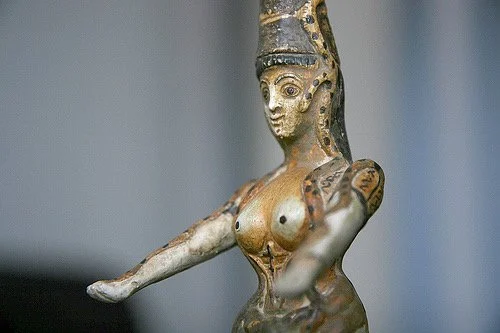 Image 1 of 6
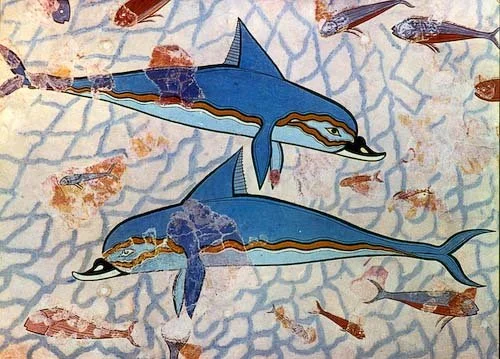 Image 2 of 6
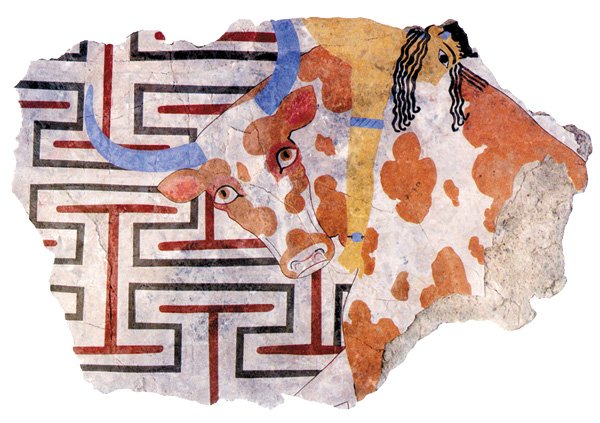 Image 3 of 6
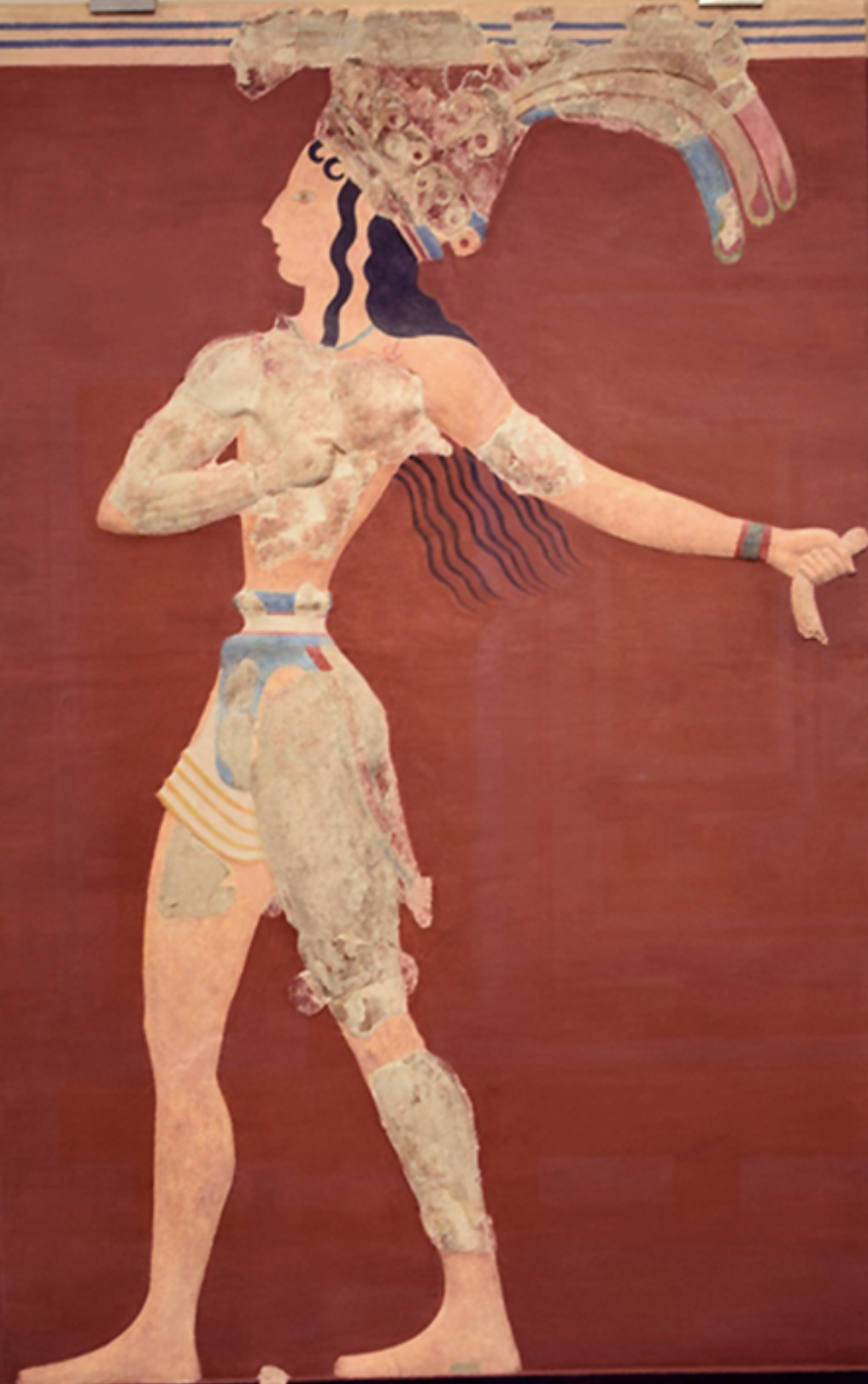 Image 4 of 6
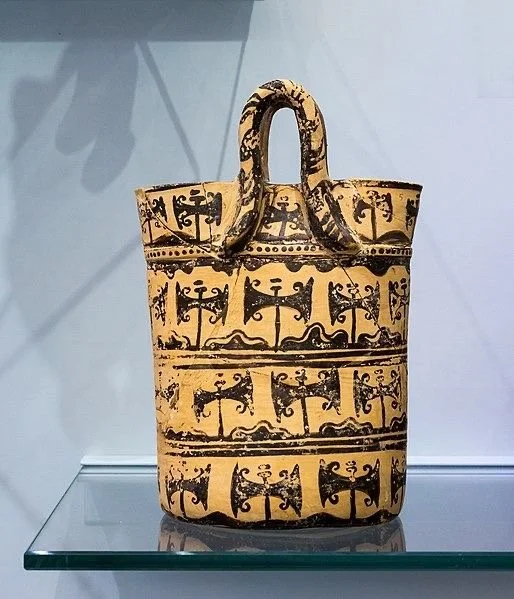 Image 5 of 6
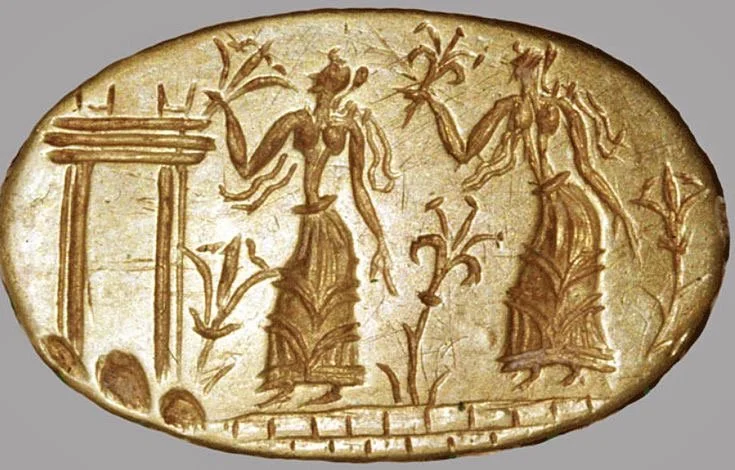 Image 6 of 6