
 Image 1 of 2
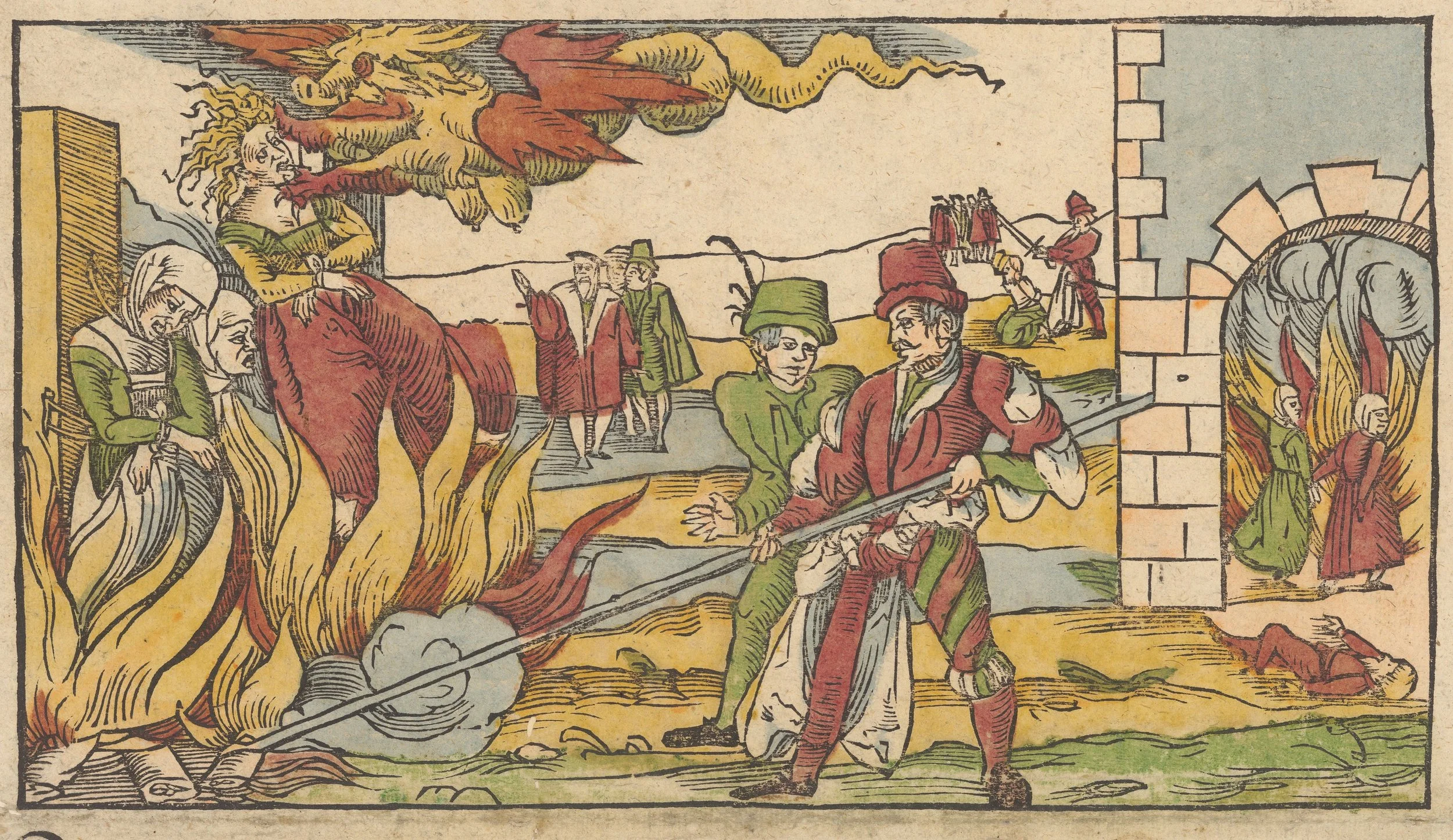 Image 2 of 2
Four Week Class Taught Online Via Zoom
Sundays, June 7 to the 28th, 2026
2 - 3:30pm ET (NYC Time)
$130 Paid Patreon Members / $150 General Admission
PLEASE NOTE: Classes will be recorded and archived for students who cannot make that time
In the tangled world of the fifteenth century, theologians, inquisitors, and other writers began imagining a secret sect of devil‑worshippers. The new technology of the printing press helped spread their stories—full of dramatic descriptions of sabbaths, strange rituals, and shocking crimes—far and wide. They also helped justify early witch‑hunts, even though people did not agree on what witchcraft really was.
Just as important, these writings slowly shaped what a “witch” looked like. Authors and artists pulled from folklore, biblical stories, medical ideas, and popular tales to build a powerful visual image: a diabolical, often female figure whose body signaled danger, mystery, and desire all at once. Over time, this created a visual language of the witch—grotesque and marvelous, abominable and fascinating—that still influences how we picture witches today.
In this course—led by Spanish art historian María Pandiello, author of Apocalypse: Revelations, Fears, and Possible Futures—we’ll read demonological texts and examine prints, paintings, and other images to see how the idea and image of the witch came into being. Together, we’ll explore the stories, pictures, and historical moments that fixed the witch in the European imagination—and ask what that figure continues to mean now.
MARÍA PANDIELLO (San Sebastián/Donostia, 1981) holds a degree in Romance Philology and a PhD in Art History (summa cum laude). Her research focuses on fifteenth- and sixteenth-century manuscripts and early printed books. Through them, she examines the circulation of ideological currents and artistic expressions in European courts. Her work explores the image as a tool of indoctrination, unpacking the intrinsic forms of violence encoded in enduring visual narratives. She is especially interested in the moralizing construction of images as vehicles of cultural violence; the visual definition of gender; the monstrous body; hybridity; liminality; and the transmission of knowledge through the book. She approaches these themes through the lenses of chronicle literature, alchemy, anatomy, the history of science, and demonology. She has written on semiotics; artistic and intellectual exchanges through books and images; the political value of libraries; the role of women in the medieval political sphere; and the use of images from an anthropological perspective. She is also the author of Visions of Fire: An Illustrated History of Alchemy and Apocalypse: Revelations, Fears, and Possible Futures.
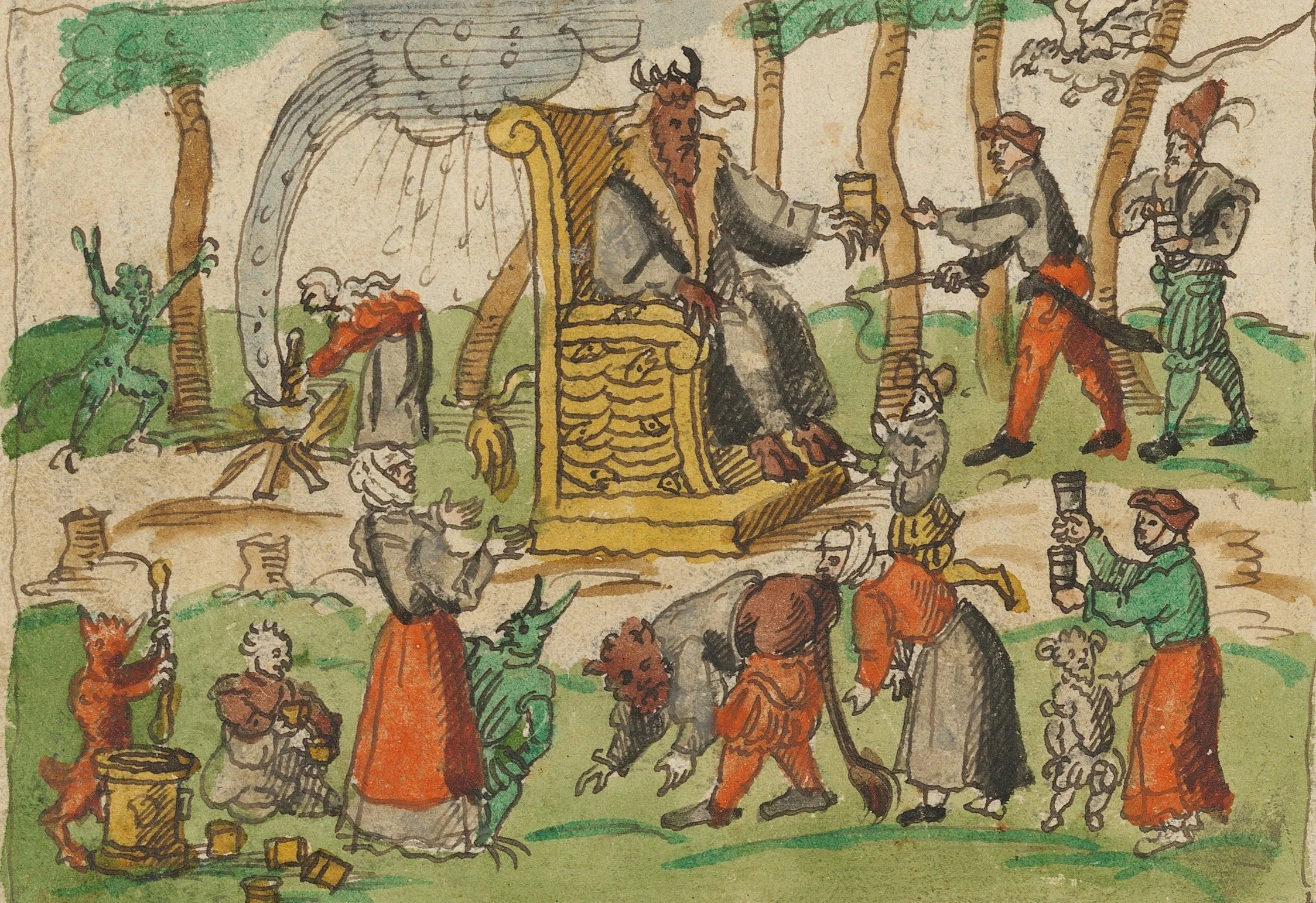
Images: Witches' Sabbath, ca. 1570, Johann Jakob Wick. German woodcut print, ca. 1555. Derneburg, Germany.
Four Week Class Taught Online Via Zoom
Sundays, June 7 to the 28th, 2026
2 - 3:30pm ET (NYC Time)
$130 Paid Patreon Members / $150 General Admission
PLEASE NOTE: Classes will be recorded and archived for students who cannot make that time
In the tangled world of the fifteenth century, theologians, inquisitors, and other writers began imagining a secret sect of devil‑worshippers. The new technology of the printing press helped spread their stories—full of dramatic descriptions of sabbaths, strange rituals, and shocking crimes—far and wide. They also helped justify early witch‑hunts, even though people did not agree on what witchcraft really was.
Just as important, these writings slowly shaped what a “witch” looked like. Authors and artists pulled from folklore, biblical stories, medical ideas, and popular tales to build a powerful visual image: a diabolical, often female figure whose body signaled danger, mystery, and desire all at once. Over time, this created a visual language of the witch—grotesque and marvelous, abominable and fascinating—that still influences how we picture witches today.
In this course—led by Spanish art historian María Pandiello, author of Apocalypse: Revelations, Fears, and Possible Futures—we’ll read demonological texts and examine prints, paintings, and other images to see how the idea and image of the witch came into being. Together, we’ll explore the stories, pictures, and historical moments that fixed the witch in the European imagination—and ask what that figure continues to mean now.
MARÍA PANDIELLO (San Sebastián/Donostia, 1981) holds a degree in Romance Philology and a PhD in Art History (summa cum laude). Her research focuses on fifteenth- and sixteenth-century manuscripts and early printed books. Through them, she examines the circulation of ideological currents and artistic expressions in European courts. Her work explores the image as a tool of indoctrination, unpacking the intrinsic forms of violence encoded in enduring visual narratives. She is especially interested in the moralizing construction of images as vehicles of cultural violence; the visual definition of gender; the monstrous body; hybridity; liminality; and the transmission of knowledge through the book. She approaches these themes through the lenses of chronicle literature, alchemy, anatomy, the history of science, and demonology. She has written on semiotics; artistic and intellectual exchanges through books and images; the political value of libraries; the role of women in the medieval political sphere; and the use of images from an anthropological perspective. She is also the author of Visions of Fire: An Illustrated History of Alchemy and Apocalypse: Revelations, Fears, and Possible Futures.
Images: Witches' Sabbath, ca. 1570, Johann Jakob Wick. German woodcut print, ca. 1555. Derneburg, Germany.