
 Image 1 of 4
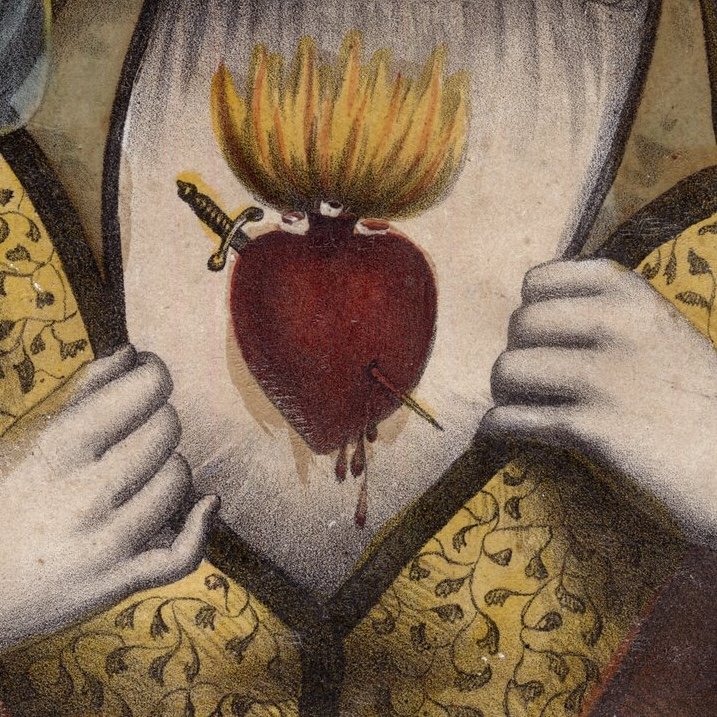 Image 2 of 4
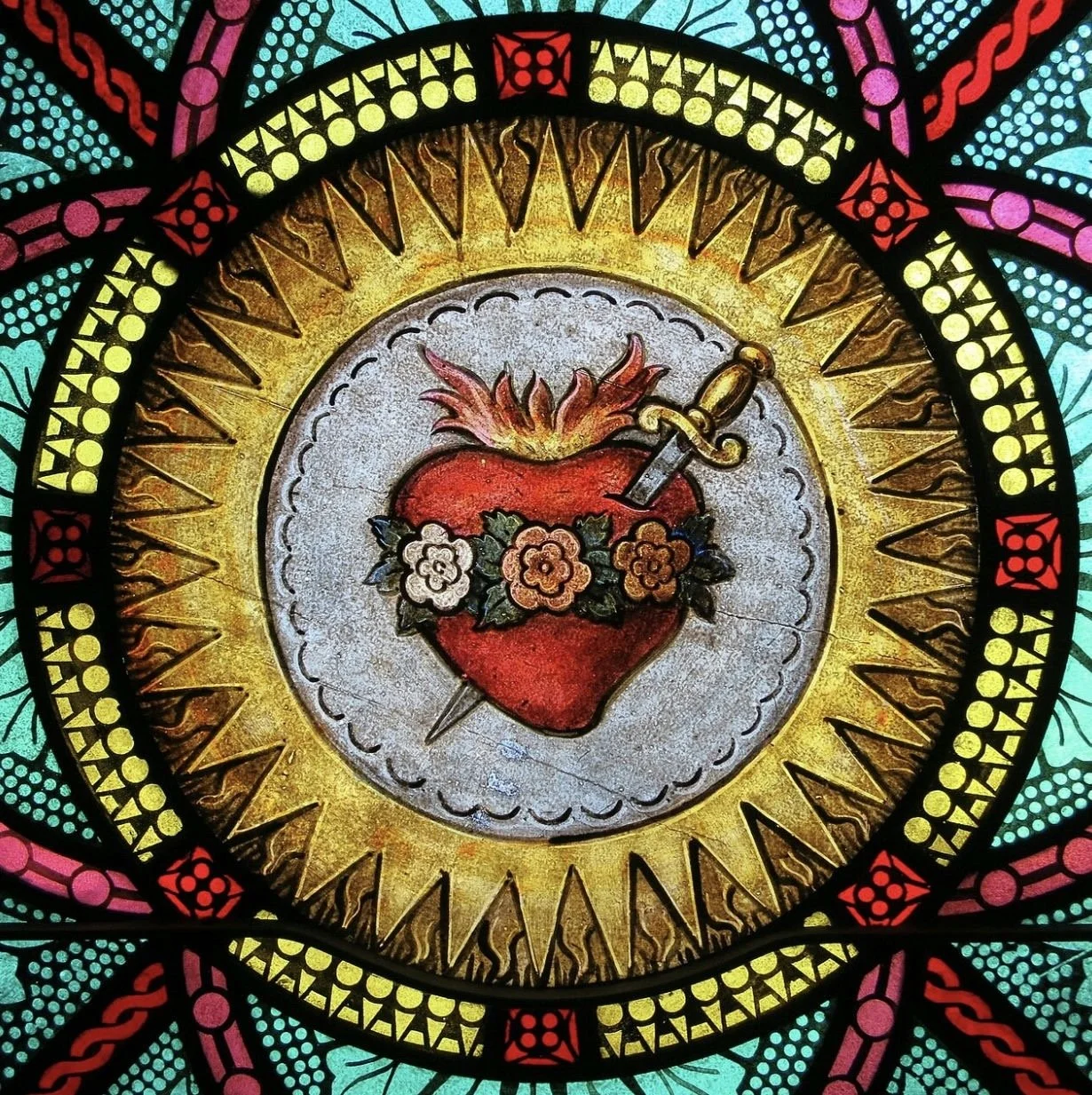 Image 3 of 4
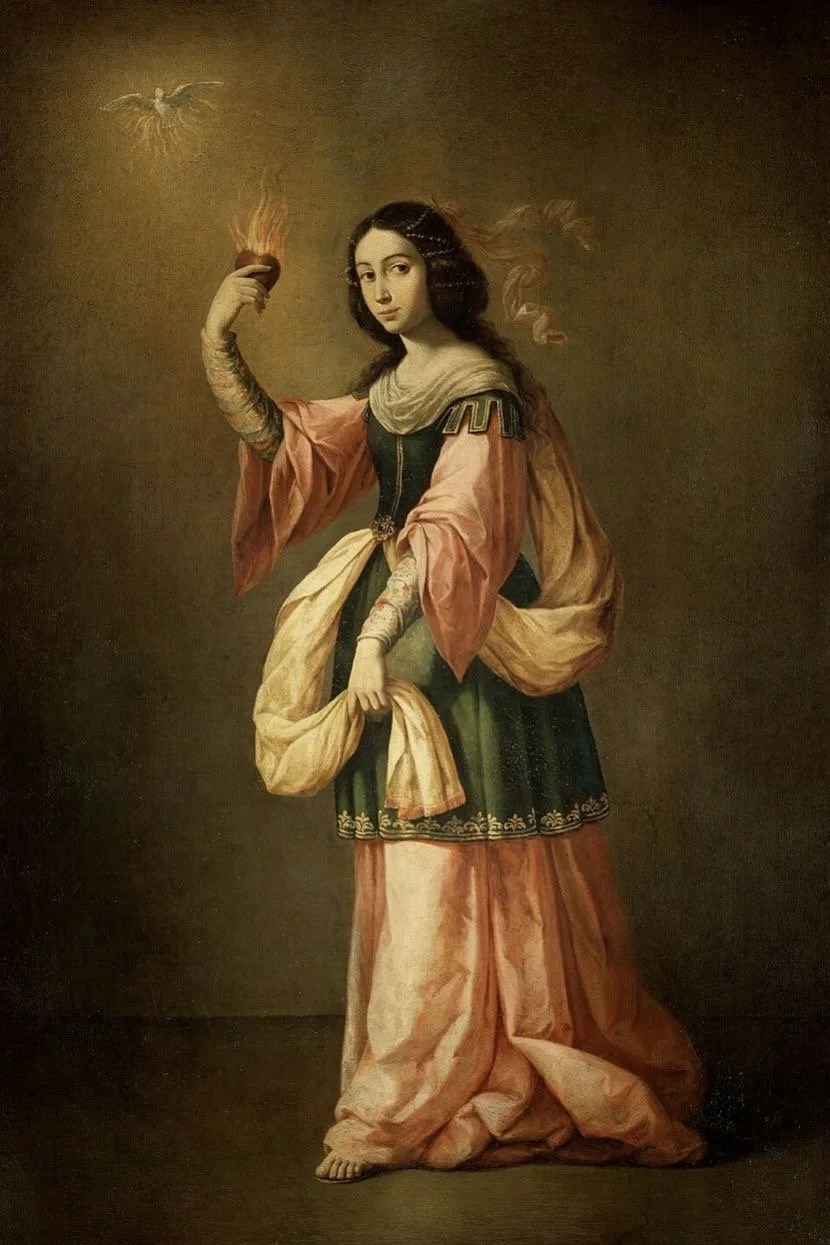 Image 4 of 4
Five Week Class Taught Online Via Zoom
Fridays, September 25 -October 23, 2026
6:00 - 7:30pm ET (NYC Time)
$145 Paid Patreon Members / $150 General Admission
PLEASE NOTE: Classes will be recorded and archived for students who cannot make that time
Join Mexican artist Teté Montero for a deep-dive into the Sacred Heart as both a religious icon and a vessel of emotional, spiritual, artivist, and creative meaning and practice.
Flaming, pierced, wrapped in thorns, and often bleeding, the Sacred Heart is an enduring symbol in Christian iconography, associated with ecstatic devotion and mystical suffering, and continually evolving through colonial art, folk traditions, social resistance, anatomical studies, milagros, and contemporary reinterpretations. Widespread since seventeenth-century France, it represents divine love, redemptive suffering, and the open vulnerability of Christ’s heart, offered to humanity as both wound and refuge. Spiritually, it evokes a heart that feels deeply, suffers willingly, and burns in the name of love; artistically, it has been adopted and reimagined by the faithful, the oppressed, and the creative alike. It lives in cathedrals and tattoos, in embroidery and graffiti, in altars and activist posters—always intimate, always aflame.
But the resonance of the sacred heart extends further back to pre-Columbian iconography. In Mexica and Aztec cosmologies, the human heart was more than a vital organ; it was the seat of the soul, a sacred offering to the gods, and a vessel of cosmic balance. Heart sacrifice stood at the center of spiritual life, symbolizing devotion as well as the perpetuation of life through ritual exchange and systems of power. When missionaries introduced the image of Christ’s burning, pierced heart, many Indigenous communities recognized something strikingly familiar. This convergence gave rise to a powerful visual and spiritual syncretism: the Heart echoing earlier cosmologies while taking on new Christian layers of compassion, suffering, and divine love. In folk art, tin hearts, embroidered milagros, and devotional paintings often carry this dual legacy, fusing European iconography with Indigenous understandings of body, spirit, and offering. It is a symbol that bleeds across cultures, testifying to both rupture and continuity.
Over the course of 5 weeks, we will examine this potent symbol across eras, cultures, and artistic media, while reflecting on our own symbolic and emotional relationship to it. Each 90-minute session will combine illustrated lectures, storytelling, and mindful creative prompts with historical and visual analysis grounded in personal reflection. As a final project, participants will be invited—if they wish—to create their own symbolic or devotional object inspired by the Sacred Heart, using any medium aligned with their creative practice. No artistic or religious experience is necessary.
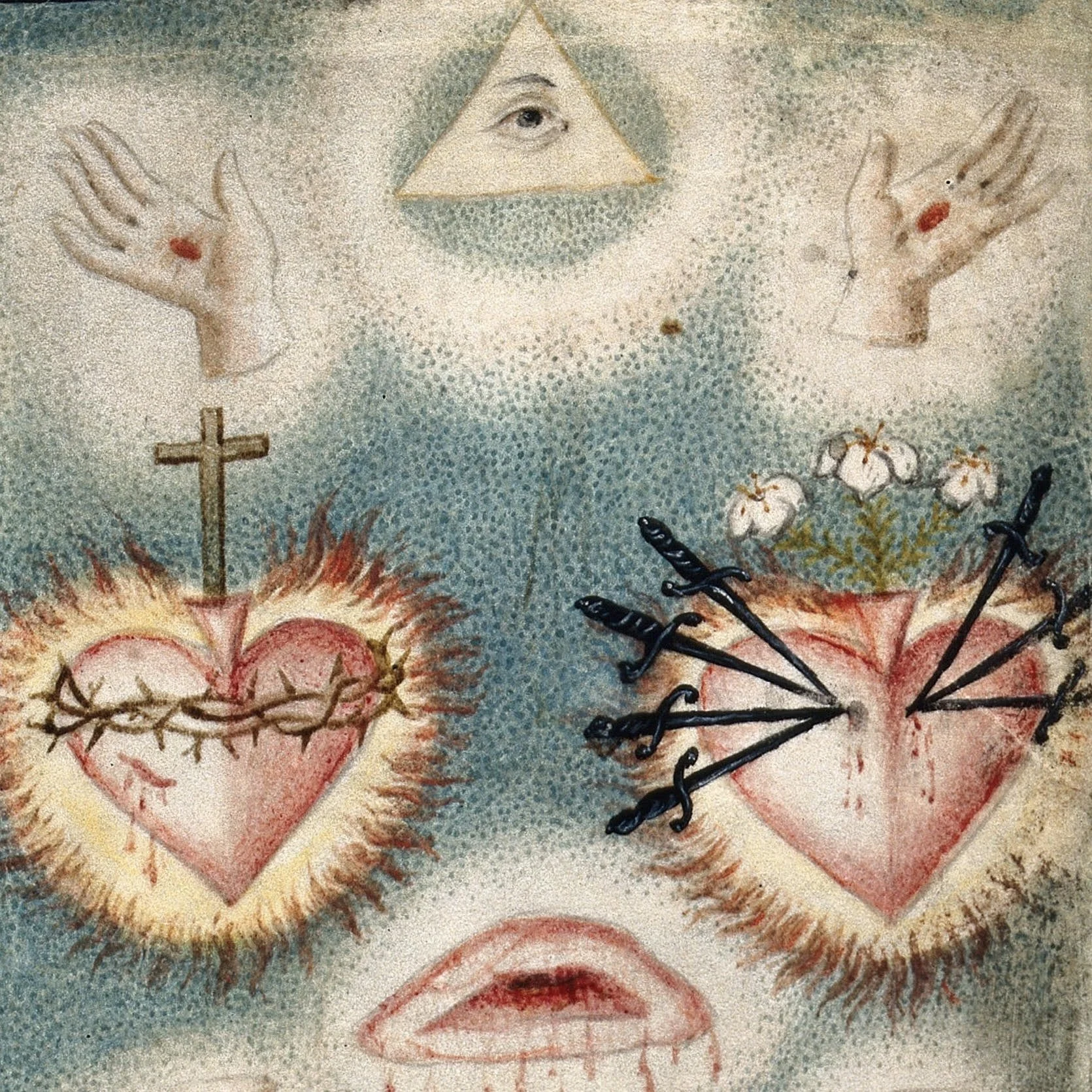
Images: Souls in purgatory, looking up at the wounds of Christ and at the Sacred Heart and the Immaculate Heart. Watercolor. Date: [between 1700 and 1799?]. Cropped; Unknown Artist - Immaculate Heart of Mary - Religious Image of the Sacred Heart of Mary (Detail); All Saints Catholic Church, St. Peters, Missouri, ca. 2014. Sacristy stained glass, Sacred Heart detail. Image by Nheyob (wikimediacommons); Allegory of Charity, ca. 1655, Francisco de Zurbarán, Museo del Prado, Madrid, Spain
Teté Montero is a Mexican artist and educator, storyteller, death doula, unicorn enchantress, and weaver, by choice. She’s neurodivergent by neurology, and a self appointed renaissance woman. She apprenticed under the care of master weaver Kenzo Jo in Saori Art Weaving in Japan. In addition, she has diverse focus studies from the University of Cambridge, Harvard University, The Hospice Association, Upaya Zen Center, and the Authentic Presence Organization. Originally focused in clinical medical studies and contemplative end of life care, with a latter shift into her lifelong special interests; medieval studies, socially engaged Buddhism, fine arts, and art history. She has found her true calling via education and inspiring artists through their creative paths, which she has done for over a decade. She currently runs an art teaching studio in Mexico City with the ghost of her dog Kayi. She is also a practicing Buddhist.
Five Week Class Taught Online Via Zoom
Fridays, September 25 -October 23, 2026
6:00 - 7:30pm ET (NYC Time)
$145 Paid Patreon Members / $150 General Admission
PLEASE NOTE: Classes will be recorded and archived for students who cannot make that time
Join Mexican artist Teté Montero for a deep-dive into the Sacred Heart as both a religious icon and a vessel of emotional, spiritual, artivist, and creative meaning and practice.
Flaming, pierced, wrapped in thorns, and often bleeding, the Sacred Heart is an enduring symbol in Christian iconography, associated with ecstatic devotion and mystical suffering, and continually evolving through colonial art, folk traditions, social resistance, anatomical studies, milagros, and contemporary reinterpretations. Widespread since seventeenth-century France, it represents divine love, redemptive suffering, and the open vulnerability of Christ’s heart, offered to humanity as both wound and refuge. Spiritually, it evokes a heart that feels deeply, suffers willingly, and burns in the name of love; artistically, it has been adopted and reimagined by the faithful, the oppressed, and the creative alike. It lives in cathedrals and tattoos, in embroidery and graffiti, in altars and activist posters—always intimate, always aflame.
But the resonance of the sacred heart extends further back to pre-Columbian iconography. In Mexica and Aztec cosmologies, the human heart was more than a vital organ; it was the seat of the soul, a sacred offering to the gods, and a vessel of cosmic balance. Heart sacrifice stood at the center of spiritual life, symbolizing devotion as well as the perpetuation of life through ritual exchange and systems of power. When missionaries introduced the image of Christ’s burning, pierced heart, many Indigenous communities recognized something strikingly familiar. This convergence gave rise to a powerful visual and spiritual syncretism: the Heart echoing earlier cosmologies while taking on new Christian layers of compassion, suffering, and divine love. In folk art, tin hearts, embroidered milagros, and devotional paintings often carry this dual legacy, fusing European iconography with Indigenous understandings of body, spirit, and offering. It is a symbol that bleeds across cultures, testifying to both rupture and continuity.
Over the course of 5 weeks, we will examine this potent symbol across eras, cultures, and artistic media, while reflecting on our own symbolic and emotional relationship to it. Each 90-minute session will combine illustrated lectures, storytelling, and mindful creative prompts with historical and visual analysis grounded in personal reflection. As a final project, participants will be invited—if they wish—to create their own symbolic or devotional object inspired by the Sacred Heart, using any medium aligned with their creative practice. No artistic or religious experience is necessary.
Images: Souls in purgatory, looking up at the wounds of Christ and at the Sacred Heart and the Immaculate Heart. Watercolor. Date: [between 1700 and 1799?]. Cropped; Unknown Artist - Immaculate Heart of Mary - Religious Image of the Sacred Heart of Mary (Detail); All Saints Catholic Church, St. Peters, Missouri, ca. 2014. Sacristy stained glass, Sacred Heart detail. Image by Nheyob (wikimediacommons); Allegory of Charity, ca. 1655, Francisco de Zurbarán, Museo del Prado, Madrid, Spain
Teté Montero is a Mexican artist and educator, storyteller, death doula, unicorn enchantress, and weaver, by choice. She’s neurodivergent by neurology, and a self appointed renaissance woman. She apprenticed under the care of master weaver Kenzo Jo in Saori Art Weaving in Japan. In addition, she has diverse focus studies from the University of Cambridge, Harvard University, The Hospice Association, Upaya Zen Center, and the Authentic Presence Organization. Originally focused in clinical medical studies and contemplative end of life care, with a latter shift into her lifelong special interests; medieval studies, socially engaged Buddhism, fine arts, and art history. She has found her true calling via education and inspiring artists through their creative paths, which she has done for over a decade. She currently runs an art teaching studio in Mexico City with the ghost of her dog Kayi. She is also a practicing Buddhist.