Four Week Class Taught Online Via Zoom
Sundays, May 16 - June 6, 2027
2:00 - 4:00pm ET (NYC Time)
$145 Paid Patreon Members / $155 General Admission
PLEASE NOTE: Classes will be recorded and archived for students who cannot make that time
The Minoans of Bronze Age Crete created one of the most visually mesmerizing artistic traditions of the ancient Mediterranean world. Their works are filled with movement, colour, elegance, and sensuality. Octopuses dance across jars, blue monkeys jump on palace walls, bees adorn the most exquisite jewelry, and tiny gold rings reveal masterpieces of astonishing delicacy and deep meaning. Every object, from a humble drinking cup to a carefully carved sealstone, reflects a remarkable attention to proportion, innovation, and both aesthetic and technical excellence.
It is no surprise that the artists and artisans behind these works of art were the people living in an exceptionally advanced civilization that did not display the markers of state-sanctioned oppression and violence, typical of the Empires of the Mediterranean Bronze Age. In fact, the prestige and economic power that women gained from trading their exquisite luxury crafts to Egyptians and Mesopotamians might have contributed to their high status in Minoan society.
This course will explore the extraordinary creativity of the Minoans (both from Crete and Santorini) through pottery, frescoes, textiles, jewelry, seal rings, and stone carvings. The visual record will be examined for both its aesthetic and technical qualities, discovering the sophisticated techniques and technological innovations that continue to astonish and inspire more than three thousand years later.
The art will also be observed for the symbolism woven into it, reflecting on what it might reveal about the people who created it. We will explore how gender is represented in Minoan art, from the prominent public roles of women in ceremonies to men portrayed as athletes, farmers, sailors, fishermen, musicians, and participants in ritual life. We will also examine intriguing figures whose appearance and social roles do not fit neatly into binary categories, opening a conversation about gender diversity in the Bronze Age.
Accompanied by an exceptional collection of photographs, designs, and reconstructions gathered over many years of research, this course offers an immersive journey through one of Europe's greatest artistic traditions, making it an ideal choice for artists and craftspeople looking for inspiration and all those who are curious to dig into the history of non-patriarchal cultures.
Class 1: Introduction: The Minoans speak to us
Class 2: Clay and Fire: The Art of Minoan Pottery
The evolution of Minoan ceramics
Early wares and palace pottery
Kamares Ware and its psychedelic designs
Marine Style pottery and oceanic wonders
Everyday vessels, feasting ware, storage jars, and ceremonial ceramics
Class 3: Woven Wonders: Jewelry, Textiles, and Personal Adornment
Goldsmithing and precious materials
The Bee Pendant and other masterpieces
Textile production and weaving technologies
Pigments and dyes
Seals and engraved gemstones
Class 4: Thera: Between Atlantis and Pompeii
Akrotiri and its preservation following the volcanic eruption
The Saffron Goddess fresco and female initiation rituals
The Blue Monkeys, the Spring Fresco, the Flotilla Procession, and other masterpieces
Chiara Baldini is a scholar, author, and speaker whose work sits at the intersection of psychedelic studies, feminist thought, ancient history, and contemporary counterculture. Her research began with an inquiry into the resonance between contemporary experiences of collective altered states of consciousness, particularly within psychedelic festival culture, and the mystery traditions of ancient Greece and Rome. Following this question backward through history led her to investigate the pre-patriarchal heritage of the lands that would become Europe, investigating gender, power, and social organization in Neolithic Europe and Minoan Crete.
She is a PhD student at the California Institute of Integral Studies. She is from Florence (Italy) but is based in Portugal.
Images: Silver Necklace, c. 1500 BCE, Aegean (Minoan), Cleveland Museum of Art, Cleveland, Ohio (Accession No. 1914.860); Fresco of the Seated Adorant (Detail of the Wounded Woman), c. 1600 BCE, Minoan wall painting from Akrotiri (Xeste 3), Museum of Prehistoric Thera, Fira, Santorini; Sir Arthur Evans, Drawing of a polychrome pot from a tomb at Isopata near Knossos, c. early 20th century, watercolor and ink on paper, Ashmolean Museum, University of Oxford, Oxford (Sir Arthur Evans Archive); The Spring Fresco, c. 1650–1600 BCE, Minoan wall painting from Akrotiri (Delta Complex, Room D2), National Archaeological Museum, Athens.

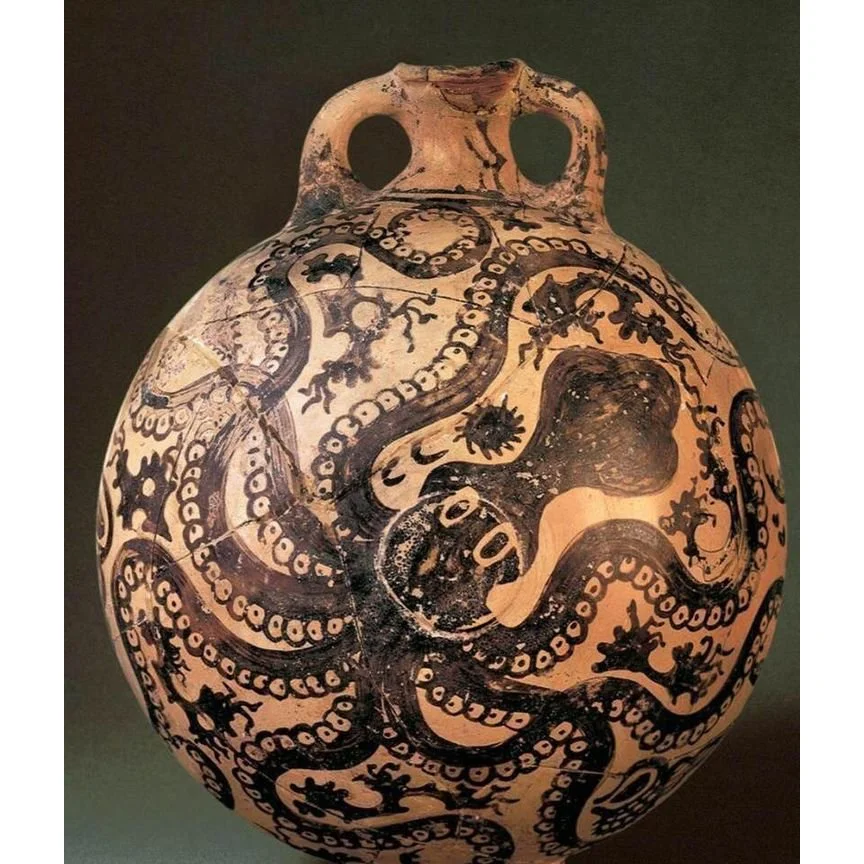 Image 1 of 8
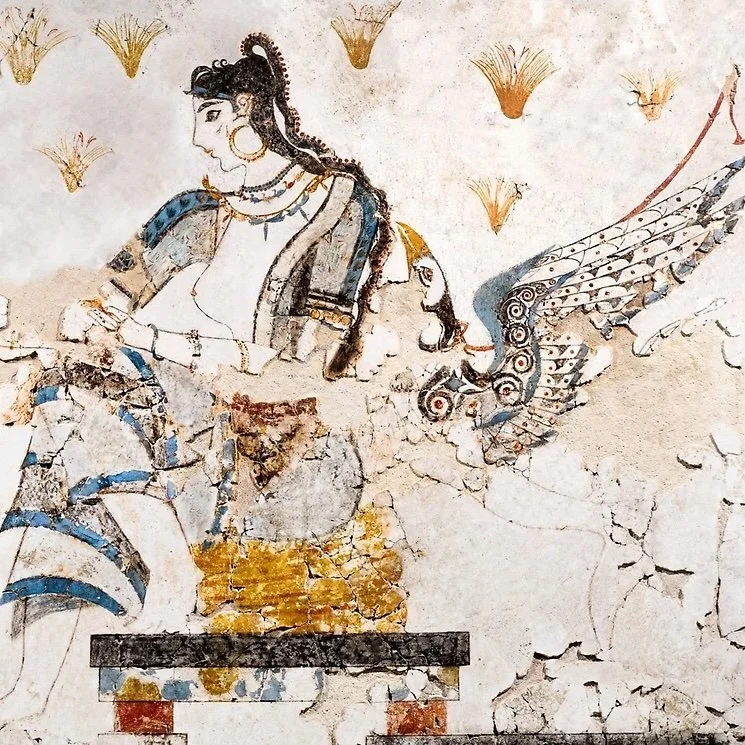 Image 2 of 8
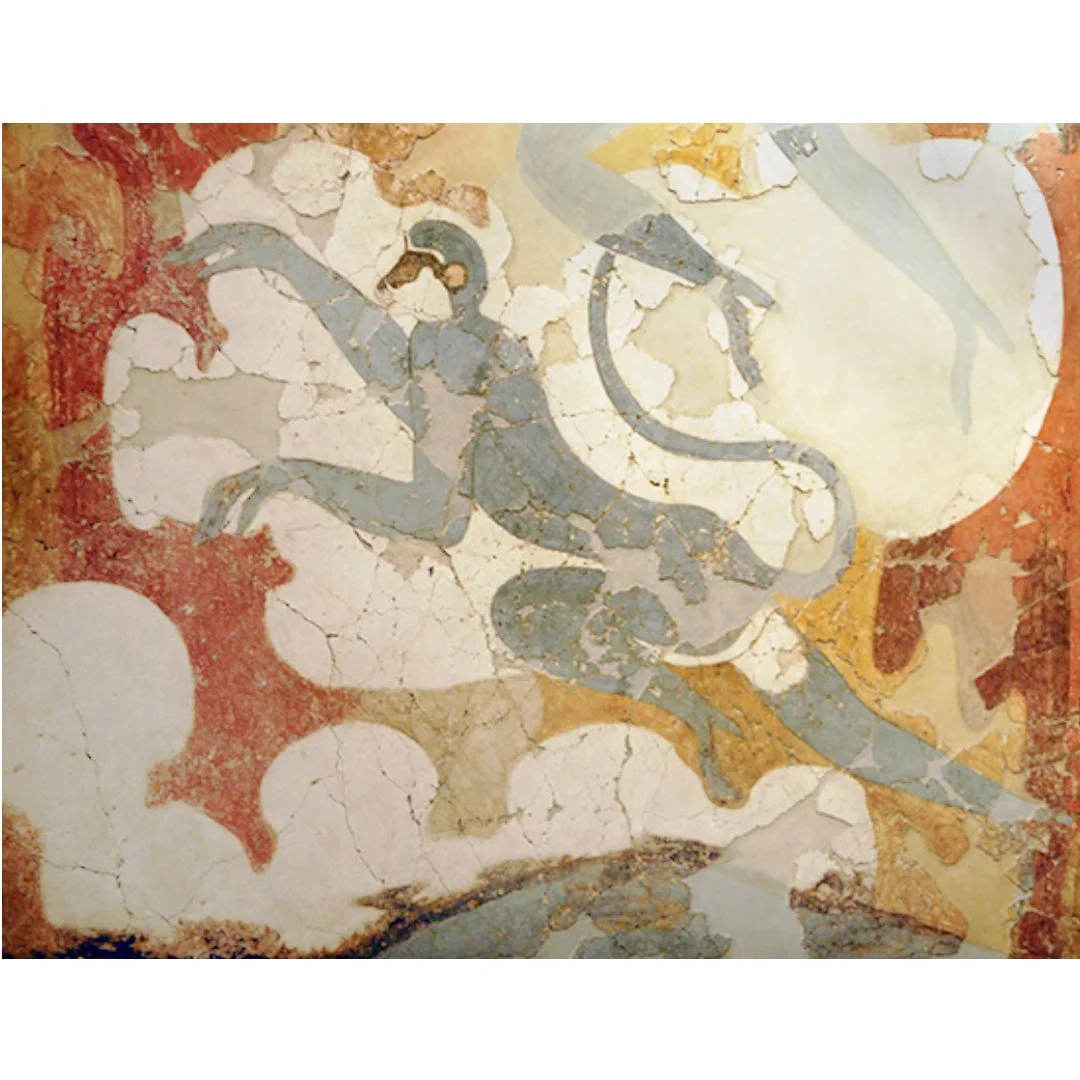 Image 3 of 8
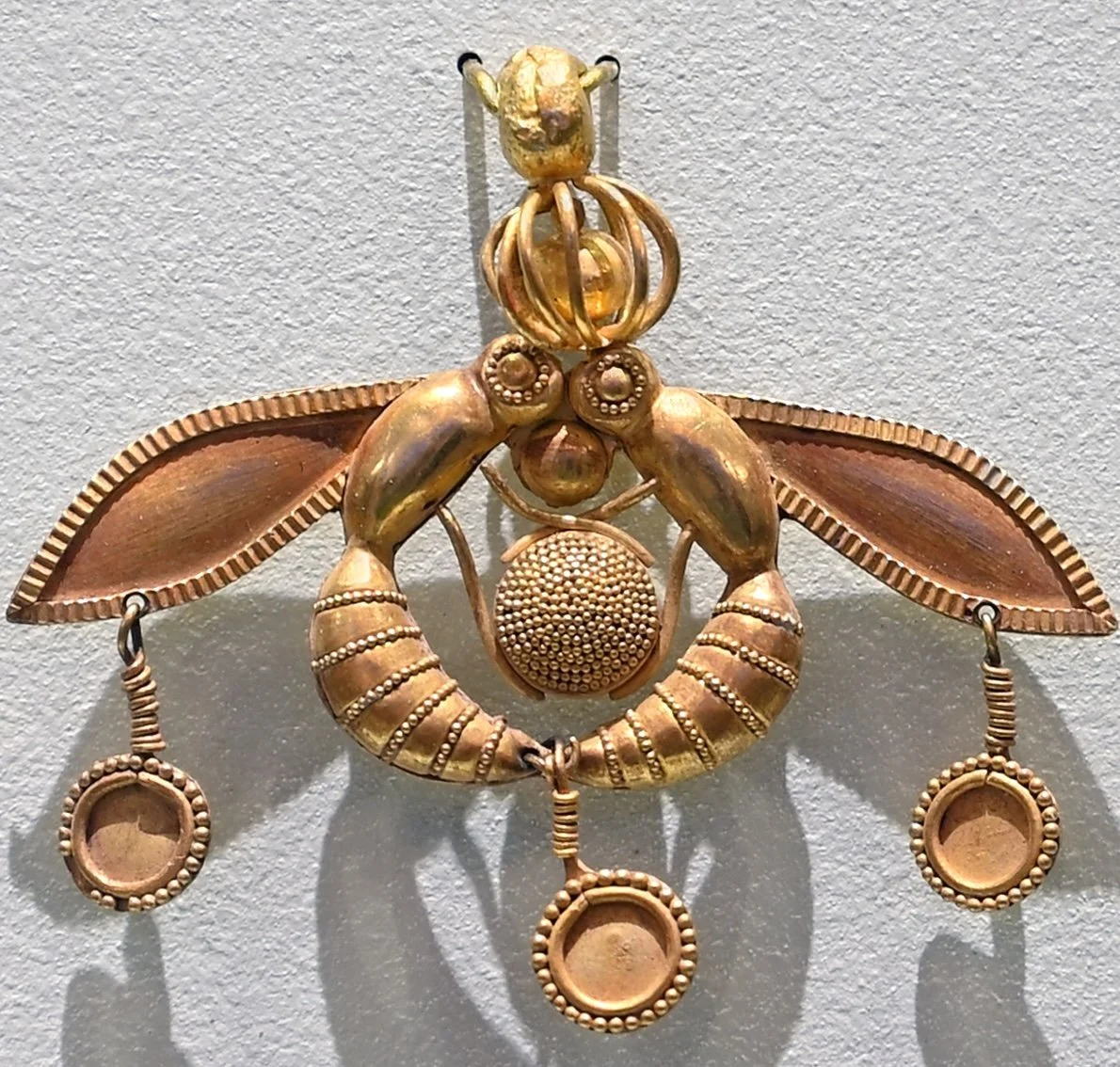 Image 4 of 8
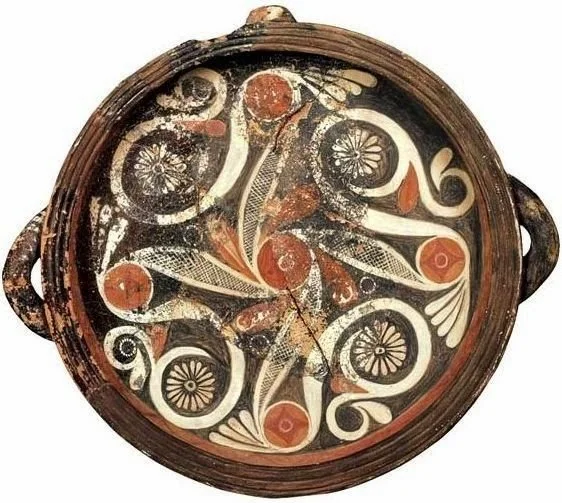 Image 5 of 8
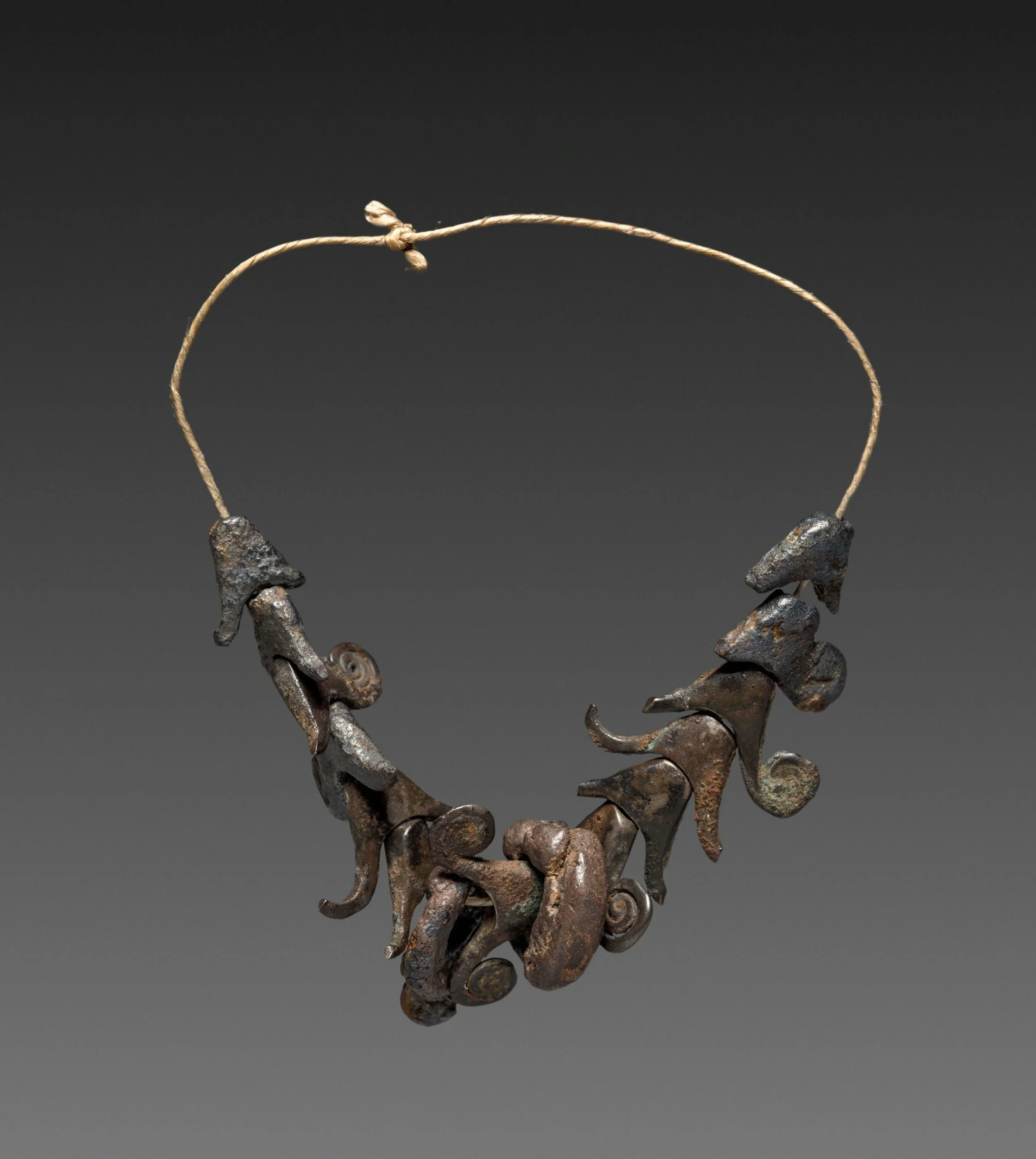 Image 6 of 8
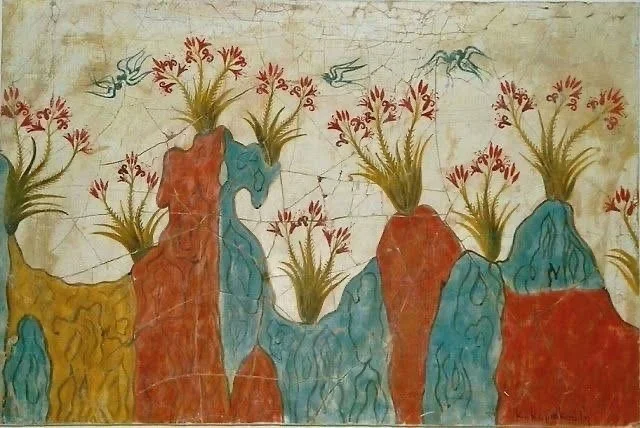 Image 7 of 8
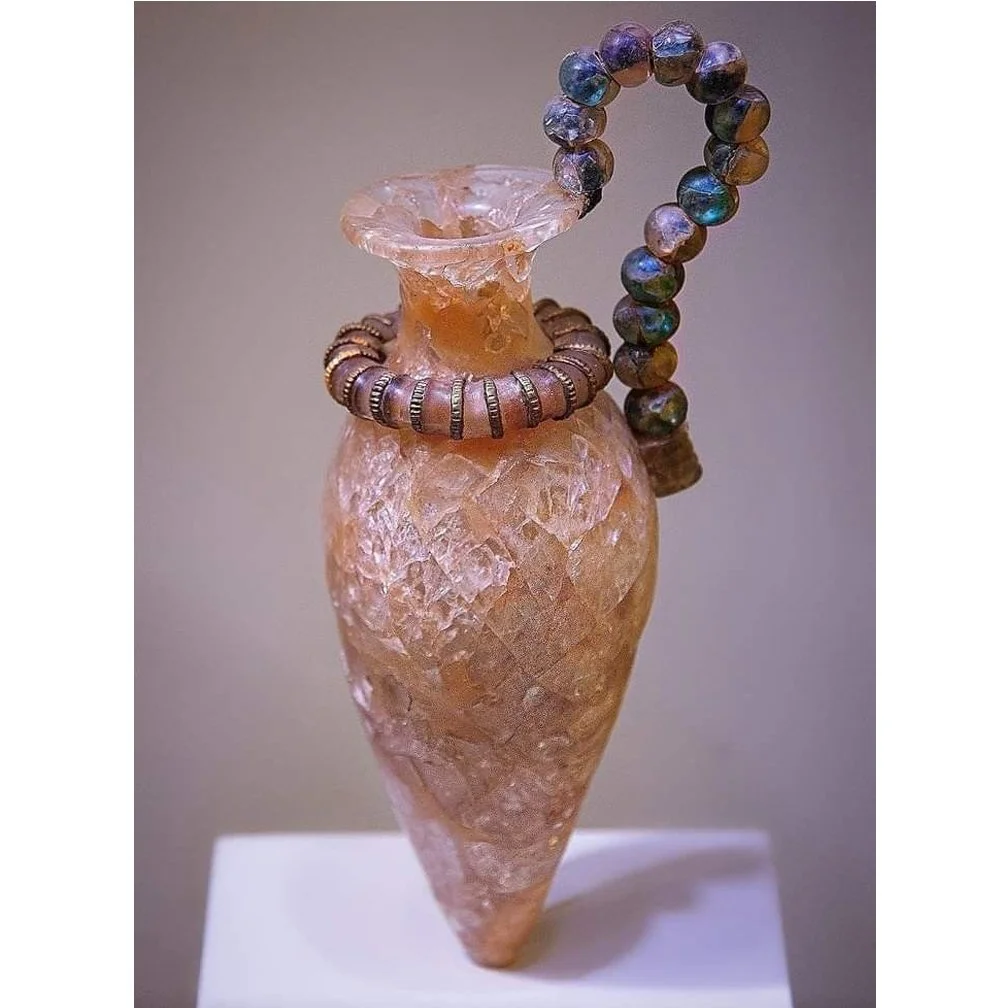 Image 8 of 8